
Choosing between a newly published article and a link added to existing content affects campaign control, speed, risk, and potential ROI. Whether you’re building links in-house or working with a professional link building service, understanding the strengths of each approach helps you make better SEO decisions.
For teams asking, “Guest posts vs. niche edits: which one is best?”, the answer depends less on the format than on relevance, editorial quality, destination-page value, and publisher standards.
Both methods can earn useful editorial backlinks, but both can also become link spam when placements exist only to manipulate rankings. Let’s first understand about each of these link building methods.
Guest Posts vs. Niche Edits: The Short Answer
Neither guest posts nor niche edits win by default. A relevant guest article on a credible industry publication can outperform an unrelated link insertion, while a carefully chosen insertion on an established resource can be more useful than a thin guest post created only for a backlink.
Guest posts are newly published articles containing an editorially relevant link to the target website. Because the content starts from a blank page, you have better control over the topic, supporting evidence, anchor text, destination URL, internal links, and broader narrative around a specific search intent.
Niche edits, also called link insertions, add a contextual link to an article that already exists. A strong source page may already be indexed, attract relevant visitors, and have an established place within the publisher’s site architecture, making the placement more efficient.
When comparing either method, don’t rely solely on third-party authority metrics. Domain Authority (DA), Domain Rating (DR), and Authority Score are vendor metrics rather than Google ranking factors. Instead, evaluate topical relevance, actual organic visibility, editorial oversight, outbound links, audience quality, and whether the destination genuinely expands the reader’s understanding.
The best choice ultimately depends on your campaign goals. Guest posts are generally better when you need full control over the content and messaging, while niche edits work well when an existing article closely matches your destination page and can be improved with a relevant resource.
Recommendation for Growth-focused Brands
Use guest posts for strategic commercial pages, thought leadership, original research, and precise topical coverage. Reserve niche edits for existing articles that closely match the destination page and would become more useful with the addition of a relevant resource.
When outsourcing either format, prioritize a link building service provider that shares the publisher, proposed topic or source page, destination URL, anchor text, and surrounding context before publication.
Tanot Solutions follows an approval-led process for both guest posts and niche edits, helping brands evaluate whether each placement aligns with the target page, topic, and commercial goal rather than pursuing raw link volume.
What Guest Posts and Niche Edits Actually Mean
Guest posting is the process of creating and publishing a new article on another website with a relevant link to the contributing brand or its content. Here’s a guest post example by Tanot Solutions published on Serpstat: “Google Ads for SEO: How to Win the SEO Game.”
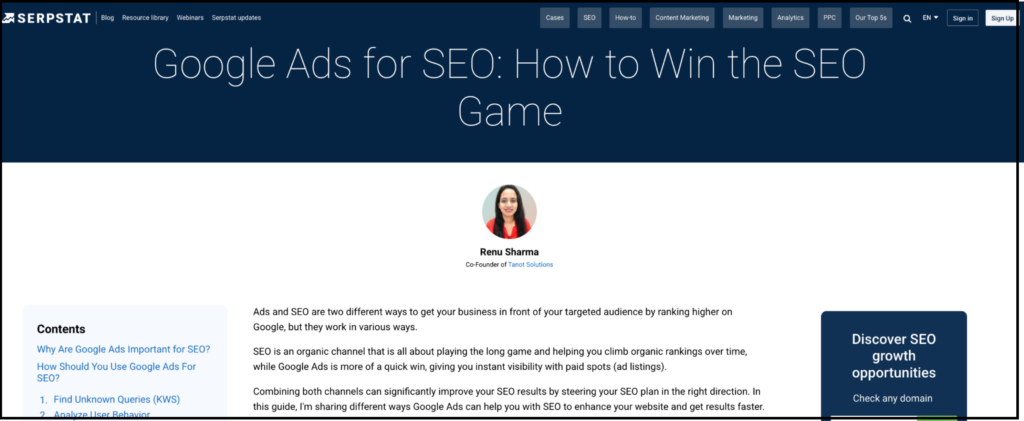
Source
The article should provide genuine value to the host publication’s audience, distinguishing a legitimate editorial contribution from content produced solely to carry a backlink.
A niche edit adds a contextual link to an existing article on another website. Effective link insertions update, support, or expand the original discussion rather than interrupting it with a forced commercial reference.
For instance, in the existing article, “Tree Service Marketing: 11+ Ideas to Drive More Customers,” the phrase “link back to your site” naturally links to our link building service page.
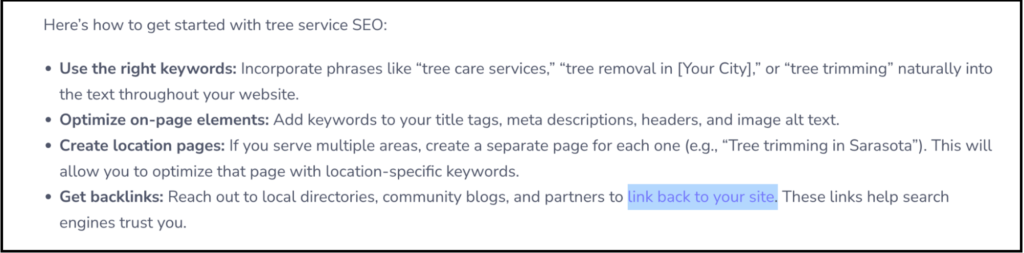
It provides readers with additional information on earning high-quality backlinks.
Both approaches can be legitimate when the publisher, subject, anchor text, destination page, and surrounding copy serve readers first. That’s why publisher vetting is essential: a credible website applies editorial standards instead of accepting every submitted placement.
Google evaluates links based on context rather than whether they appear in a guest post or a niche edit. However, Google Search Essentials and its spam policies state that paid links intended to influence rankings should use appropriate link attributes, such as rel=”sponsored” or, where appropriate, rel=”nofollow”.

A transparent outreach process should give clients the opportunity to review and approve the publisher, proposed topic or source page, destination URL, anchor text, surrounding context, and commercial terms before publication.
How a guest post works
A guest post campaign generally includes:
| 🔎 Prospect Relevant Publications ↓ ✅ Vet Editorial Quality & Organic Visibility ↓ 📝 Secure Topic Approval ↓ ✍️ Create Original Content ↓ 📋 Editorial Review & Revisions ↓ 🚀 Publish & Verify the Backlink ↓ 📈 Check Indexation & Live Link |
This workflow allows brands to build a complete narrative around an informational or commercial page without forcing a reference into unrelated copy.
How a niche edit works
A typical niche edit workflow looks like:
| 🔎 Identify a Relevant Existing Article ↓ ✅ Vet Relevance & Organic Visibility ↓ 📝 Secure Publisher Approval ↓ ✍️ Add a Contextual Link ↓ 📋 Review the Updated Content ↓ 🚀 Publish & Verify the Link ↓ 📈 Check Indexation & Live Link |
However, pay close attention to the wording of the inserted sentence. Awkward phrasing or an overly optimized anchor text can undermine both readability and trust.
You can also use AI Overviews, ChatGPT, and Perplexity to identify how topics and entities are discussed, but prioritize adding value for human readers over AI visibility.
💡 Tip: Use our link building email outreach templates to improve publisher response rates and secure more high-quality editorial placements.
Guest Posts vs. Niche Edits: Side-by-Side Comparison
Guest posts offer greater control over content and messaging, while niche edits can often go live within days. However, speed should never come at the expense of topical relevance or editorial quality.
| Factor | Guest Posts | Niche Edits | What Matters for SEO |
| Content format | New article | Link added to an existing article | Content must help the publisher’s audience |
| Publication speed | Usually slower | Often faster | Speed should not replace editorial review |
| Control over copy | High | Limited to the edited passage | Context must accurately support the destination |
| Topical relevance | Built around the chosen subject | Depends on the existing article | Close subject alignment strengthens usefulness |
| Existing page history | Starts with a new URL | May have an established history | Review indexation, traffic, and content stability |
| Internal-link opportunities | Can be planned during writing | Limited by the existing structure | Internal links can help discovery and context |
| Referral traffic potential | Depends on promotion and readership | Depends on current page traffic | Qualified visitors matter more than raw sessions |
| Scalability | Requires recurring content production | Can be operationally faster | Scale must preserve publisher quality |
| Quality risks | Thin articles or weak publishers | Forced edits or overloaded pages | Reject placements created mainly to sell links |
Neither format is inherently better for your business SEO. The right choice depends on your goals, the relevance of the publisher, and whether the placement provides genuine value to readers. The following sections explain when each approach is most effective.
When Guest Posts Are the Better Choice
Guest posts are the better choice when you need greater control over the topic, supporting evidence, link placement, and reader journey. They allow you to introduce a problem, explain a solution, and naturally guide readers to the destination page without forcing a link into existing content.
This format is particularly useful for:
- New product or service categories requiring clear context
- Pillar pages covering broad, commercially important subjects
- Original research that publishers can interpret or reference
- Expert commentary connected to timely industry developments
- Commercial pages that need educational support before a call to action
- Topics for which no suitable existing publisher article is available
For instance, SaaS companies can use guest posts to explain technical use cases before linking to a feature, integration, or comparison page.
Similarly, B2B teams can address complex buying considerations, while ecommerce brands can support category pages through educational content rather than inserting product links into loosely related articles.
Enterprise organizations may also prefer guest posts because legal, brand, and communications teams can review the complete article before publication, reducing the risk of inaccurate messaging or unsuitable positioning.
The trade-off is time and effort. A quality guest-post campaign requires publisher prospecting, topic approval, content creation, editorial review, and link verification before the article goes live.
Our advanced link prospecting guide walks you through the complete prospecting workflow, from researching relevant publishers to qualifying outreach opportunities.
Guest Post Quality Checklist
Before approving a guest-post opportunity, verify that:
The publisher reaches your target audience.
The publication’s topical focus aligns with your content.
The website has meaningful organic visibility.
Editors review and approve submissions.
Author pages and contributor guidelines are credible.
Existing articles are accurate, useful, and well written.
The destination page naturally supports the reader’s next step.
The anchor text reads naturally and avoids excessive exact-match keywords.
The backlink adds value to the article rather than existing solely for SEO.
Final check: Ask yourself, “Would this article still be valuable if the backlink were removed?” If the answer is no, reconsider the opportunity.
When Niche Edits Are the Better Choice
Niche edits are most effective when an existing article closely aligns with the destination page and adding a new resource genuinely improves the reader’s experience. The best opportunities typically arise when an article contains an outdated explanation, unsupported claim, missing resource, or incomplete next step.
Indexed pages are eligible to appear in Google Search results, while unindexed pages cannot. Although indexation alone doesn’t guarantee quality or rankings, it confirms that Google has processed the URL for possible search visibility.
Niche editorial links are particularly useful for:
- Filling a topical gap within an otherwise useful article
- Diversifying links across different editorial formats
- Supporting a priority page without commissioning a new article
- Updating older content with current evidence or a better resource
- Reaching qualified visitors through a page that already attracts relevant traffic
The primary risk is inheriting the source page’s weaknesses. An article may be indexed yet poorly maintained, topically diluted, overloaded with commercial links, or no longer visible for meaningful searches.
Because you’re working within an existing article, you also have less control over the surrounding content. Even a well-written insertion cannot fix inaccurate information, weak structure, or an unrelated editorial direction elsewhere on the page.
Niche Edit Quality Checklist
Before approving a niche edit link, verify that:
The source article closely matches the destination topic.
The page is indexed and accessible to search engines.
The content is current, accurate, and well maintained.
The article is written for a genuine audience.
Existing outbound links are relevant and selective.
The inserted sentence reads naturally within its paragraph.
The anchor text describes the destination without excessive exact-match keywords.
The link fits the page naturally without disrupting the topic.
The publisher shares the exact URL and placement for approval.
Final check: Ask yourself, “Does this link genuinely improve the article for readers?” If the answer is no, it’s probably not the right placement.
How Tanot Solutions Approaches Guest Posts and Niche Edit
For companies that need support executing either format, Tanot Solutions provides both guest post outreach and contextual niche edit placements as part of a broader link building service. The emphasis is on matching the placement type to the target page, search intent, and commercial objective.
For example, a new guest post may be a better fit when a destination page needs explanation, original commentary, or a carefully controlled narrative. A niche edit may be considered when an existing, relevant article has a clear resource gap, and the addition improves the reader’s next step.
This strategy-first approach has helped our clients achieve measurable SEO growth.
A real-world example: Tanot Solutions ran a four-month campaign for an Amazon seller management platform, where we combined contextual niche edits and guest posts to strengthen high-value commercial pages.
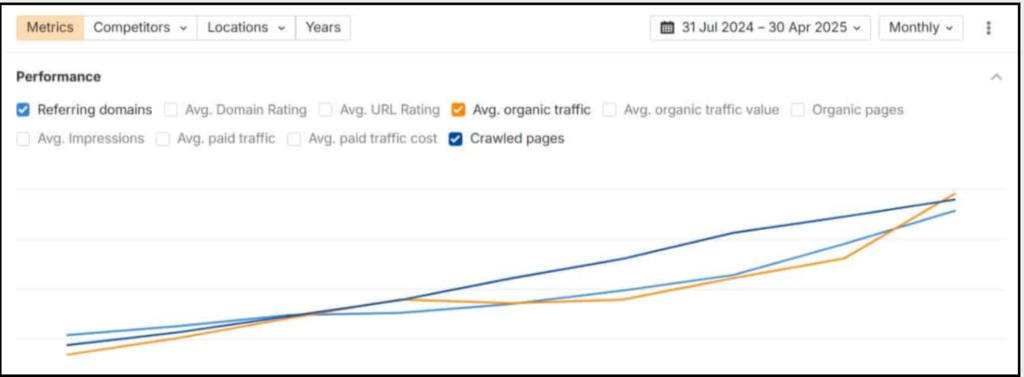
By prioritizing relevant publishers and strategic page targeting over link volume, the campaign doubled monthly organic traffic from 1,000 to 2,000+ visitors and increased DR by 8 points.
What to expect from a transparent process
A quality link building partner should make every placement decision transparent before a link goes live.
At Tanot Solutions, clients review the publisher, proposed topic or source page, destination URL, anchor text, and surrounding context before approving a placement. This approval-first workflow helps ensure that every guest post or niche edit backlink supports the campaign’s SEO objectives rather than simply increasing backlink volume.
Evaluating placements this way is far more valuable than relying on domain metrics alone. It keeps the focus on topical fit, editorial standards, page context, and the likelihood of attracting qualified traffic.
How to Evaluate Any Link Building Opportunity
Evaluating a link building opportunity starts with the specific page and placement, not the website’s domain metrics. While DR and similar third-party metrics can help shortlist publishers, they don’t guarantee better rankings, qualified traffic, or business results.
Before approving a placement, ask:
- Topical match: Does the publication regularly cover your industry or subject?
- Audience fit: Are its readers plausible buyers, users, or industry influencers?
- Editorial standards: Does the publisher review, edit, and maintain its content?
- Organic traffic quality: Does the website rank for keywords relevant to its niche?
- Page indexation: Is the proposed source page indexed and discoverable by Google?
- Outbound-link profile: Are external links selective, contextual, and useful?
- Destination relevance: Does the linked page deliver on the promise made by the anchor text?
- Placement context: Does the link fit naturally within the surrounding content?
- Business contribution: Could this placement realistically contribute to rankings, referral traffic, leads, or revenue?
Anchor text should describe the destination naturally. A balanced mix of branded, descriptive, partial-match, and URL-based anchors creates a healthier backlink profile than repeatedly using exact-match keywords.
Measure success by the performance of your target pages, not by the total number of backlinks. Monitor rankings, qualified organic traffic, referral visits, conversions, and revenue to understand whether your link building campaign is delivering meaningful business outcomes.
Red flags to reject
Avoid link building opportunities that involve:
- Irrelevant pages selected purely for high DR or other vanity metrics
- Poor writing or unsupported claims
- Abrupt topic changes introduced only to accommodate a link
- Excessive outbound links to unrelated websites
- Unverified or inflated traffic claims
- Publishers unwilling to share the exact source URL or placement before approval
- Promises of guaranteed rankings or instant SEO results
- Misleading anchor text or copy that doesn’t accurately describe the destination
- Forced exact-match anchors that read unnaturally
- Articles created primarily to sell backlinks
Whether you use guest posts or niche edits, ensure your link building partner rejects opportunities that don’t meet these standards. Strict approval criteria protect both your SEO investment and your brand’s reputation.
Choose the Right Strategy for Link Building
There isn’t a universal winner between guest posts and niche edits.
Guest posts are usually the stronger option for message control, brand storytelling, internal link planning, and deep topical relevance. Whereas niche edits can be more efficient when an existing article is current, indexed, well-maintained, and exceptionally relevant to the destination page.
A balanced backlink portfolio combines both formats where appropriate rather than following arbitrary quotas. Before approving any placement, define the target pages, search intent, commercial value, anchor requirements, publisher criteria, and how success will be measured.
Most importantly, choose a partner that can explain why every proposed placement deserves to exist. If a recommendation relies only on DR, backlink volume, or other vanity metrics, it’s unlikely to deliver sustainable SEO results.
Long-term growth comes from earning editorial links that support both search visibility and business outcomes.
If you’re unsure which approach is right for your business, contact Tanot Solutions today for a customized link building strategy. Let’s talk.