Most SaaS companies know they need backlinks. Few know how to get the right ones. Even fewer know which strategies actually move the needle in competitive search results.
Here is the problem: Most businesses forget to focus on what makes SaaS unique and end up following generic link-building advice that drives traffic and views, but not signups and revenue.
As a SaaS business, you must know that your buyers are technical and skeptical. You are competing against well-funded competitors who have been building authority for years.
This guide covers proven SaaS link-building strategies that drive rankings, qualified traffic, and revenue, not vanity metrics. From low-budget starter tactics to scalable link-building campaigns, here’s how to future-proof your SaaS SEO for 2026 and beyond.
Why link building matters for SaaS companies
Search isn’t just happening on Google anymore. In 2026, SaaS buyers are discovering tools through Google AI Overviews, ChatGPT answers, and Perplexity summaries — not just the classic “10 blue links.”
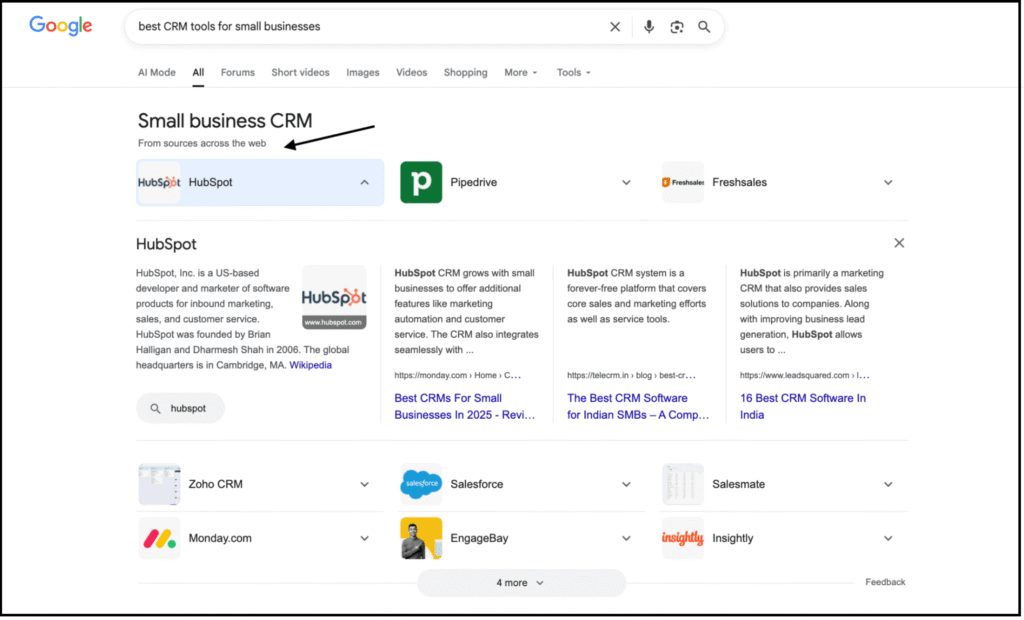
For example, when you search for the “best CRM tools for small businesses” on Google or Perplexity, you no longer get a standard results page.
Instead, you see a curated summary of the top CRM tools, complete with citations linking back to trusted SaaS sources.
Here’s how it looks on Google’s search results 一 a curated overview highlighting top CRM platforms cited from authoritative sources:
Similarly, Perplexity generates a list of recommended CRM tools for small businesses, pulling references from credible SaaS publications and product pages.
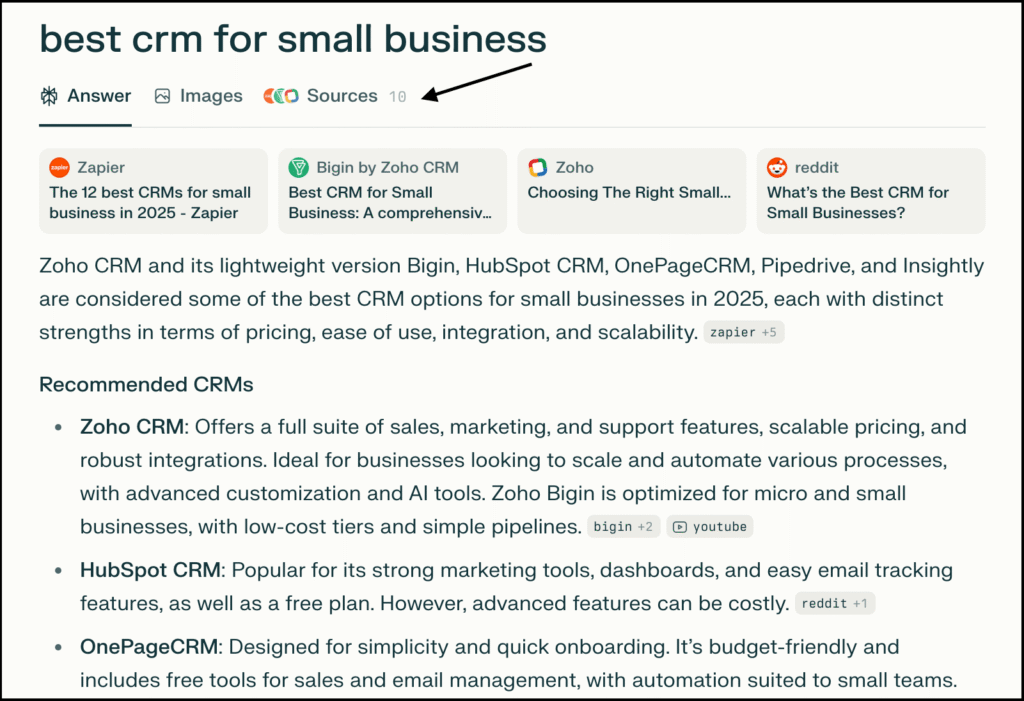
If your product isn’t mentioned in these summaries, you’re invisible to a growing share of your market. These generative platforms are now decision engines: they highlight the tools, brands, and data that large language models (LLMs) trust most.
And that trust is built with high-quality backlinks, brand mentions, and strong entity signals.
Multiple well-funded SaaS products often compete for the same keywords, and feature pages rarely rank without targeted backlinks. So, a strong backlink profile is what keeps delivering targeted traffic long after you have stopped investing.
But SaaS link building is different from generic SEO as you need links that drive actual business results, not just traffic.
At Tanot Solutions, we have seen companies reduce their customer acquisition cost by 30-40% over 18 months through strategic link building paired with solid content. The key is understanding that not all links are created equal.
11 most effective SaaS link-building strategies
Let us break down the tactics that actually work for SaaS companies in 2026.
1. Guest posting on industry-relevant websites
Guest posting, when done strategically, helps earn high-authority backlinks and strengthen your brand’s presence across both Google and AI-driven search.
But in 2026, it’s less about spraying content across any site that accepts guest posts and more about earning a seat on authoritative industry publications that LLMs already trust.
Partnering with an experienced link-building agency can help you identify, pitch, and secure guest post opportunities on reputable platforms that your audience already follows.
Think of sites like HubSpot, TechRadar, and Forbes. These are the publications that frequently appear in Google AI Overviews and Perplexity summaries because of their credibility and topical depth.
Guest posting gives you the chance to create original content, naturally weave in your target keyword as anchor text, and earn a do-follow, contextually relevant backlink.
Here is how to do guest posting for your SaaS business:
- Find relevant sites in your niche. Use Ahrefs Content Explorer or Semrush to identify websites that accept guest posts in your industry
- Craft quality content. Focus on providing genuine value, not thinly veiled product pitches.
- Include contextual backlinks. Place links naturally within the content, targeting keywords you want to rank for.
- Build relationships. One successful guest post often leads to ongoing contributor opportunities.
The goal is not just a link. It is reaching an audience that actually cares about the product/solution you’re offering.
For example, FlowMetrics (productivity analytics for remote teams) grew its organic traffic by 300% in six months using nothing but strategic, high-quality guest posting. By narrowing keywords and partnering with relevant websites with real audiences, the SaaS brand acquired 23 qualified sales leads from their guest post referral traffic.
2. Link insertions (contextual placements)
Contextual link insertions, also known as niche edits, involve placing your backlink naturally within an existing, high-performing, and relevant article. It’s one of the fastest and most effective ways to transfer authority from a trusted domain to your SaaS site.
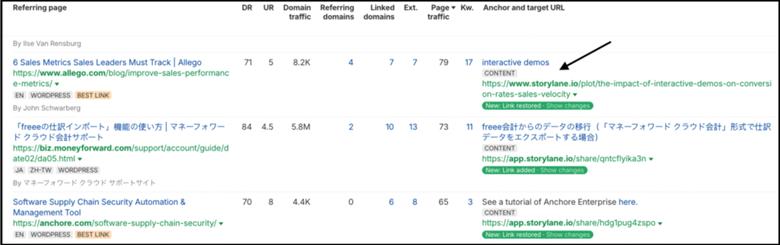
Storylane is a SaaS tool that helps teams create interactive product demos. Here’s an example of a contextual backlink of Storylane with the anchor text “interactive demos” that carries far more weight than dozens of low-quality mentions.
Now, when I asked ChatGPT, “How do I create an interactive demo?” Storylane was listed under recommended tools.
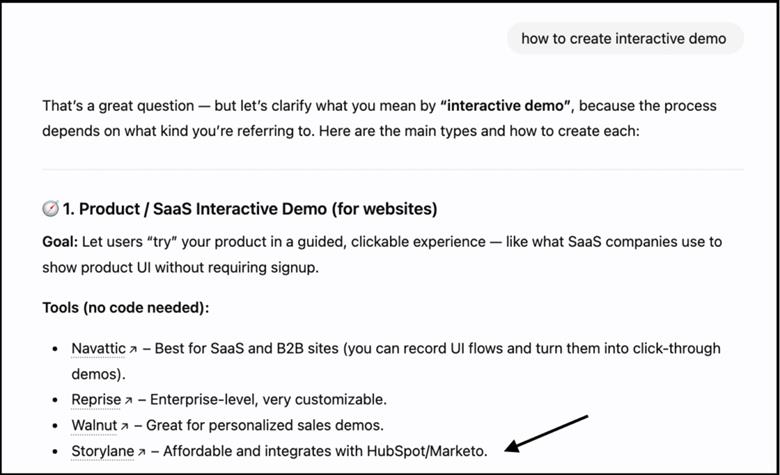
That’s because LLMs rely on linked, semantically rich content to understand context and credibility.
Contextual backlinks are a high-impact, low-risk strategy every growth-stage SaaS should prioritize when scaling link acquisition.
3. Broken link building
Broken link building is finding dead links on relevant websites and offering your content as a replacement.
Here is the process:
- Use tools like Ahrefs Site Explorer or Semrush to find broken links on sites in your niche.
- Create (or identify existing) content that would serve as a suitable replacement.
- Reach out to the site owner or editor with a helpful, non-pushy email to use your resource.
This strategy works because you are solving a real problem for the website owner. They want to fix broken links. You want a backlink. It is a genuine win-win.
4. Brand mentions and roundups
A brand mention is any time your SaaS product is referenced by name or linked in another website’s content, while a roundup is a curated list, such as “Best CRM Tools for 2026” or “Top Invoicing Platforms for Startups.”
These pages act as powerful endorsement hubs, signaling to both search engines and AI systems that your product belongs in a trusted category.
For example, a Google search for “best email marketing tools” displays roundup articles from HubSpot, G2, or Zapier, each listing and linking to popular SaaS brands.
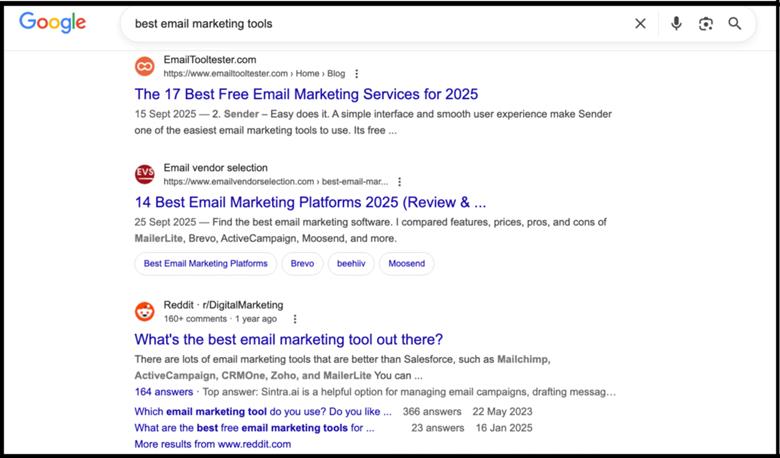
Those same roundup pages are what ChatGPT and Perplexity reference when you ask, “What are the best email marketing tools for small businesses?” — pulling citations directly from those sources.
Earning a place in such roundups can significantly increase both referral traffic and AI exposure.
Along with acquiring new mentions and features, you must monitor the web for organic mentions of your brand that do not include a link, then politely request the link.
For this, you can use tools like:
- Ahrefs Alerts or Google Alerts for brand name monitoring
- Semrush Brand Monitoring for more comprehensive tracking
- Manual search for variations of your company name
This is low-hanging fruit. The site is already mentioning you. They just need a gentle nudge to add the link.
5. Product-led linkable assets
Original data attracts backlinks naturally. So, you should create resources so valuable that people naturally want to link to them.
Some effective content assets for SaaS businesses to earn backlinks include:
- Free tools and calculators, such as a pricing calculator, ROI estimator, or assessment tool
- Comprehensive templates, spreadsheets, checklists, and frameworks your audience needs
- Comparison pages of your software vs. competitors. These rank for high-intent keywords and attract natural links
- Industry data reports and studies
The key is solving a real problem your target audience has. If it is genuinely useful, links follow.
While your SaaS content team creates the assets, a link-building service provider like Tanot Solutions can help amplify the resource’s reach by pitching insights to journalists, SaaS blogs, and resource pages that regularly cite new stats.
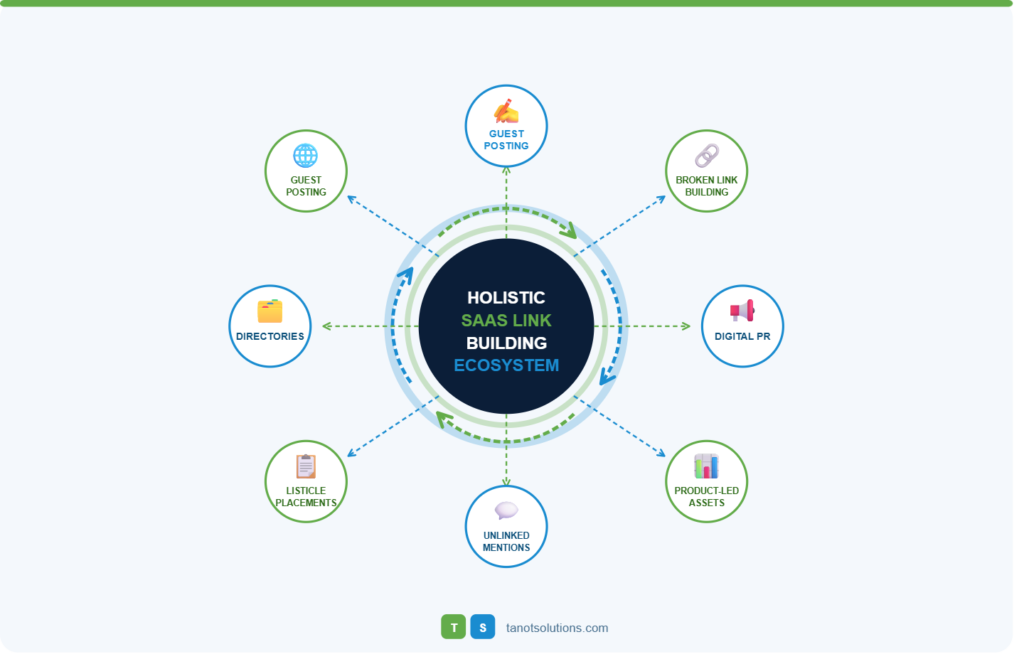
Basically, the agency can take care of Steps 3-5 in the graphic below for you, while you focus on researching and creating valuable assets.
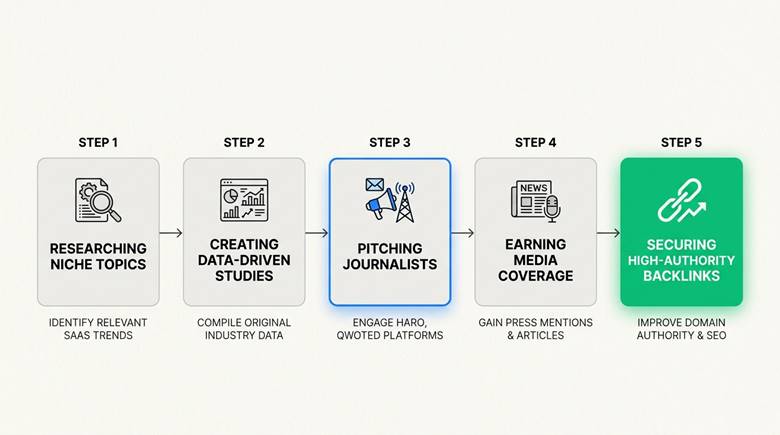
A skilled link-building agency ensures your data gets found, referenced, and cited, earning contextual backlinks that boost both Google rankings and LLM visibility.
6. SaaS directories and product review sites
Software directories are link-building gold for SaaS companies. They are relevant, authoritative, and drive actual buyers.
Trusted platforms include:
| Platform | Primary Value | Link Type |
| G2 | 3.3M+ reviews, high domain authority | Profile + review links |
| Capterra | 2.5M+ verified reviews, 50M+ yearly users | Category listing links |
| Product Hunt | 800K newsletter subscribers, high domain rating, helps secure funding for top tools | Profile links |
| TrustRadius | In-depth reviews, B2B focused | Vendor profile links |
| Industry-specific communities | Niche relevance | Contextual links |
Listing your SaaS product on these trusted platforms gives you authoritative backlinks and visibility where AI models often source their data. When someone asks ChatGPT or Perplexity for “the best tools in your category,” these summaries frequently reference directory content and verified reviews.
Claim your profiles, optimize your listings, and encourage satisfied customers to leave detailed reviews.
Go beyond listings – engage with niche communities like GrowthHackers or Indie Hackers to earn organic mentions and backlinks. Together, these platforms strengthen your brand’s credibility and visibility in both Google rankings and AI-generated recommendations.
7. CEO podcast interviews and founder stories
Founder-led storytelling is one of the most powerful and underrated link-building opportunities for SaaS brands. When your CEO or founder shares insights through interviews, podcasts, or guest features, you earn quality backlinks as well as build authorship equity that both Google and AI systems recognize as authority.
LLMs look for consistent associations between a founder’s name, brand, and topic expertise. The more these appear across trusted sources, the more likely your company is to surface in AI-driven summaries and recommendation lists.
Here’s an example of a SaaS founder doing a podcast on the SaaStr channel.
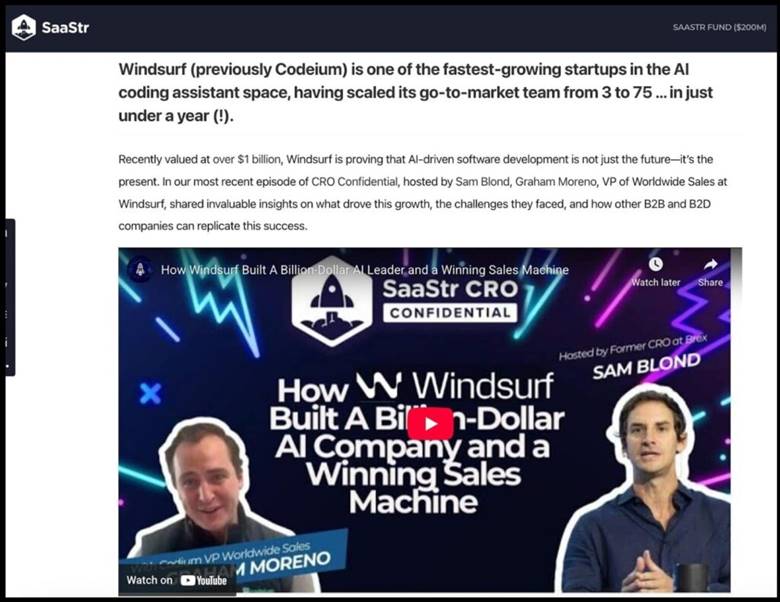
Encourage your leadership team to participate in interviews or write opinion pieces.
Podcasts and webinars do more than brand awareness; they’re powerful link-building and AI visibility channels. As transcripts are now indexed across the web, Google and AI systems crawl and process this text when generating recommendations.
For example, when Zapier’s team discusses automation trends on a marketing podcast, those episodes often include backlinks in the show notes, guest bios, and transcripts.
Over time, those mentions help both Google and LLMs associate the brand with specific topics like “workflow automation.”
If you’re a growing SaaS brand, aim to guest on niche podcasts within your vertical — or host your own expert sessions. Share the transcripts on your website, link to relevant pages, and repurpose highlights into guest content.
8. HARO and journalist requests
Journalist outreach platforms like HARO (Help a Reporter Out), Qwoted, or SourceBottle are goldmines for earning authoritative backlinks and credibility that LLMs recognize.
Reporters from publications such as TechCrunch, VentureBeat, or Business Insider regularly seek expert insights on SaaS, AI, and marketing technology. By contributing thoughtful, data-backed quotes, your brand earns both editorial backlinks and topical authority.
For instance, Tanot Solutions was recently featured in a GoDaddy article on measuring SEO success through expert contributions, a placement earned through proactive outreach and timely responses.
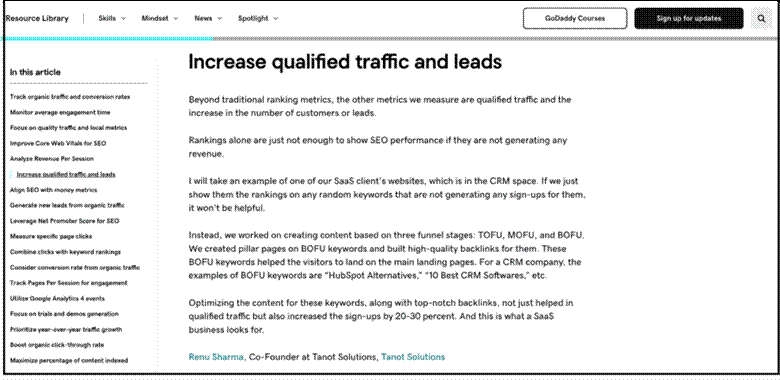
These placements don’t just raise your domain rating (DR); they feed data to AI systems that often cite such sources in Overviews and summaries.
To make this work:
- Monitor platforms like HARO or Qwoted daily.
- Respond to queries relevant to your niche (SaaS, AI, or SEO).
- Offer genuine insights backed by experience, not sales pitches.
9. Reddit and Quora engagement
Platforms like Reddit and Quora are now part of the AI discovery layer.
A recent Semrush study found that over 40% of AI-model citations (across 150,000 citations for 5,000 keywords) came from Reddit discussions, showing how frequently these forums feed into AI-generated responses.
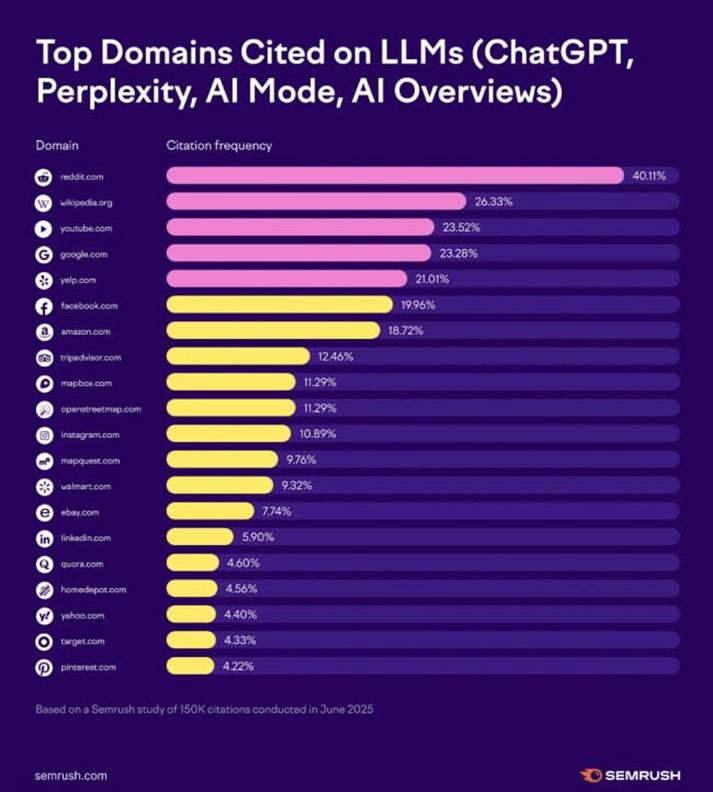
That means your participation on these platforms can directly influence how and where your SaaS brand appears in tools like ChatGPT and Perplexity.
The key is to contribute genuinely: answer questions your target audience is already asking, share actionable insights, and mention your product naturally where relevant.
For example, when I searched for the best invoicing software for freelancers, you could see the detailed discussion on Reddit threads. It features detailed, experience-based recommendations from users discussing pros, cons, and pricing.
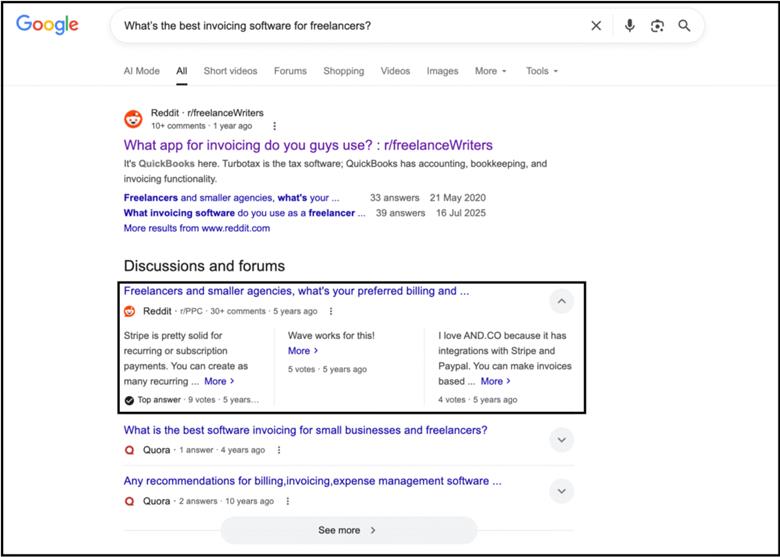
You can do the same and share thoughtful, relevant responses describing your solution’s features and link to a case study or free trial.
These thoughtful, contextual contributions signal credibility and help your brand surface in future AI summaries and trusted online conversations alike.
10. Image credits and visual mentions
Your visuals can work harder for you. Every infographic, chart, or screenshot is a chance to earn backlinks if it’s properly optimized. Use descriptive filenames and alt text (e.g., “saas-customer-acquisition-funnel-tanot-solutions.png”) so both Google and AI systems understand what the image represents and who created it.
When your visuals are reused by blogs or appear in AI Overviews and Perplexity summaries, they often include source attributions that link back to your site. A single infographic on “SaaS Growth Benchmarks” can generate multiple citations over time.
Host visuals on a dedicated resources page and share them on platforms like LinkedIn or Reddit, turning every image credit into a small but lasting signal of authority.
11. Partner content and integrations
Co-marketing with complementary tools is one of the most underused yet powerful link-building tactics in the AI era. When two SaaS brands collaborate, say a CRM tool and an analytics platform, they exchange backlinks and build a shared semantic network of mentions across multiple sources.
These reciprocal signals tell Google and AI systems that your product is connected to a broader ecosystem, a key factor in how LLMs determine credibility and relevance.
To maximize results, focus on quality collaborations: partner with tools that share similar audiences but offer non-competing features, use structured data in joint content, and ensure both brands link back consistently.
Link quality vs. quantity: What actually moves the needle
Industry benchmarks suggest quality placements range from $250 to $500 per link. Anything cheaper carries a real risk of penalties or zero SEO value.
Here is what to look for when building links for your SaaS company:
| Quality Signal | Why It Matters |
| Relevance | A DR 40 site in your niche outperforms a DR 70 off-topic site |
| Real traffic | Sites with genuine organic traffic pass more authority |
| Editorial standards | Publications with real editorial processes signal quality to Google |
| Natural placement | Links in contextually relevant content, not author bios or footers |
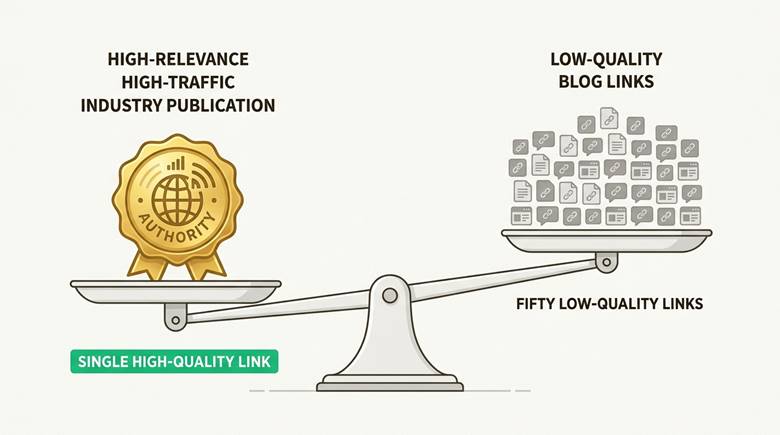
One link from TechCrunch, Forbes, or a major industry publication is worth more than fifty links from random blogs.
Red flags to avoid during link building:
- Guaranteed link volumes (quality cannot be guaranteed at scale)
- Private blog networks (PBNs)
- Sites with no organic traffic
- Links that are clearly paid but not marked as sponsored
At Tanot Solutions, we guarantee personalized manual outreach to websites that will drive targeted traffic and leads to your SaaS product. Moreover, each link placement and website id approved by you before the link goes live.
We also offer a link replacement guarantee in case a link goes down within one year.
Hire Us for Contextual High-Authority Links
Measuring SaaS link-building ROI
Link building is a long-term strategy. Here is the realistic timeline:
| Milestone | Realistic Timeline |
| First 10-20 links live | 1-2 months |
| Ranking movement | 3-6 months |
| Meaningful traffic increase | 6-12 months |
| Customer acquisition cost (CAC) reduction | 12+ months |
To measure the performance of SaaS link-building campaigns, you must track metrics such as:
- Keyword rankings for your target terms
- Referring domains growth (quality over quantity)
- Referral traffic from new links
- Demo requests and SQLs attributed to organic search
- CAC reduction as organic becomes a larger channel
SaaS companies we work with at Tanot Solutions typically see an 80-100% increase in traffic, 10-35K new keywords ranking on page 1, and a 20-30% reduction in blended CAC over a period of 14-18 months, when pairing strategic link building with quality content.
Read our case studies to learn more about the kind of results our SaaS link-building services drive.
Building SaaS backlinks in-house vs. hiring an agency
When does DIY make sense? When should you hire?
Build your SaaS backlinks in-house if:
- You are at an early stage with a limited budget.
- You have someone with dedicated time for outreach
- Your niche is small enough for manual prospecting
Hire a link-building agency if:
- You are in a competitive niche (most SaaS categories).
- You need to scale beyond what one person can manage.
- Your internal team lacks link-building expertise.
Red flags when evaluating agencies:
- Guaranteed link volumes
- No transparency about where links come from
- Emphasis on domain authority over relevance
- No site approval process
What to look for in a SaaS link-building agency:
- SaaS niche experience (as the industry is unique)
- Transparent processes and reporting
- Site approval before placement
- Pay-per-performance models
At Tanot Solutions, we have built our model around what we wished existed when we were on the client side:
- Site approval before placement
- Pay-per-live-link pricing model
- No hidden costs
You only pay for links that are actually delivered, and you also get a link replacement guarantee if any link goes down within six months.
Best SaaS link-building services in 2026
Here are the top three SaaS link-building agencies to consider:
1. Tanot Solutions
Tanot Solutions is popular for strategy-led link building for B2B SaaS SEO. They take a consultative approach, combining keyword strategy, authority mapping, and transparent reporting to ensure every link drives measurable growth.
With a vetted publisher network across marketing, technology, and startup ecosystems, Tanot Solutions helps SaaS brands earn placements that build long-term authority and not vanity metrics.
They are trusted by 150+ brands and have helped businesses achieve 5x SEO results.
2. uSERP
uSERP focuses on digital public relations (PR) placements that increase brand mentions in AI-powered search results.
Their team leverages relationships with high-authority publishers to help SaaS brands earn links from top-tier tech and marketing sites, driving both traffic and trust signals that AI models recognize.
3. LinkDoctor.io
LinkDoctor is known for content-driven outreach and contextual link placements for SaaS businesses.
They specialize in helping mid-market SaaS and B2B tech companies build relevance through niche publications and resource pages that naturally attract backlinks and AI citations over time.
Start building authority that drives SaaS revenue
Link building for SaaS is about building real digital authority through genuine value and strategic relationships.
The SaaS link-building strategies that work in 2026 are the same ones that have always worked: Create valuable resources, build real relationships, and earn links that make sense for your audience.
If you are ready to build links that actually drive rankings and revenue, connect with our link-building experts. We will show you exactly where your competitors are getting their links from and how to close the gap to outrank them on Google and AI Overviews.