
If you work in SEO, chances are you’ve used, or at least considered, both Ahrefs and Majestic.
At Tanot Solutions, I’ve used both tools extensively to run full-fledged link building campaigns for clients.
One thing that became clear over time is that the biggest difference lies not in their backlink databases, but in how you use that data once you have it.
Majestic is built around backlink intelligence, with metrics such as Trust Flow, Citation Flow, and Topical Trust Flow at the center of the platform. Ahrefs has taken a broader approach, combining backlink analysis with keyword research, competitor research, rank tracking, site auditing, and more.
So, which one should you actually pay for?
| Quick verdict: If you’re buying one tool for SEO, I’d choose Ahrefs. If backlink intelligence is your primary focus, Majestic is still worth considering. |
Ahrefs vs. Majestic: At a Glance
| Ahrefs | Majestic | |
| Primary focus | Full SEO platform | Backlink intelligence |
| Backlink analysis | Strong | Strong |
| Keyword research | Yes | Limited |
| Competitor research | Broad SEO data | Primarily link-focused |
| Rank tracking | Yes | Yes, via Google Search Console on Pro |
| Technical SEO | Site Audit | Not a core focus |
| Link metrics | Domain Rating (DR) | Trust Flow, Citation Flow |
| Historical link data | Yes | Yes |
| Best suited for | SEO teams, agencies, businesses | Link-focused SEOs |
Ahrefs vs. Majestic: DR, Trust Flow, and Citation Flow
If you’re comparing backlink prospects, you’ll encounter different link building metrics depending on the platform.
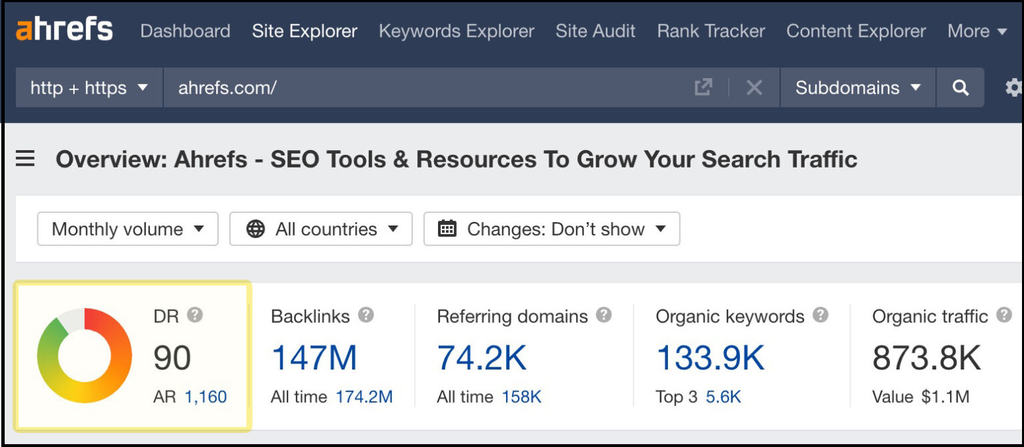
Ahrefs uses Domain Rating (DR) to represent the strength of a website’s backlink profile.
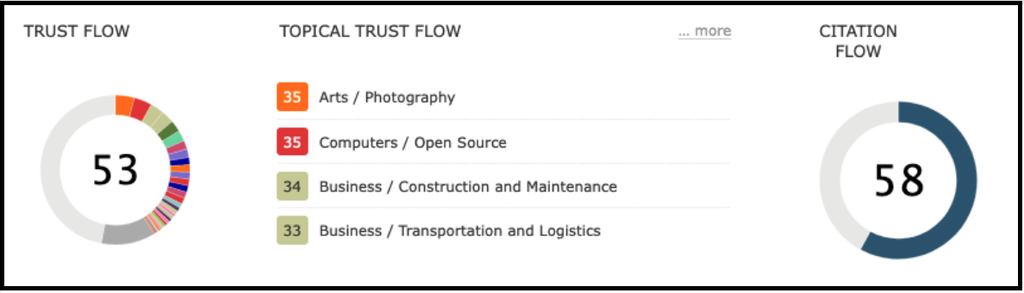
Majestic uses Trust Flow and Citation Flow. Trust Flow is intended to reflect the quality of links pointing to a site, while Citation Flow focuses more on the quantity or influence of those links. Majestic recommends considering the two together rather than treating either as a standalone measure.
So, is DR better than Trust Flow?
They’re proprietary metrics built differently, so they’re not directly interchangeable.
For link building, I’d use these metrics as screening signals, then validate the actual opportunity using relevance, traffic, link context, and the quality of the site’s overall profile.
Ahrefs vs. Majestic: Site Explorer
Both Ahrefs and Majestic have Site Explorer tools, but they approach backlink research differently.
Ahrefs’ Site Explorer gives you a broader view of a website’s SEO performance. You can move between backlink profiles, organic keywords, top pages, competitors, and traffic data, with filters that let you drill into specific opportunities.
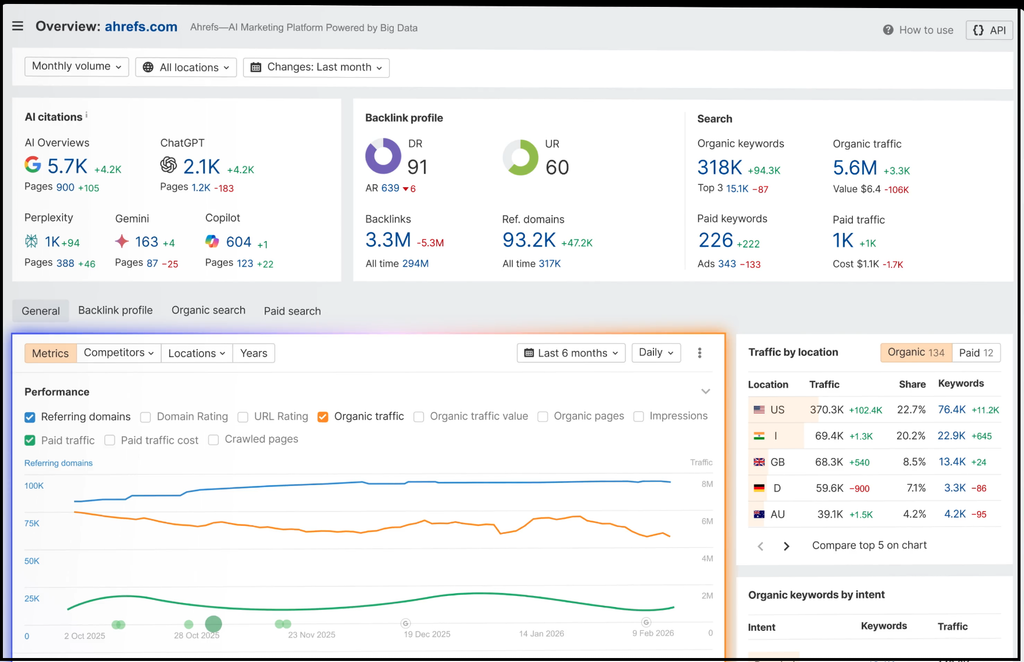
This makes it easy to go from “Who is linking to this site?” to “Which pages are attracting those links?” and “Are those pages actually bringing in organic traffic?”
Majestic’s Site Explorer is more focused on backlink intelligence. It gives you detailed information around a site’s link profile, including Trust Flow, Citation Flow, Topical Trust Flow, Link Context, and Link Graph.
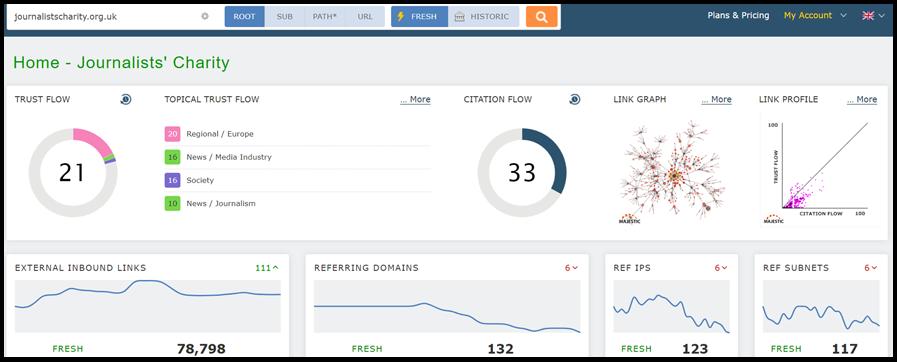
That level of link specific data can be useful when your primary goal is evaluating backlink quality, relevance, and context. But if you want to connect backlink data with keywords, organic traffic, competitor performance, and content opportunities, Ahrefs gives you more to work with in the same interface.
While I like Ahrefs’ Site Explorer for its broader SEO research capabilities, link specialists who understand the depth of Majestic’s proprietary metrics may also find its Site Explorer valuable.
Ahrefs vs. Majestic: Backlink Analysis
Both tools offer detailed backlink analysis, but their backlink indexes and the way they surface that data are worth considering.
Ahrefs has a large backlink database and offers numerous filters to analyze backlinks, including referring domains, backlink types, anchor text, new and lost links, and the pages attracting the most links.
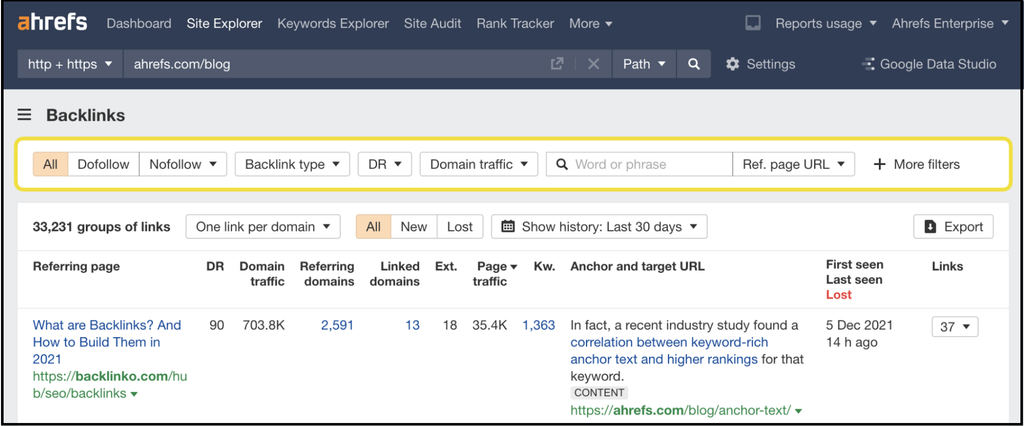
This data also connects with organic traffic and keyword rankings, making it easier to understand which links are actually contributing to a competitor’s SEO performance.
That said, Majestic is also built around a large, specialized backlink index, with Fresh and Historic indexes for analyzing more recent and historical link data. This is useful when you’re investigating how a competitor’s link profile has evolved, including older links that may no longer be active.
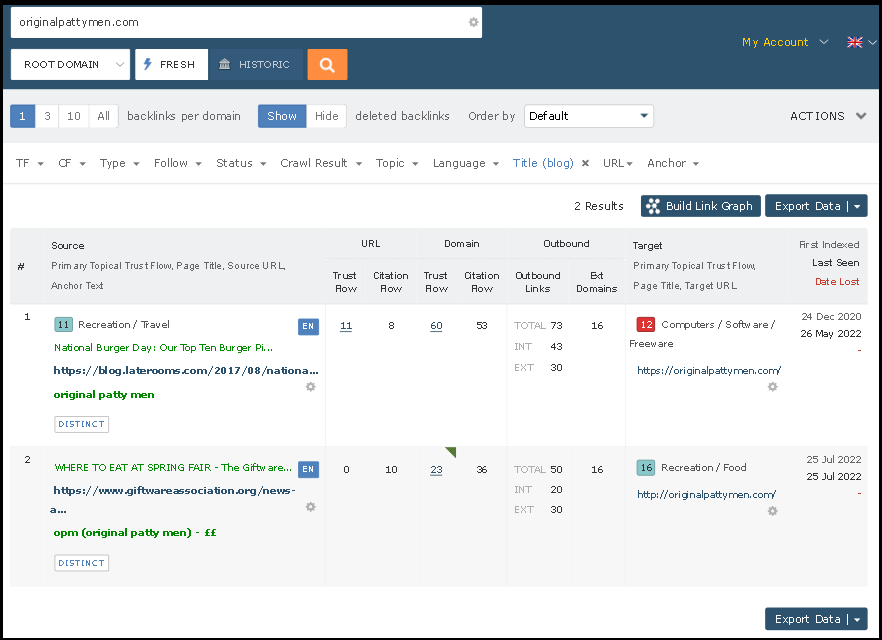
Ahrefs also provides historical backlink data, but its advantage is how easily you can combine that data with other SEO signals.
So, Majestic gives you more depth within the backlink dataset itself, while Ahrefs makes it easier to connect backlink changes to broader SEO performance.
Ahrefs vs. Majestic: Competitor Research
This is where the gap becomes more noticeable.
Let’s say a competitor is outranking you. Knowing who links to them is useful, but it’s only part of the story. You also want to know:
- What keywords are they ranking for?
- Which pages bring them organic traffic?
- Which pages have earned the most links?
- What topics are they covering that you aren’t?
- Which domains link to them but not to you?
Ahrefs lets you investigate these questions within the same ecosystem.
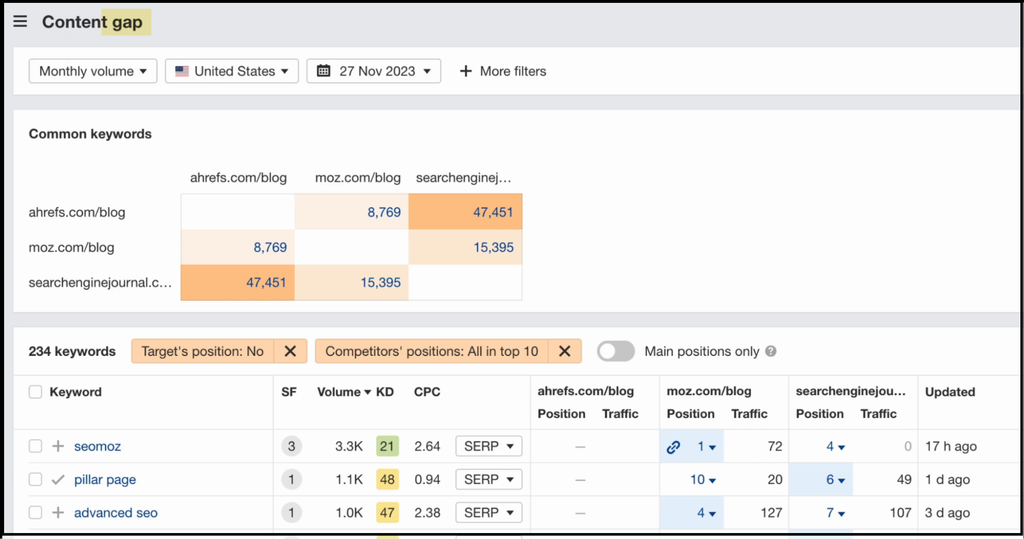
Majestic is still useful if your competitor research is primarily about how competitors have built authority through links. Its link graph, topical data, referring domains, and historical information can help you reverse-engineer a competitor’s backlink profile.
But if you’re trying to answer the bigger question: “Why is this competitor beating me, and what should I do about it?” then Ahrefs gives you more context.
Ahrefs vs. Majestic: Keyword Research and Technical SEO
Ahrefs’ Keywords Explorer supports keyword discovery, search volume, traffic potential, keyword difficulty, SERP analysis, search intent, and competitor keyword research.
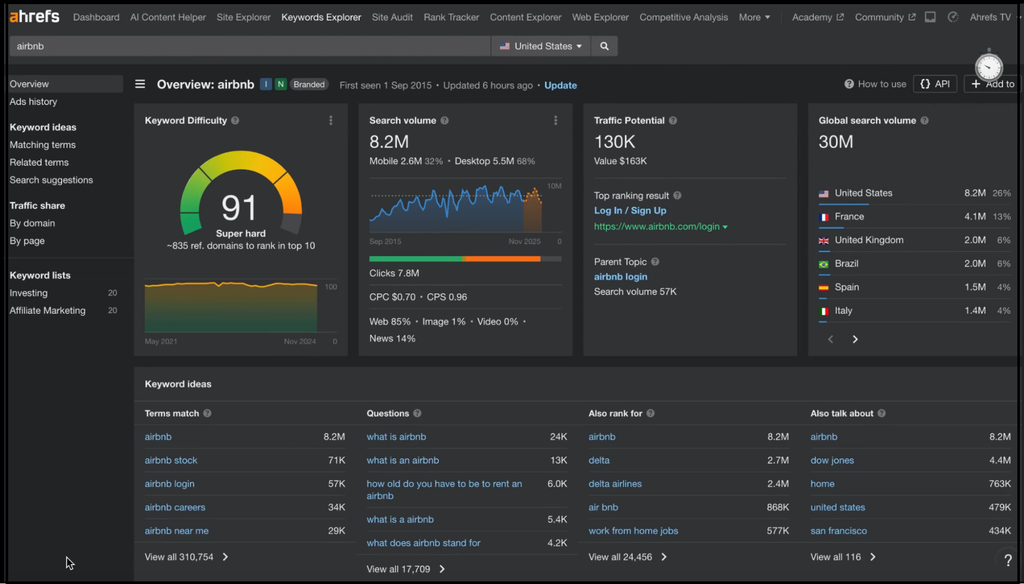
It Rank Tracker lets you monitor keyword positions over time, while Site Audit identifies technical issues such as broken links, crawlability problems, and other on-page SEO issues.
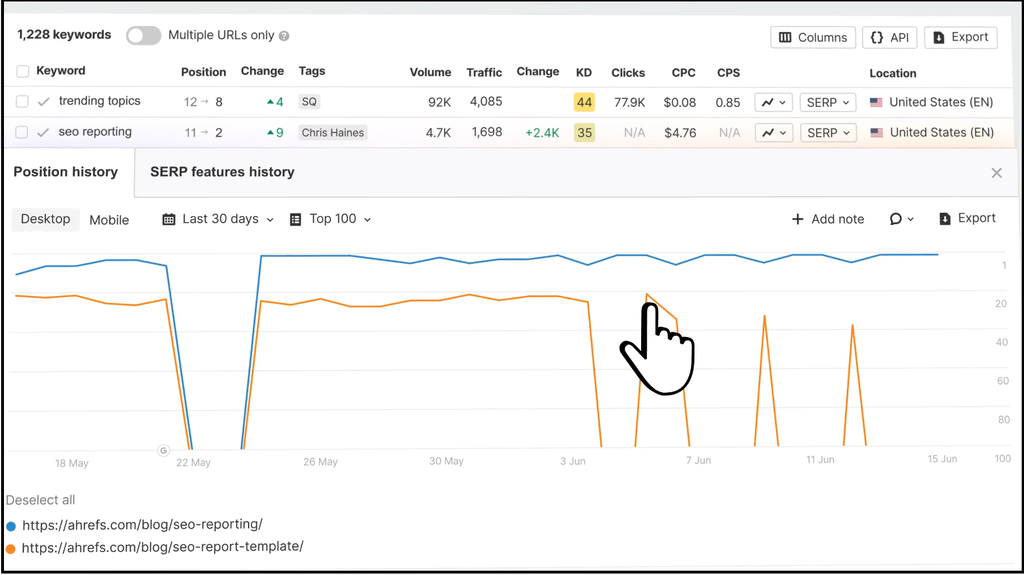
Majestic, on the other hand, offers some keyword and ranking data, but it doesn’t provide the same depth of keyword research or technical SEO functionality.
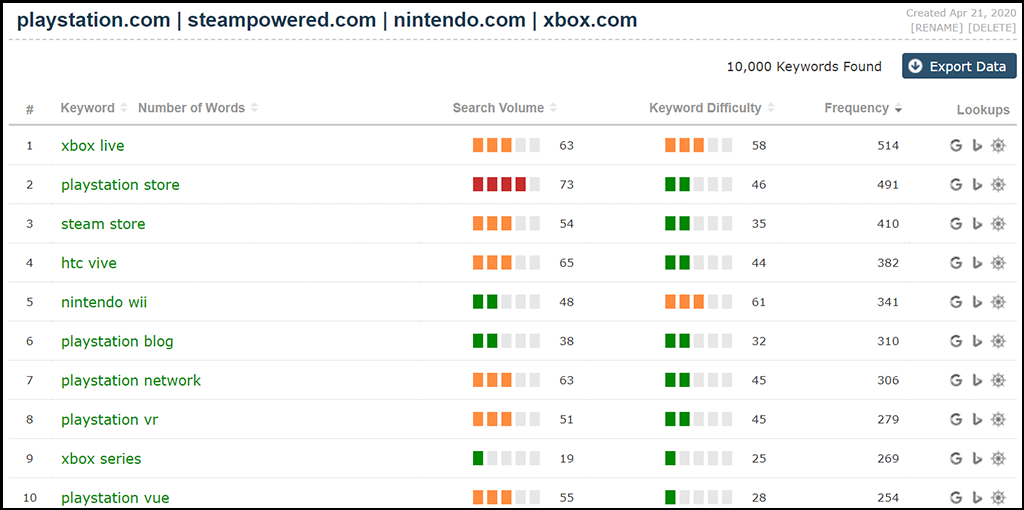
For example, you can get search volume data, but you don’t get the same search-intent analysis available in Ahrefs. Its core strength remains backlink intelligence.
If you already use separate tools for these functions, that may not matter. But if you’re looking for one primary SEO platform, the difference becomes much more important.
Ahrefs vs. Majestic: Which Interface Is Easier to Use?
This is subjective, but after using both, I find Ahrefs easier for day-to-day SEO work.
Majestic’s interface makes sense once you’re deep into backlink analysis. You get a lot of link specific information, and experienced users can pull plenty of useful insights from it.
The trade-off is that it can feel more specialized.
Ahrefs is easier to navigate when your workflow jumps between different tasks. You can start with a competitor, investigate its keywords, open its top pages, inspect its backlinks, compare link gaps, and then move into a site audit.
That breadth is also its potential downside. With so many reports, filters, and data points available, Ahrefs can feel overwhelming when you’re still getting familiar with the platform. Majestic’s narrower focus can make it easier to stay focused if backlink analysis is all you need.
A tool can have excellent data and still slow you down if you have to hunt for the report you need or switch platforms every time your research question changes.
For me, Ahrefs wins on workflow and usability, particularly when you’re using it across multiple areas of SEO.
Ahrefs vs. Majestic Pricing: What Are You Actually Paying For?
Ahrefs has a free plan, but it gives you limited access to Site Explorer and Site Audit, including up to 1,000 backlinks or keywords at once and 5,000 crawl credits per verified project each month. You can’t use the free plan for full competitor research across unverified sites.
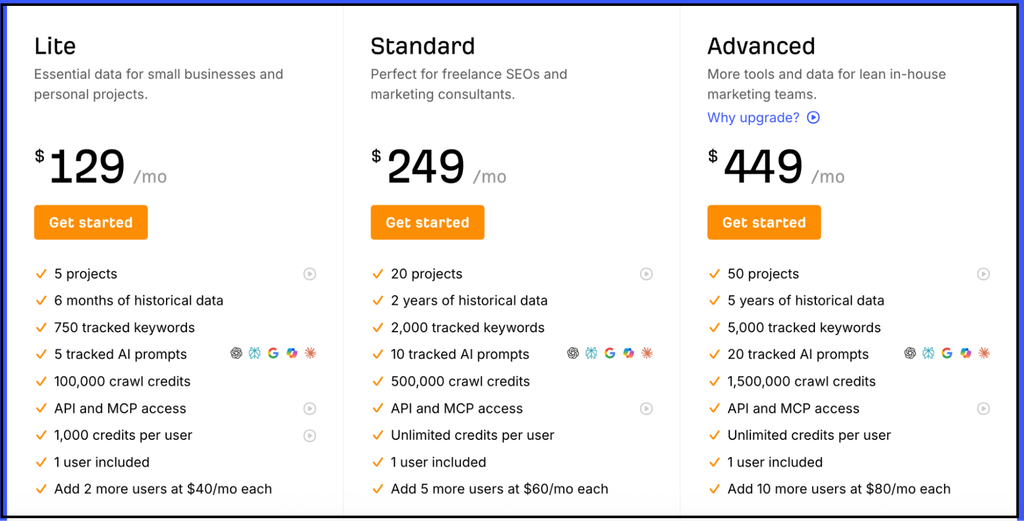
Its Starter plan, which costs $29 per month, opens up Competitor Research, Keywords Explorer, Rank Tracker, and more Site Explorer functionality. The premium paid plans start at $129 per month for Lite, $249 for Standard, and $449 for Advanced, with higher limits, more historical data, exports, and additional features as you move up.
Majestic also offers a free account, but it provides only limited access to the platform, including Site Explorer, the Majestic Million, and browser plugins.
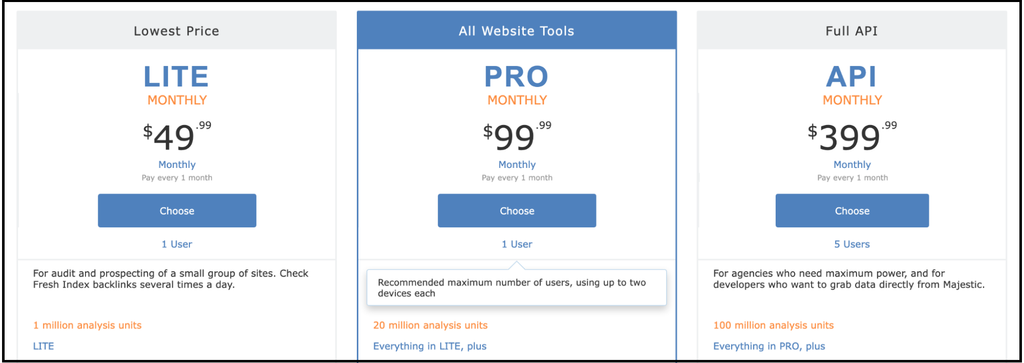
Its paid Lite plan starts at $49.99 per month, giving you Fresh Index, Site Explorer, Trust Flow, Topical Trust Flow, Link Context, Link Graph, and other backlink-focused tools. Pro costs $99.99 per month and adds the Historic Index, comparison tools, backlink history, Clique Hunter, Search Explorer, and Rank Tracker through Google Search Console.
Majestic may look more affordable than Ahrefs, but you’re paying for a more specialized backlink intelligence platform. Ahrefs costs more, but you’re also getting keyword research, competitor analysis, rank tracking, technical SEO, and backlink analysis in one platform. Whether that premium is worth paying depends on how much of that functionality you actually need.
For smaller brands with a limited SEO budget, the higher cost may not make sense if they’re only using a fraction of Ahrefs’ capabilities. In that case, it’s worth comparing Ahrefs with other all-in-one SEO tools before committing.
Which One Should You Choose: Ahrefs or Majestic?
Choose Majestic if: You spend a significant part of your day qualifying backlink prospects, auditing link profiles, or investigating how a domain has built its authority over time. Its combination of Trust Flow, Citation Flow, Topical Trust Flow, Link Context, and historical data gives link specialists more ways to interrogate a backlink profile before deciding whether a domain is worth pursuing.
Choose Ahrefs if: Your SEO decisions rarely stop at backlinks. If you’re moving from keyword research to competitor analysis, content opportunities, backlink gaps, and technical issues throughout the same campaign, having those datasets connected saves you from stitching together insights across different platforms.
Use both if: You run link building campaigns where prospecting and vetting require a deeper backlink view than your primary SEO platform provides. You can use Ahrefs to identify competitors, pages, and potential link opportunities, then bring promising domains into Majestic when you want another layer of link quality and historical analysis.
At Tanot Solutions, you don’t have to worry about digging through backlink profiles, vetting prospects, or figuring out which links are actually worth pursuing. We handle the research and analysis for you, then build a link building strategy around your broader SEO goals. Contact us today to get started.