
Backlinks still matter. But in 2026, not all backlinks help your rankings.
Some links strengthen your authority and help you compete in crowded search results. Others quietly do the opposite. They create an unnatural backlink profile, waste your SEO budget, and in more serious cases, contribute to ranking drops or even Google penalties.
This is why many businesses feel frustrated after investing in link building. They may have hundreds of backlinks, but very little growth to show for it.
At Tanot Solutions, we see this often: companies have been sold “high-DR” links in bulk, only to discover that those links came from irrelevant sites, private blog networks, or spammy directories.
In this guide, we will look at the 10 most common types of bad backlinks, why they hurt rankings, and how to avoid them.
What Are Bad Backlinks?
Bad backlinks are links that appear manipulative, irrelevant, spammy, or unnatural. Search engines don’t judge backlinks in isolation anymore. They look at the bigger picture:
- Is the linking site relevant to your industry?
- Does the link make sense in the content?
- Does the website have real traffic and editorial standards?
- Does the overall backlink profile look natural?
That is why there is an important difference between a low-quality link and a bad link.
For example, imagine a random scraper site republishes one of your blog posts and links back to you. That backlink probably has no value, but it is unlikely to hurt you either. It is simply noise.
Now imagine your website suddenly gains 50 links from unrelated sites, all using the same keyword-rich anchor text, and all clearly placed because someone paid for them. That pattern looks manipulative. It can signal an attempt to game rankings.
In other words, a single weak link is rarely the problem. A pattern of spammy link building practices is.
How Bad Backlinks Can Damage Rankings and Trust
Search engines have become much better at spotting unnatural links.
In the past, websites could improve rankings by building hundreds of low-quality backlinks. Today, Google largely ignores weak links and is far stricter about manipulative link building.
Google’s spam policy specifically targets tactics such as private blog networks, paid links without disclosure, large-scale link exchanges, and other link farming schemes. If your backlink profile contains too many of these signals, Google may ignore those links or reduce the visibility of the pages benefiting from them.
This also affects AI visibility. AI Overviews and answer engines increasingly rely on trust and authority signals. A backlink profile filled with spammy links makes your site less likely to be treated as a credible source.
A few weak links are unlikely to hurt you, but a strategy built on shortcuts often will.
10 Types of Toxic Backlinks to Watch For
Let’s look at different types of bad backlinks that can hurt your site’s credibility.
1. Links from private blog networks (PBNs)
Private Blog Networks, or PBNs, are groups of websites created primarily to link to other sites and manipulate rankings.
On the surface, these websites can look legitimate. They may even show respectable authority metrics. But once you look closer, the signs are usually obvious:
- Thin or generic content
- Little to no real traffic
- Similar website designs or ownership details
- Articles stuffed with unnatural outbound links
For example, a software company may buy links from five different “business blogs,” only to discover that the same network owns all five sites.
Google has spent years targeting PBN links because they exist only to pass link equity artificially. If a backlink opportunity seems suspiciously easy or too good to be true, it probably is.
2. Paid links without disclosure
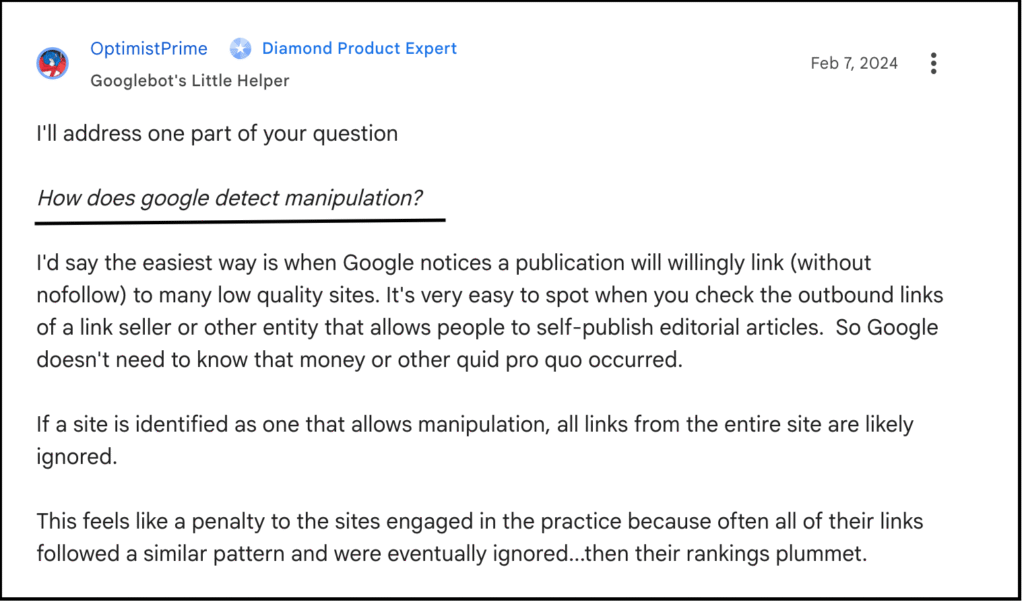
On Google’s discussion forum
Paying for placement is not automatically a problem. The problem comes when paid links are disguised as organic editorial links.
Google expects paid placements to use attributes such as rel=”sponsored” or rel=”nofollow”. When a site sells dofollow links purely to manipulate rankings, it becomes a link scheme.
Plenty of brands work with publishers, partners, and industry websites. The difference is transparency.
If a link exists because money changed hands, it should be disclosed.
3. Links from irrelevant websites
Relevance matters far more than raw authority.
A contextual mention from a highly relevant industry website is often more valuable than one from a bigger but unrelated site.
Imagine a law firm building dozens of backlinks from pet blogs, travel sites, and recipe websites. Even if those websites have strong authority metrics, the links make no contextual sense.
Search engines, including AI-powered systems, increasingly evaluate whether a link belongs naturally within a topic.
A relevant link profile for a law firm might include links from:
- Legal publications
- Law firm directories
- Business websites
- Bar association resources
Not pet blogs.
This is why chasing DR alone is risky. A high DR score does not automatically make a backlink useful.
4. Spammy directory links
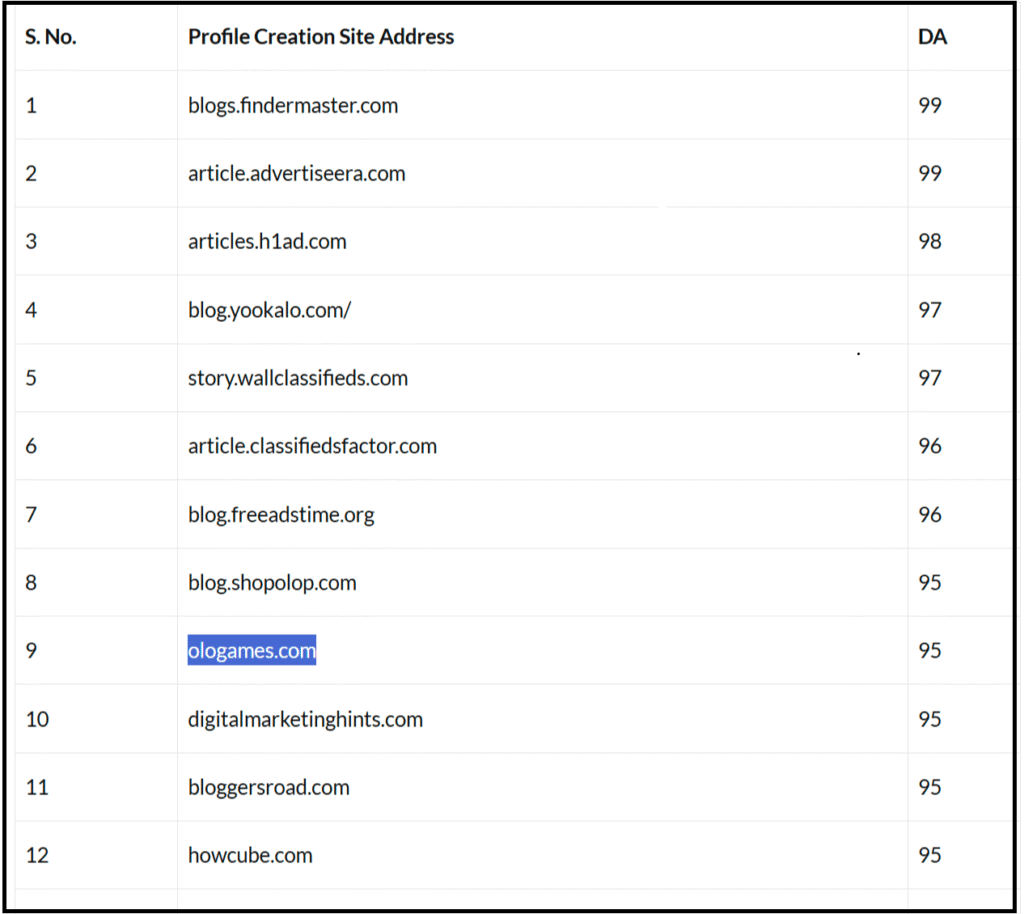
List of spammy directories with high DAs, but can be harmful to your SEO equity
There is nothing wrong with legitimate business directories.
Listings on respected directories, industry associations, local chambers of commerce, or review platforms can still be valuable.
The problem is low-quality directories created only for backlinks.
These websites usually contain:
- Thousands of unrelated businesses
- No editorial standards
- Thin category pages
- No real users or traffic
Years ago, many SEO agencies submitted websites to hundreds of directories because it was cheap and easy. Today, those links add little value and can make your backlink profile look outdated or manipulative.
If the directory exists only for SEO, avoid it.
5. Forum profile and comment spam backlinks
Forum profile links and blog comment spam are some of the oldest link building tactics on the internet.
You have probably seen them before. Here’s what it looks like:

These links are rarely helpful because they are not editorial. They are inserted purely for SEO.
A few natural mentions in relevant communities are fine. For example, if someone genuinely recommends your business in an industry forum, that can be useful.
The problem begins when links are dropped at scale across dozens of forums, comment sections, and user profiles.
That pattern looks manipulative very quickly.
6. Misleading or over-optimized anchor text
Anchor text tells search engines what the linked page is about. But when anchor text becomes too aggressive, it can create problems.
Google explains this with an example.

That does not look natural.
Besides, misleading or over-optimized anchor text becomes especially risky when it appears repeatedly across multiple websites.
A natural link profile might include variations of the topic. Not the exact same keyword every time.
7. Sitewide footer or sidebar links
Sitewide links appear across every page of another website, often in the footer or sidebar.
For example, a web design agency might place “SEO partner” links in the footer of every client website they build. That can instantly create hundreds of backlinks from a single domain.
The issue is not always the link itself. It is the scale and pattern.
One contextual partnership link may be fine. Hundreds of identical sitewide links often look unnatural.
If you have sitewide links pointing to your website, it is usually safer to:
- Limit them
- Make them branded rather than keyword-rich
- Use nofollow where appropriate
8. Links from hacked or compromised websites
Some of the worst backlinks come from hacked websites. This is the result of a negative SEO attack.
Someone injects hidden links into an unrelated website without the owner even knowing. These links often appear on:
- Old blog posts
- Hidden pages
- Website footers
- Spammy redirects
These links are clearly manipulative and often associated with wider spam networks.
A website owner reported a significant ranking drop after their site was targeted with a sudden surge of toxic backlinks.
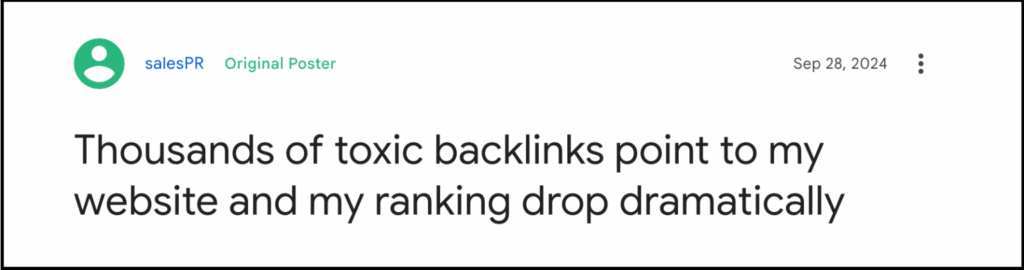
If you discover links from hacked websites, they should usually be removed or disavowed immediately.
9. AI-generated spam content with embedded links
AI has made it easier than ever to produce content at scale. Unfortunately, it has also made it easier to create low-quality link farms.
Many websites now publish hundreds of AI-generated articles with little editing, no real audience, and no purpose beyond inserting backlinks.
Google has become much stricter about scaled content abuse. A backlink from a low-quality AI content farm may not help your rankings at all. In some cases, too many of these links can become a negative signal.
The problem is not AI itself. The problem is low-quality, mass-produced content created purely for SEO manipulation.
10. Link exchanges at scale
There is nothing wrong with natural partnerships. If two businesses genuinely collaborate and reference each other where relevant, that is perfectly reasonable.
The issue comes when reciprocal linking becomes a system. For example:
“You link to me, I will link to you.”
One or two natural exchanges are not unusual. But when a website repeatedly swaps links with dozens of other sites, the pattern becomes obvious.
Large-scale link exchanges often leave footprints:
- Repeated reciprocal links
- Similar anchor text
- No genuine editorial reason for the link
Search engines are good at spotting these patterns. If the only reason a link exists is because of a trade, it is probably not the kind of link you want.
How to Identify Bad Backlinks Before They Become a Problem
The best way to avoid toxic backlinks is to review your profile regularly. You do not need to obsess over every weak link. Instead, look for patterns.
Ask yourself:
- Is the linking website relevant to my industry?
- Does the site have real traffic?
- Does the link make sense in context?
- Are too many links using the same anchor text?
- Are multiple links coming from similar-looking websites?
You can review this using backlink monitoring tools such as Google Search Console, Ahrefs, and Semrush.
If you notice a pattern of suspicious links, investigate before it grows.
Should You Remove or Disavow Bad Backlinks?
Not every bad backlink needs action. If a random scraper site or weak directory links to you once, you can usually ignore it. Google is generally good at discounting isolated low-quality links.
You should consider removal or disavowal when:
- The links are clearly manipulative
- They come from hacked, spammy, or irrelevant websites
- They appear in large numbers
- You suspect they may be affecting rankings
Google’s disavow tool should be used carefully. It is designed for situations where you can’t get harmful links removed manually.
Many businesses make the mistake of disavowing too aggressively. They end up removing links that were harmless or even helpful.
The goal is not to create a “perfect” backlink profile. It is to remove clear risks.
Avoid Bad Backlinks in the Future with Tanot Solutions
Cleaning up bad links is frustrating. Preventing them is much easier. The safest long-term strategy is to focus on quality over quantity. That means building backlinks from websites that have real traffic, strong topical relevance, and genuine editorial standards.
That also means avoiding agencies that promise hundreds of backlinks in a few weeks. Those links often come from the exact tactics we covered above: PBNs, irrelevant websites, spammy directories, and low-quality placements designed to inflate numbers rather than improve rankings.
Instead, review every placement before it goes live. Ask where the link will appear, what website it will come from, and why that site is relevant to your business.
That is also why an approval-first process matters. At Tanot Solution, we ensure every backlink is reviewed for quality, traffic, and relevance before publication.
This helps you avoid risky link building practices while creating a backlink profile that supports stronger rankings, greater trust, and better visibility in both search and AI-driven results.
If you want backlinks that strengthen your authority instead of putting your rankings at risk, contact us today.