

Editorial links are among the most valuable backlinks in SEO. Unlike paid or manipulated links, they are placed naturally within editorial content because a publisher believes the referenced source genuinely adds value to their readers.
Both traditional and AI-powered search engines increasingly rely on these kinds of signals to understand which brands deserve authority.
This shift has changed how modern link building works. Instead of chasing large volumes of links, businesses are focusing on earning relevant editorial mentions from credible websites.
At Tanot Solutions, the focus is exactly this: building authority through strategic placements that support long-term SEO growth.
In this article, we’ll cover:
- What editorial links are
- How they differ from paid backlinks
- Practical strategies businesses use to earn them
What Are Editorial Links?
Editorial links are placed naturally by editors, journalists, or content creators within their articles when they reference a source that provides credible supporting information.
In other words, the link is included by the publisher’s choice, not inserted by the brand requesting it.
These links typically appear within the body of an article, guide, or news story where the publisher is –
- Referencing a source
- Citing research or quoting an expert
- Recommending a helpful resource

Why Editorial Links Matter for SEO
Editorial backlinks are valuable because they send strong trust signals to search engines.
They indicate that:
- A trusted website considers your content valuable
- Your brand is being referenced within credible industry discussions
- Your website contributes to authoritative content ecosystems
This is why editorial links are often considered high-quality authority backlinks. They help strengthen:
- Domain authority
- Topical relevance
- Brand credibility
In competitive industries, these signals can make the difference between ranking on page one and remaining buried in search results.
At the same time, they increase the likelihood of your brand being referenced in AI-powered search results and large language model (LLM) answers, which rely on authoritative sources across the web.
These advantages are part of the broader impact backlinks have on SEO. We explain this in more detail in our guide on the benefits of link building.
Editorial Links vs. Paid Backlinks
To understand why editorial links are so valuable, it helps to compare them with paid backlinks. While both can appear within articles, the way they are placed and how search engines interpret them is very different.
| Factor | Editorial Links | Paid Backlinks |
| How the link is placed | Added naturally by an editor or publisher | Inserted after a paid agreement or sponsorship |
| Editorial control | Controlled entirely by the publisher | Requested or negotiated by the brand |
| Trust signal | Seen as genuine references | May appear promotional if overused |
| SEO impact | Strong authority signals and long-term ranking benefits | Can provide visibility, but may carry risk if not disclosed properly |
| Purpose | Added to support information or provide a helpful resource | Added to promote a product, service, or brand |
Example of an editorial link
Here’s a screenshot showing how Tanot Solutions was referenced naturally within an article to support the information being shared with readers.

In this example, the article discusses content marketing strategies and references Tanot Solutions as a partner that helps businesses earn high-quality backlinks and strengthen their SEO authority.
Example of a paid or sponsored link
Paid placements are typically marked clearly, as shown in the screenshot below.
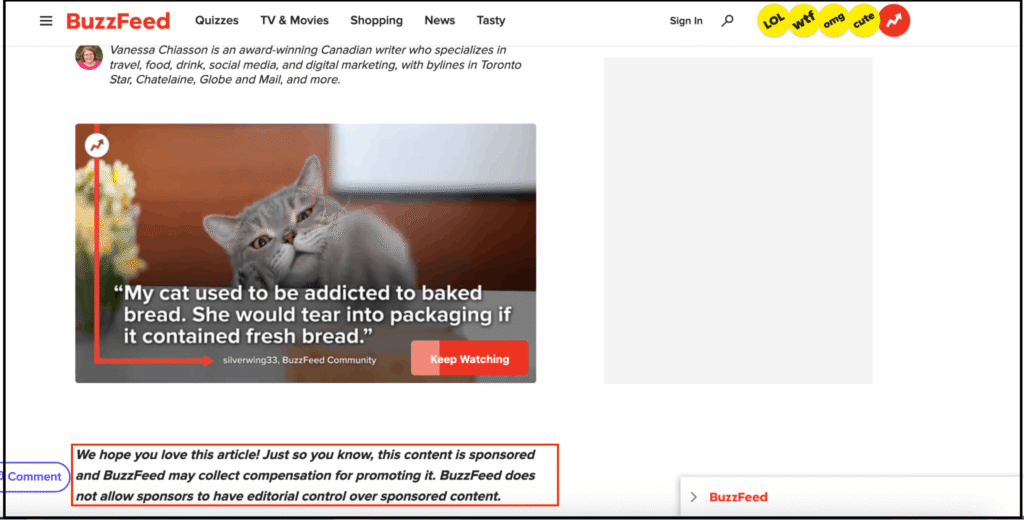
These disclosures signal that the placement is commercial rather than editorial.
How to Earn Editorial Links
Editorial backlinks rarely appear by accident. They are usually the result of strategic content creation, digital public relations (PR), and industry visibility.
Here are several proven strategies businesses use to attract editorial links consistently.
1. Publish link-worthy assets
The most reliable way to earn editorial backlinks is by publishing content that other writers want to reference.
Journalists, bloggers, and researchers constantly need credible sources to support their content. If your website publishes useful resources, it naturally becomes a citation target.
Types of content that attract editorial links
Some of the most linkable content formats include:
- Original research and industry studies
- Comprehensive guides and pillar resources
- Data reports and market insights
- Unique frameworks or methodologies
- Infographics and visual resources
You’ll notice how organizations like McKinsey or Harvard Business Review frequently get cited across blogs, reports, and news articles. One major reason is that they consistently publish original research and market studies, which other writers reference when discussing industry trends.
Here’s an example of how The Bridge Group’s SaaS AE Report is cited within a HubSpot blog article discussing SaaS salary benchmarks.

Beyond this example, the report has also attracted 37 referring domains linking to the study.
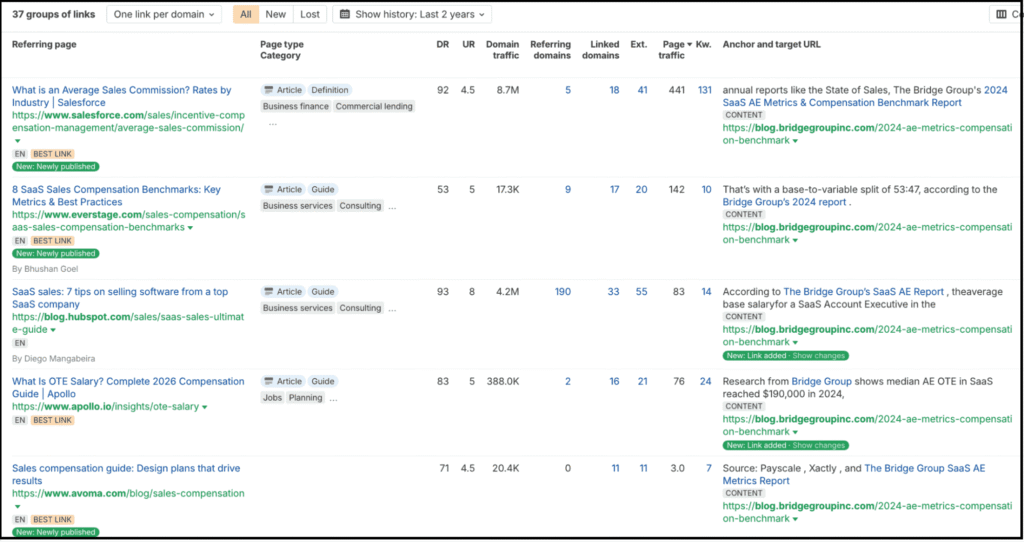
One well-executed data report can earn dozens of editorial backlinks over time.
2. Digital PR campaigns
Digital PR is one of the most effective ways to generate editorial backlinks at scale. Instead of pitching links, digital PR focuses on pitching stories.
Journalists are always looking for:
- Fresh insights
- Expert commentary
- New research/product launch
- Industry trends
When a company provides these elements, publishers often link back to the source.
A good example of this is when Zoho introduced advanced AI capabilities to its low-code platform, Zoho Creator. The announcement quickly gained attention across multiple technology and business publications.
As shown below, several news outlets covered the launch, including Business Wire, Yahoo Finance, and Enterprise Times.
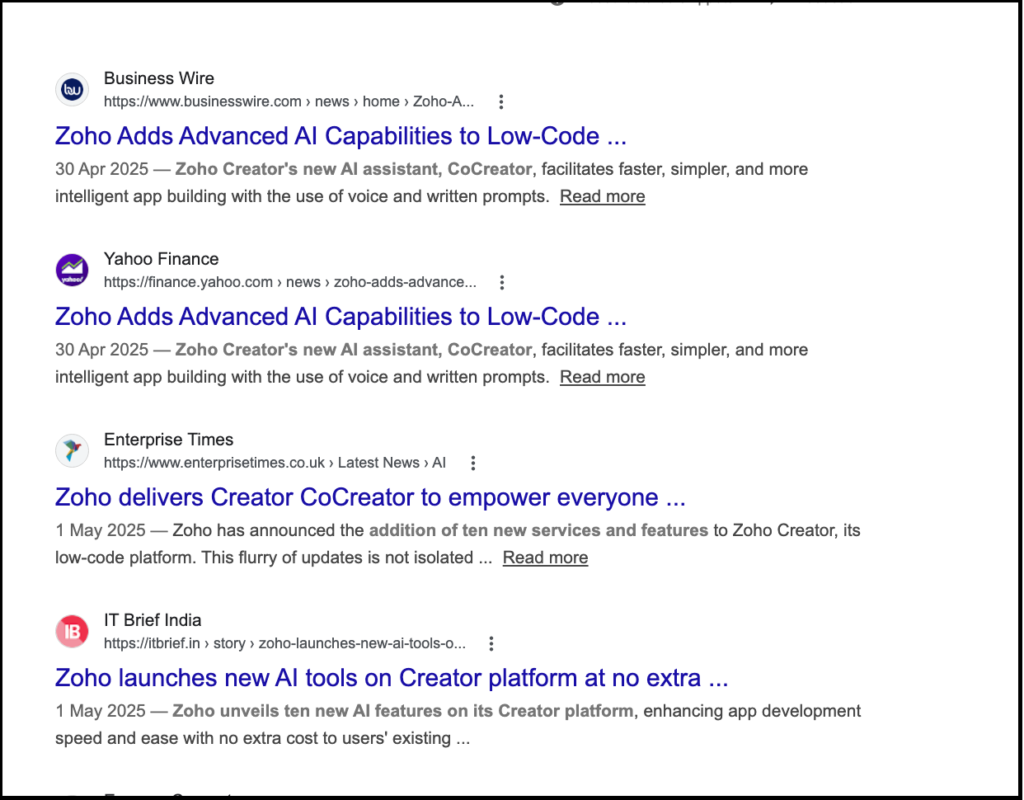
These articles typically reference the company announcement and link back to the official source, which results in multiple editorial backlinks generated from a single PR event.
This is digital PR in action.
3. Expert positioning
Another effective way to earn editorial links is by becoming a recognized industry expert.
When journalists or bloggers need insights, they often quote professionals with experience in the field.
If your brand consistently contributes valuable perspectives, publishers may cite your expertise and link back to your website.
Ways to build expert positioning
Some common strategies include:
- Contributing insights to industry publications
- Participating in expert roundups
- Speaking at webinars or industry events
- Publishing thought leadership articles
For example, GoDaddy published an article titled “Measuring SEO Success Beyond Rankings,” where they gathered insights from several SEO professionals.
Each expert shared their perspective on the key metrics businesses should track to evaluate SEO performance. In return, the article included a link back to each contributor’s website.
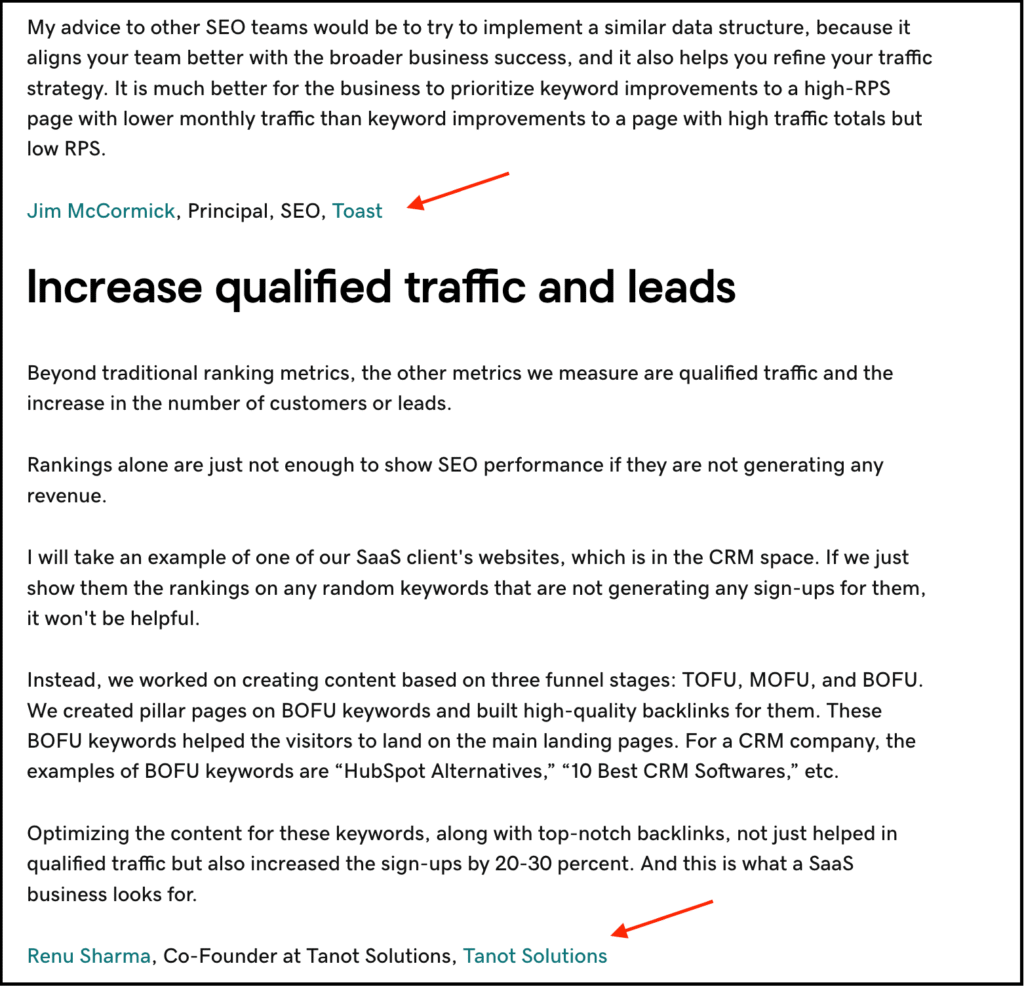
Because the publisher selected these experts and included their insights as part of the editorial content, the backlinks they received are considered editorial links.
4. Create a Featured.com account
Another way to earn editorial links is by responding to journalist requests through platforms like Featured, Qwoted, and similar expert-source networks.
These platforms are where journalists and content creators post questions for experts. Professionals can log in, browse relevant queries, and submit answers based on their expertise.
Below is an example of how questions appear on Featured.com, including information about where the response may be published. Based on your area of expertise, you can select relevant questions and submit insights for consideration.
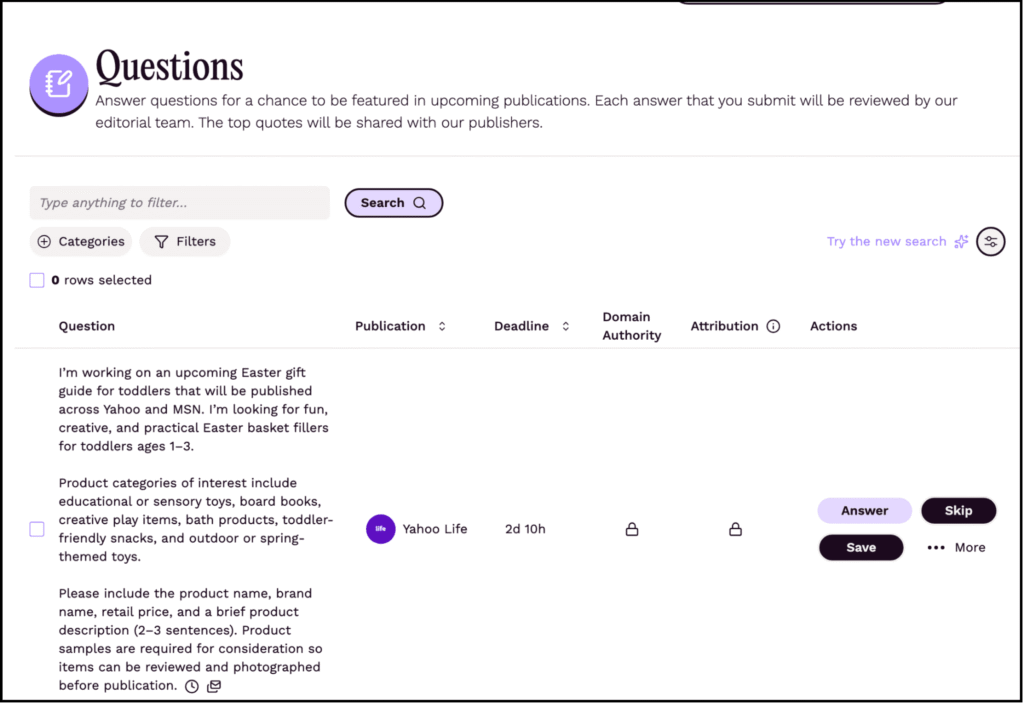
If a journalist uses your answer in their article, they often include a citation and link back to your website.
5. Build relationships within your industry
Editorial links often come from relationships within your professional network.
Editors and bloggers are more likely to reference brands they recognize and trust. When you build genuine connections within your industry, those relationships can naturally lead to mentions, collaborations, and editorial backlinks over time.
Some effective ways to build industry relationships include:
- Engaging with editors and journalists on social media
- Collaborating with industry bloggers
- Participating in professional communities and events
- Referencing other websites and experts within your own blog content
Below is an example from a marketing Slack community where a member is reaching out to others for backlink collaboration opportunities.
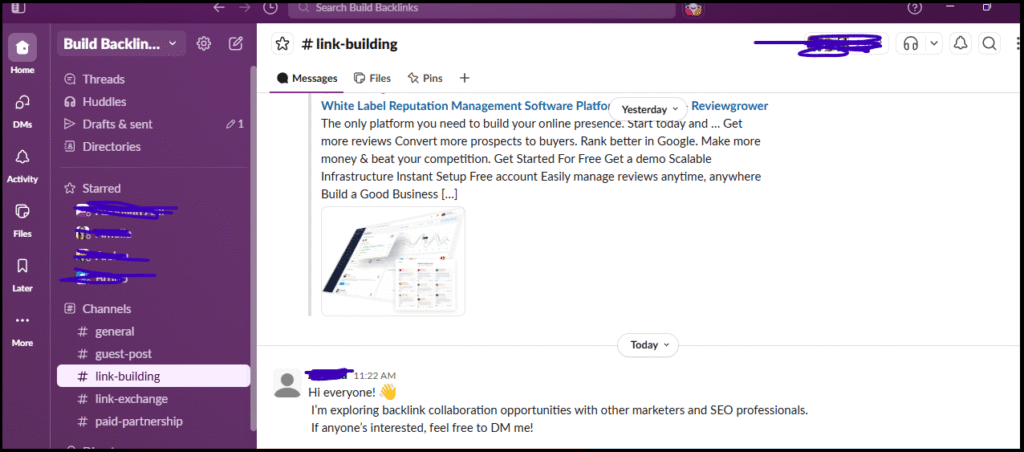
These types of community-driven collaborations often result in natural editorial mentions within blog articles, guides, or expert roundups.
6. Claim unlinked mentions
One of the most overlooked editorial link opportunities comes from unlinked brand mentions.
Sometimes websites mention your brand within their content, but forget to include a hyperlink to your website. With a simple outreach email, you can often convert these mentions into editorial backlinks.
For example, CloudEagle.ai published a listicle article featuring top SaaS management tools. If you look closely, several tool names are mentioned in the article without a hyperlink to their official websites.

This creates a great opportunity. If your brand is mentioned in a similar article without a link, you can contact the editor and politely request that they add a hyperlink to your website.
Because the brand is already referenced in the article, editors often agree to add the link, making this one of the simplest ways to earn editorial backlinks while also improving the reader’s experience.
Scale Editorial Link Building With Tanot Solutions
Editorial links are among the most powerful backlinks in modern SEO.
Unlike transactional link placements, editorial backlinks reflect genuine recognition within your industry. Over time, these signals strengthen your overall brand credibility.
However, earning editorial links consistently requires a structured strategy built around:
- High-value content that publishers want to reference
- Digital PR campaigns that generate newsworthy coverage
- Expert positioning that attracts journalist citations
- Industry relationships that lead to organic mentions
For many businesses, executing these strategies at scale can be difficult without the right expertise and publisher network.
That’s where Tanot Solutions comes in.
Our link building service helps businesses secure relevant, high-authority editorial backlinks through strategic outreach, publisher relationships, and authority-driven content placements.
If you’re ready to strengthen your backlink profile with trusted editorial placements, contact our team today to discuss a strategy tailored to your SEO goals.
Frequently Asked Questions (FAQs)
How do I identify which content will naturally attract editorial links?
Look for content that solves complex problems or provides data others can’t easily replicate. Reports, case studies, and unique insights are more likely to be referenced. Check competitor backlinks and industry publications to see what types of content are already earning attention, then create something more authoritative or actionable.
How can I pitch my content to journalists without being spammy?
Focus on relevance and value. Personalize your emails, reference their recent articles, and explain how your content adds insight or data they can cite. Avoid asking directly for a link—position it as useful information for their readers. Consistency and relationship-building over time matter more than one-off outreach.
What metrics should I track to measure the value of editorial links?
Track referring domains, organic traffic to linked pages, and keyword rankings. Also monitor domain authority and anchor text diversity. High-authority links from relevant sites carry more SEO weight than multiple low-value links, so focus on quality over quantity.
How do I turn unlinked brand mentions into editorial backlinks?
Identify mentions using tools like Google Alerts or Ahrefs. Contact the publisher politely, showing appreciation for the mention, and request adding a link. Provide the correct URL and context. A thoughtful, professional approach often converts mentions into high-value editorial links without straining relationships.
Can digital PR campaigns scale editorial link acquisition effectively?
Yes, but only if campaigns are data-driven and story-focused. Press releases alone rarely earn links. Offer insights, original data, or expert commentary journalists want to reference. Repeated coverage across multiple outlets amplifies authority and strengthens your overall backlink profile over time.
How do I maintain a healthy backlink profile while focusing on editorial links?
Diversify anchor text and link types while avoiding manipulative tactics. Combine editorial links with organic mentions, content partnerships, and niche-relevant references. Regularly audit backlinks to remove spammy links and ensure your profile signals trust and authority to search engines consistently.
How can expert positioning increase the likelihood of earning editorial links?
Being recognized as a thought leader attracts natural links. Publish insights, participate in panels or webinars, contribute to roundups, and engage in industry discussions. Consistently providing credible expertise builds visibility, making journalists and bloggers more likely to reference your content organically.