
Buying backlinks can help strengthen your website’s authority, but only when you know what you’re actually buying.
A high Domain Rating (DR) or Domain Authority (DA) number alone doesn’t make a backlink valuable. The website should be relevant to your industry, attract genuine traffic, have a healthy backlink profile, and provide a natural editorial context for your link.
The challenge is knowing which backlink platforms and providers meet those standards, and which ones simply sell links based on inflated metrics.
This guide breaks down what makes a backlink high quality, where to buy them, what to look for before placing an order, and how to choose between a self-service platform and a managed link building service provider.
💡 Key Takeaways
- High-quality backlinks are about more than DA or DR. Relevance, organic traffic, editorial context, and the quality of the linking site matter just as much.
- You can buy backlinks through self-service marketplaces or managed providers. Marketplaces give you more control, while managed services handle publisher research, outreach, and placement.
- Vet every backlink opportunity carefully. A high-authority site isn't automatically valuable if it has poor relevance, little organic visibility, or a low-quality audience.
- Avoid shortcuts that prioritize volume over quality. PBNs, link farms, recycled site lists, and cheap bulk packages can create unnecessary SEO risk.
- Think beyond the price of a link. The best backlink investment is one that supports long-term authority, relevant search visibility, and business outcomes, not simply the highest number of links for the lowest price.
10 Platforms and Providers to Buy High-Quality Backlinks From
The platforms and providers below offer different approaches to link building, from self-service marketplaces to fully managed campaigns, so compare them based on placement quality, relevance, pricing, and the level of control you need.
| S.No. | Provider/Platform | Category | Price | DA/DR Range | Link Type |
|---|---|---|---|---|---|
| 1 | Tanot Solutions | Managed service provider | Custom pricing | Custom requirements | Editorial, contextual, niche-relevant links |
| 2 | Adsy | Platform/marketplace | ~$14 per link | DA 40+ | Dofollow links in guest posts |
| 3 | Linksman | Platform + managed service | ~$120 per link | DA 40–50 | Contextual, dofollow, niche-specific links |
| 4 | Authority Builders | Platform + managed service | ~$300 per link | DR 30+, 1K+ traffic | Guest posts and niche edits |
| 5 | BacklinkBoss | Service provider | ~$8 per link | TF 35+, DA 10+ | Non-spammy, drip-fed links |
| 6 | SEOeShop | Platform/marketplace | ~$0.1 per link | DA 30+ | Mix of contextual and profile links |
| 7 | The HOTH | Managed service provider | ~$200 per link | DR 45+ | Niche edits |
| 8 | Editorial.Link | Managed service provider | ~$375 per link | DR 50–90, 5K+ traffic | Dofollow, editorial links |
| 9 | Serpzilla | Platform/marketplace | ~$250 per link | DR 40–50, 500–20K+ traffic | Manual, niche-based link placements |
| 10 | Backlink Works | Service provider | ~$0.016 per link | DA 30+, DR 50+ | Dofollow, permanent backlinks from blog sites |
1. Tanot Solutions
Tanot Solutions is a managed, white-hat link-building provider focused on acquiring relevant, high-quality backlinks that support broader SEO and business goals. Rather than selling fixed link packages based primarily on domain metrics, its approach combines publisher vetting, strategic anchor text planning, and client approval before placements go live.
Pricing is customized based on site quality and niche. Tanot Solutions offers pay-per-live-link, monthly retainer, and custom growth programs.
What makes it stand apart as a link building service provider
- Pre-approval on every placement: Clients review and approve every site and page before a link goes live. Full transparency, full control.
- Relevance-first vetting: Publishers are selected based on niche alignment, real organic traffic, and audience fit. No link farms, no expired domain networks.
- Strategic anchor text optimization: Anchors are mapped to your keyword targets and link profile health, not just whatever the publisher suggests.
- Proven results across competitive niches: 80% conversion lift in 6 months (SaaS) and 35K to 48K+ monthly visitors in 11 months (healthcare company)
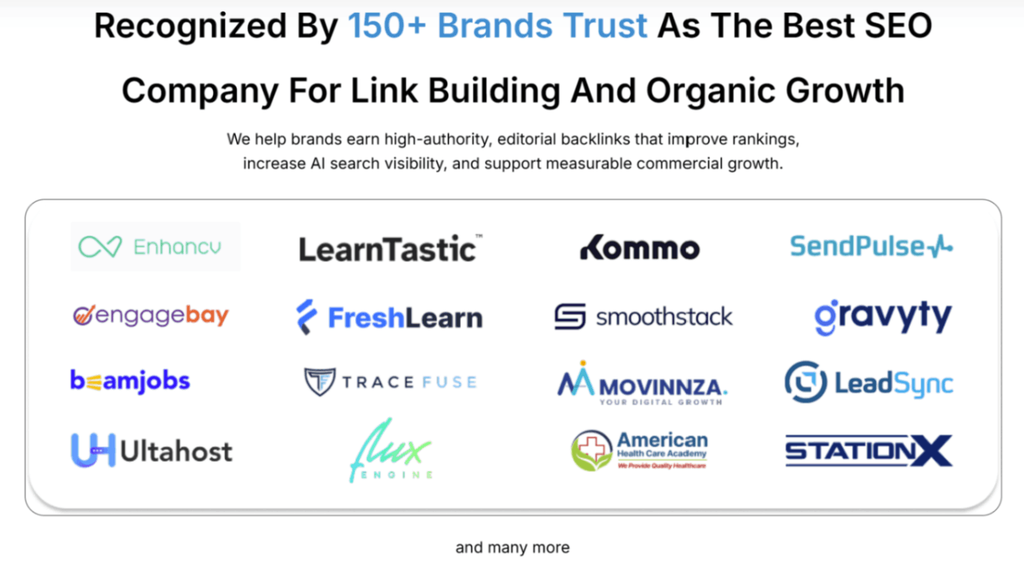
Trusted by 150+ brands for premium, white-hat link building, with verified reviews from real clients.
Best use case
Best for established B2B companies and brands with dedicated SEO budgets that want consistent, strategic link acquisition without managing publisher research, outreach, content, and placement negotiations internally.
See detailed link-building case studies →
2. Adsy
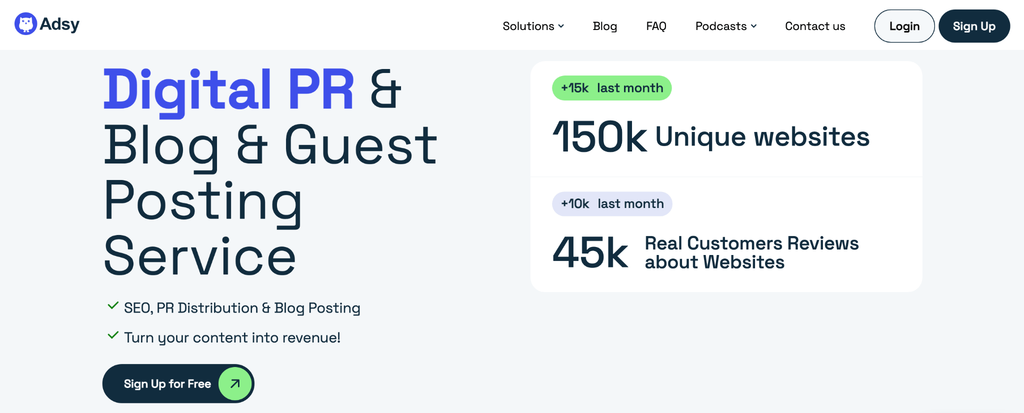
Adsy is a self-service backlink marketplace where marketers can browse publisher opportunities using metrics such as DA, DR, traffic, niche, language, and country. Its current marketplace lists more than 150,000 publisher opportunities, with dofollow placements starting at around $14.
Best use case
Best for SEO professionals and experienced marketers who want to select individual placements themselves and control their spending.
Pros
- Large inventory
- Transparent pricing
- Multiple filtering options
- No need to negotiate with publishers individually
Cons
- Quality still varies between publishers
- Requires hands-on site vetting
- Metrics can’t replace manual quality checks
- Less strategic than a managed campaign
3. Linksman
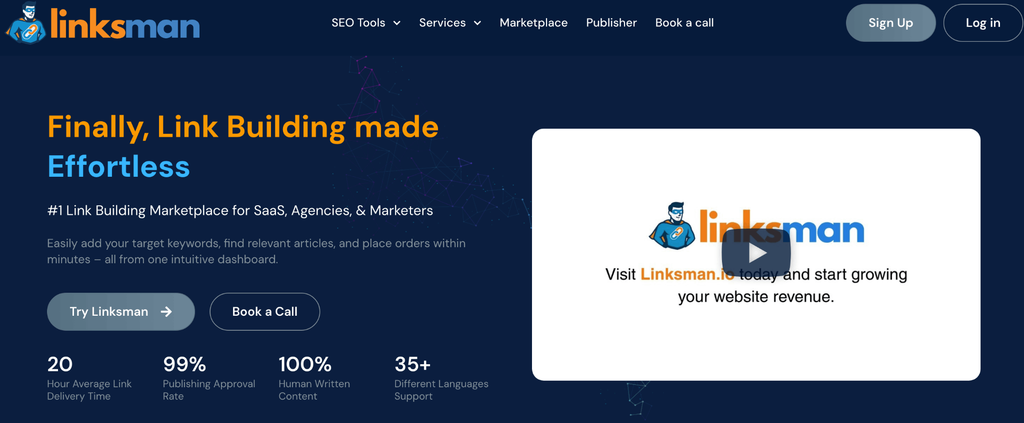
Linksman combines a backlink marketplace with managed link building services, offering guest posts, niche edits, and digital PR with DA, DR, traffic, and niche filters. Users can select placements themselves or have Linksman handle outreach, content, and publishing. Niche edits start at around $199 per link, while packages start at $399 for three backlinks.
Best use case
Best for SEO teams that want more control than a traditional agency provides but don’t want to manage publisher outreach themselves.
Pros
- Combines marketplace control with managed execution
- Clear site metrics
- Multiple link-building options
- No long-term contract required
Cons
- Premium placements can become expensive
- Requires some SEO knowledge to select appropriate sites
- Still more transactional than a fully strategic agency relationship
4. Authority Builders

Authority Builders offers both self-service backlink placements and managed campaigns focused on sites with genuine organic traffic. Its managed plans include competitor analysis, anchor text planning, placement recommendations, and reporting. ABC High-Authority Links starts at $300 per link, with higher-tier plans available.
Best use case
Best for established businesses that want either direct control over placements or a managed campaign with a defined monthly cadence.
Pros
- Strong emphasis on real traffic
- Managed and self-service options
- Strategic campaign components
- Multiple pricing tiers
Cons
- More expensive than basic marketplaces
- Higher-tier campaigns require larger budgets
- Not every placement is equally suitable for every niche
5. BacklinkBoss
BacklinkBoss sells packaged backlink campaigns based on metrics such as Trust Flow, DA, referring domains, and link type. Its offerings are more volume-oriented than strategic editorial link building, with different packages and drip-fed options available. Five-link packages currently start at around $40.
Best use case
Best suited to buyers looking for inexpensive, packaged link building products rather than a strategic editorial campaign.
Pros
- Low entry price
- Simple ordering process
- Multiple package options
- Reporting included
Cons
- Some offerings are heavily volume-driven
- Quality can vary substantially by package
- Less emphasis on strategic publisher selection
- Not the best fit for brands that need strict editorial standards
6. SEOeShop
SEOeShop is a self-service SEO marketplace offering a wide range of backlink products, including guest posts, contextual links, Web 2.0, forum, and profile links. Its prices range from fractions of a cent for some products to $10–$20+ for certain outreach and premium placements, making it more suitable for experienced SEOs than brands seeking premium editorial links.
Best use case
Best for experienced SEOs who understand the difference between foundational, supporting, and editorial links and can evaluate the risks of different link types.
Pros
- Extremely low entry cost
- Large selection
- Fast delivery
- Self-service control
Cons
- Very wide variation in link quality
- Many products are not comparable to genuine editorial backlinks
- High-volume packages require careful evaluation
- Low price does not necessarily translate into meaningful SEO value
7. The HOTH
The HOTH is a productized SEO provider offering link insertions, guest posts, content, and broader SEO services. Its current link building products range from roughly $175–$405+ per placement, depending on the product and authority tier.
Best use case
Best for businesses that want a structured, productized way to outsource link building without building their own publisher outreach operation.
Pros
- Established SEO provider
- Simple ordering process
- Multiple SEO products
- Link insertion option
- Suitable for agencies and businesses
Cons
- Productized approach may provide less customization than a specialist campaign
- Pricing increases with placement quality
- Buyers still need to understand the quality criteria behind each product
8. Editorial.Link
Editorial.Link focuses on premium editorial backlinks from websites with real traffic and authority, using a managed approach that includes publisher research and outreach. Clients can review and approve target websites before outreach begins. Individual backlinks start at $375, while five-link packages cost $1,750.
Best use case
Best for B2B, SaaS, technology, finance, and other brands that prioritize editorial quality and want visibility into potential placements before approving them.
Pros
- Strong quality-control process
- Client approval before outreach
- Focus on real traffic and relevance
- Transparent package pricing
- Managed strategy available
Cons
- Higher cost than self-service marketplaces
- Premium placements can require a larger budget
- Less suitable for buyers primarily looking for link volume
9. Serpzilla
Serpzilla is a large self-service link marketplace offering guest posts, link insertions, brand mentions, and other placements, with filters for DR, traffic, niche, and country. It provides pricing upfront and reports average prices of approximately $459 for guest posts, $225 for link insertions, and $18 for brand mentions.
Best use case
Best for experienced SEO professionals managing link acquisition themselves and looking for a large inventory across multiple markets and price ranges.
Pros
- Large marketplace
- Transparent pricing
- Wide range of placement types
- No subscription required
- Flexible budgets
Cons
- Quality varies across the inventory
- Requires strong SEO judgment
- Large marketplaces can encourage metric-based buying
- Less strategic guidance than a managed provider
10. Backlink Works
Backlink Works offers high-volume backlink packages built around tiered link structures, DA/DR metrics, dofollow links, and reporting. Its pricing is significantly lower than premium editorial providers, with packages starting at around $12 for 750+ links. This makes it more suitable for experienced SEOs evaluating volume-based link acquisition than brands seeking premium editorial placements.
Best use case
Best for experienced SEOs who specifically need volume-based or supporting link packages and understand that these are not equivalent to premium editorial placements.
Pros
- Very low cost per link
- Large-volume packages
- Multiple tier structures
- Reporting included
Cons
- High-volume approach is very different from editorial link building
- Large numbers of links can obscure actual placement quality
- Less suitable for brands seeking premium publisher relationships
- Requires careful risk assessment
Choosing Between a Self-Service Link Marketplace/Platform and a Managed Service Provider
The main difference comes down to control vs. convenience. Self-service platforms let you choose and purchase placements yourself, while managed providers handle publisher research, outreach, and placement for you.
Self-service link marketplaces
How they work
You browse publisher websites, filter them by metrics such as DR, DA, traffic, niche, and price, and purchase the placements that meet your requirements. You typically manage the selection, anchor text, target URL, and campaign strategy yourself.
Pros
- More control over publisher selection
- Transparent, upfront pricing
- Flexible budgets and one-off purchases
- Large publisher inventories
Cons
- Requires time and SEO expertise
- You are responsible for vetting publishers
- Quality can vary significantly
- Limited strategic guidance
Managed link building providers
How they work
The provider manages most of the process, including finding relevant publishers, evaluating sites, conducting outreach, coordinating content, and securing placements. Some providers like Tanot Solutions also let you approve publishers or placements before they go live.
Pros
- Less time spent on research and outreach
- Strategic campaign planning
- Easier to scale link acquisition
- Access to link building specialist expertise
- More focus on relevance and placement quality
Cons
- Higher cost
- Less direct control over individual placements
- Provider quality varies
- Some services require ongoing campaigns or retainers
Which should you choose?
| Choose a self-service platform if you… | Choose a managed provider if you… |
| Have in-house SEO expertise | Want the process handled for you |
| Want maximum control over placements | Need strategic guidance |
| Have time for publisher research | Have limited internal resources |
| Prefer flexible, one-off purchases | Want consistent, scalable link acquisition |
| Are comfortable evaluating sites yourself | Prefer to outsource research and outreach |
The bottom line: If you know how to evaluate backlinks and have the time to manage campaigns, a self-service platform gives you more control. If you want to build links consistently without managing publisher research and outreach yourself, a managed provider is usually the better fit.
Whichever model you choose, don’t judge a backlink by DA or DR alone. Relevance, organic visibility, editorial context, and the quality of the linking website’s audience matter just as much.