
Healthcare search is different from every other industry.
When someone searches online for medical information, they’re not casually browsing. They’re worried, evaluating risk, and deciding who to trust with their own or the health of someone they love.
On average, 15.49% of patients search for symptoms online before consulting a doctor.
That’s why healthcare SEO needs to be credible enough to earn the trust of both search engines and real people.
When you apply healthcare SEO strategies correctly, it helps attract patients to your medical practice and build confidence among investors and partners.
This article shares practical, replicable healthcare SEO strategies used by leading medical websites. You can apply the same principles to scale organic traffic and patient acquisition in 2026.
Why Healthcare SEO Requires a Different Approach Than Any Other Industry
Before we talk tactics, it’s important to understand why healthcare SEO behaves differently.
1. YMYL rules change everything
Healthcare falls under Your Money or Your Life (YMYL). Google holds medical content to a much higher standard because inaccurate information can cause real harm. That means:
- Shallow content won’t rank,
- Unverified advice gets filtered out,
- And authority matters more than keywords.
2. Patient searches are complex and emotional
Patients don’t search like shoppers. Queries often look like “persistent chest pain after exercise,” “is knee replacement safe at 60,” or “best hospital for IVF near me.”
These searches combine fear, urgency, and trust, and your SEO strategy has to reflect that.
3. AI assistants now shape medical discovery
Patients increasingly ask AI tools for explanations and next steps. AI systems like Google SGE, ChatGPT, and Perplexity prioritize verified, structured, and authoritative sources. If your website isn’t built for this, you’re invisible in AI answers.
4. Privacy and compliance influence SEO
HIPAA, data handling, and accessibility directly affect UX, conversions, and even how Google evaluates site quality. In healthcare, technical trust is inseparable from SEO trust.
The Essential Healthcare SEO Strategy Playbook
This playbook breaks healthcare SEO into clear, actionable pillars that align with how patients search and how search engines evaluate medical content.
Pillar #1: Build deep medical authority (not just content)
If there’s one thing healthcare SEO rewards consistently, it’s depth. Shallow pages don’t survive YMYL scrutiny.
1. Create a medical knowledge base or medication directory
One of the highest ROI strategies in healthcare SEO is building a public-facing medical knowledge base. This could be a medication directory, a disease encyclopedia, or a treatment explainer library.
See how Cleveland Clinic has created a medication directory of all diseases that you can easily search by name, alphabetically, or even filter it based on categories like symptoms, procedures, and more.
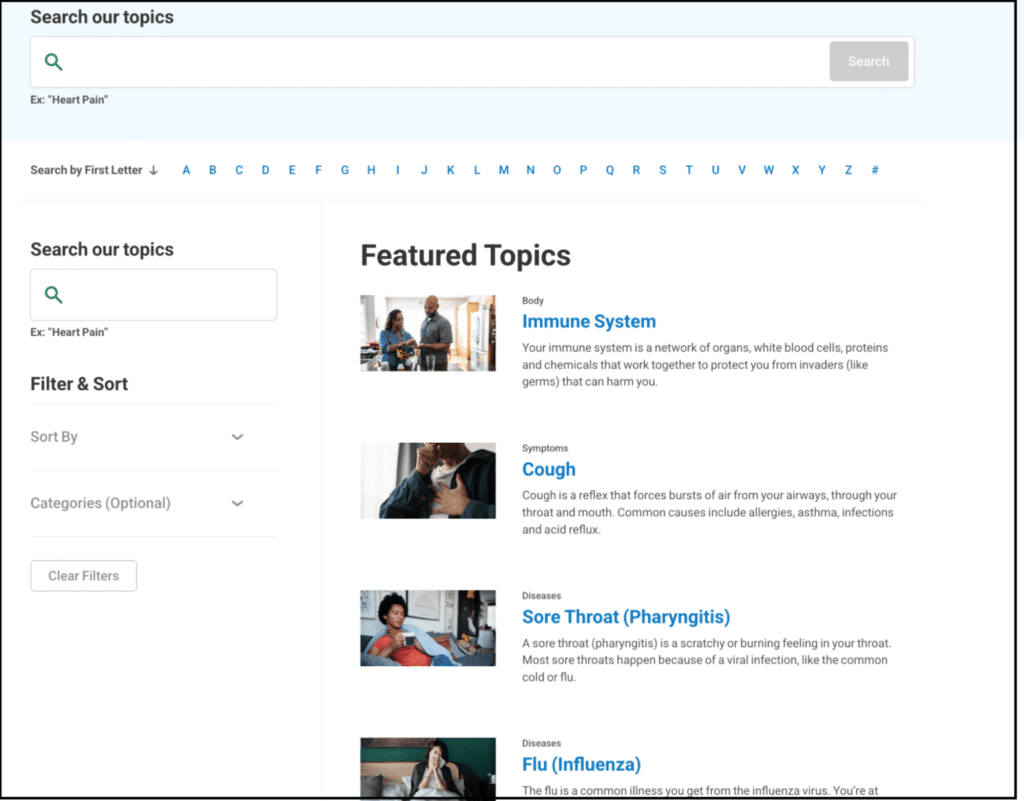
Each page should typically include:
- What the medication or condition is
- Dosage or treatment options
- Side effects and risks
- Who it’s suitable for
- FAQs patients actually ask
These pages capture long tail searches that patients ask before they ever book an appointment. Here’s an example of how Mayo Clinic has structured it.
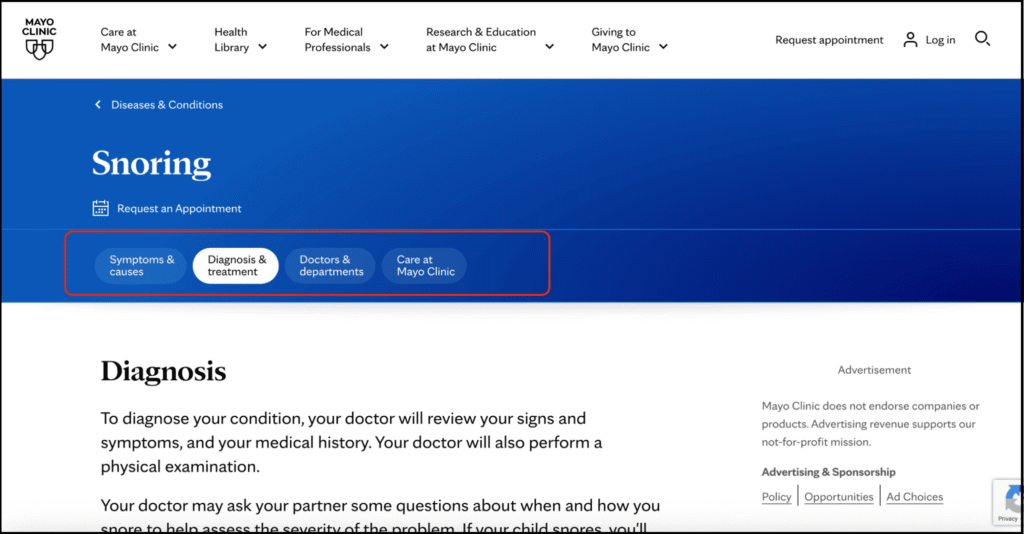
Cleveland and Mayo Clinic’s medication and condition libraries rank for thousands of medical queries globally because they are factually structured, medically reviewed, and internally linked across related conditions and treatments.
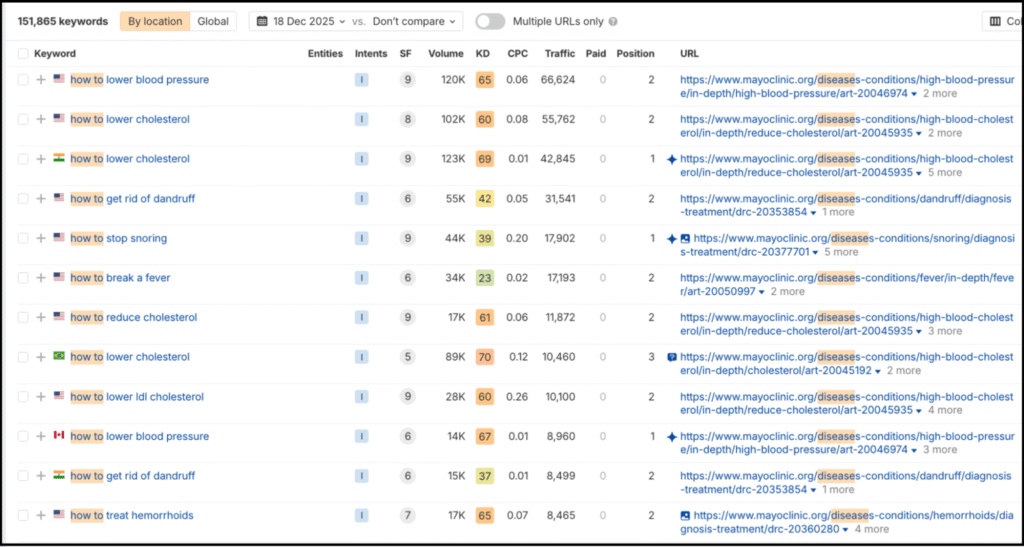
Both Google and AI assistants frequently surface such pages because their structure aligns with how medical answers are retrieved.
2. Build condition + treatment hubs
Instead of isolated pages, think in patient journeys. A strong condition hub follows this flow:
Symptoms → Diagnosis → Treatment → Recovery → FAQs
Each hub should naturally link to:
- Relevant doctor or surgeon profiles
- Procedure pages
- Insurance or eligibility details
- Appointment booking CTAs
Mayo structures its condition pages in a way that patients can move seamlessly from understanding symptoms to finding care. This approach captures informational traffic early and converts it into consultations later.
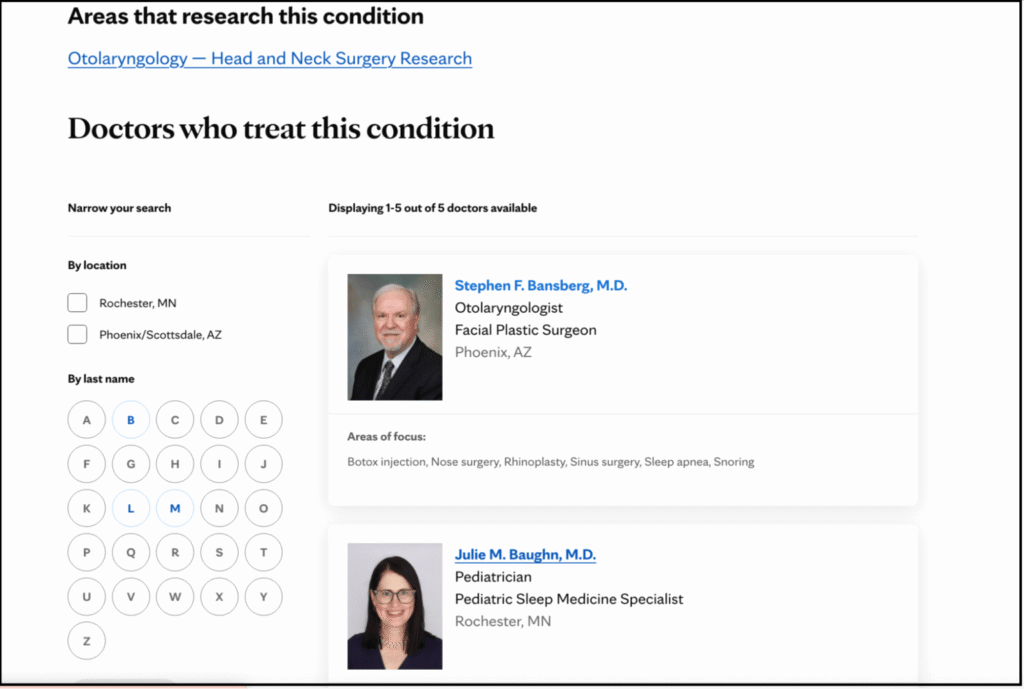
Google and AI systems reward completeness. Patients stay longer, explore more pages, and feel guided.
3. Publish research, innovations, and equipment updates
Medical institutions are constantly investing in research, clinical trials, improved treatment protocols, and advanced diagnostic equipment. Yet most healthcare organizations fail to capitalize on this information online.
When these updates stay offline, you miss a major opportunity to build authority. Publishing research breakthroughs, technology upgrades, and clinical advancements can boost your website’s authority.
Mount Sinai Health System is a strong example of this approach. Their website features dedicated sections for clinical trials and medical research updates, resulting in hundreds of indexable pages that attract consistent organic traffic.
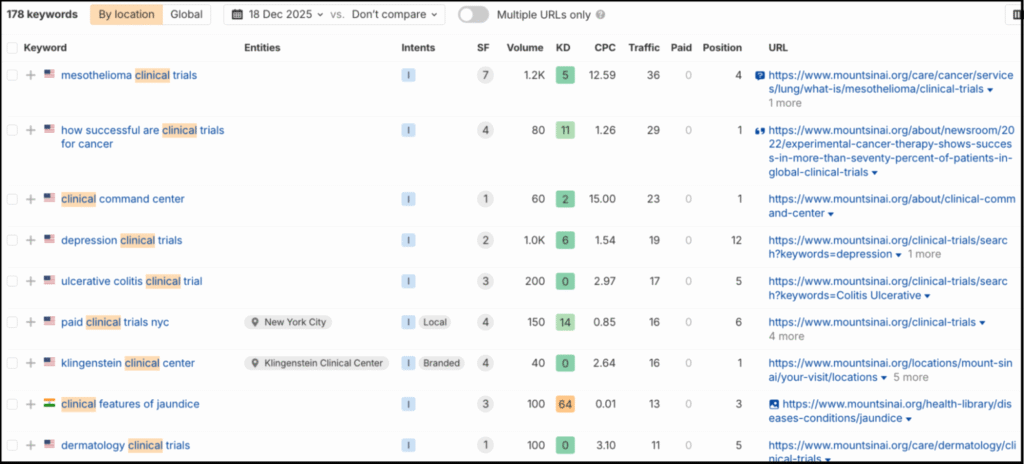
These pages signal topical freshness, earn authoritative backlinks, and position your hospital as a leader in innovation.
Pillar #2: Build trust & credibility (E-E-A-T for healthcare)
Google’s YMYL content demands clear verification of who the information is coming from and why it should be trusted. In healthcare SEO, credibility has to be demonstrated explicitly.
The first thing you can do to build trust is to create doctor and specialist profile pages.
Profiles that include verified credentials, education history, board certifications, areas of specialization, and conference participation help search engines understand that real medical professionals stand behind your content.
See how a list of directories shows up when you search for doctors in the US.
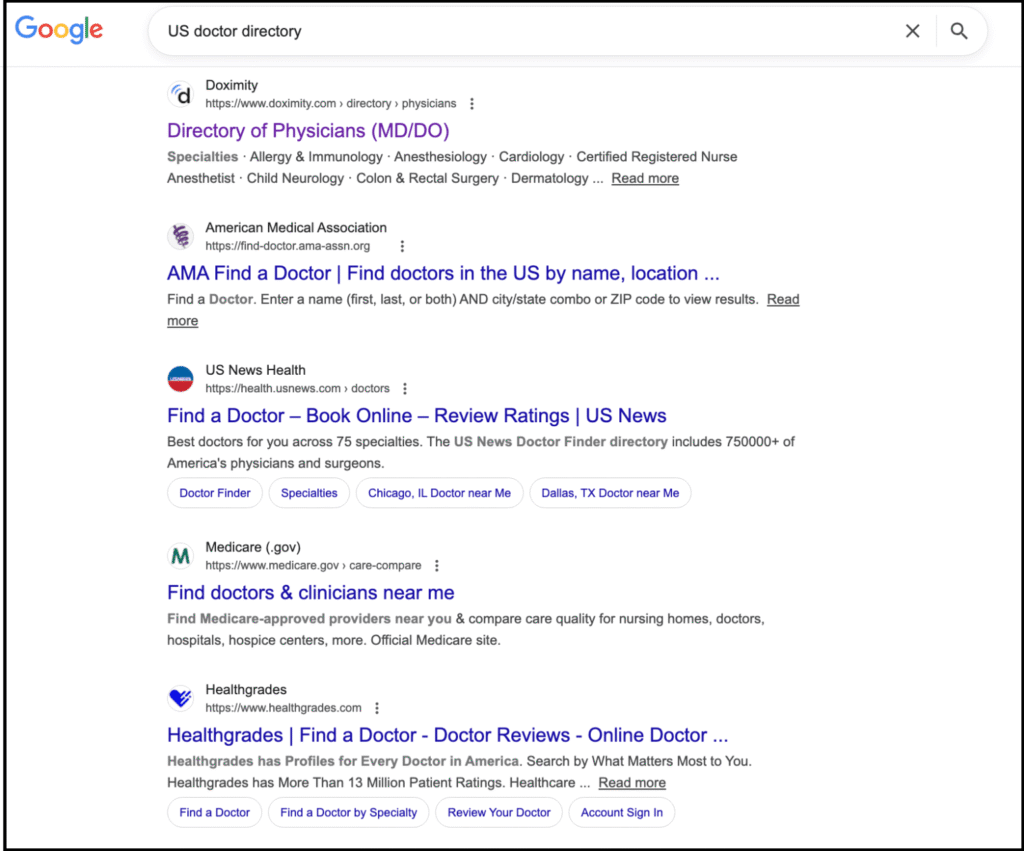
Another critical layer of credibility comes from publishing verified medical sources and citations. Referencing PubMed studies, FDA approvals, WHO or CDC guidelines, and established treatment protocols shows that your information is aligned with accepted medical standards.
Finally, institutional accreditations and awards, such as NABH, JCI, ISO, or HIMSS, play a larger role in SEO than most healthcare brands realize. Patients may not consciously analyze these credentials, but they strongly influence trust for both human and algorithmic.
Pillar #3: Local SEO to capture high-intent patient searches
For clinics and hospitals, local SEO is the fastest revenue driver.
Local healthcare searches are almost always intent-driven. When someone searches “emergency care near me” or “orthopedic clinic in Boston,” they’re mostly ready to act.
Here’s how to position your hospital website for local SEO.
i. Build hyper-personalized hospital location pages
The foundation of local healthcare SEO starts with Google Business Profile (GBP) optimization.
Your profile should clearly include accurate NAP details, primary and secondary medical categories, emergency care availability, operating hours (including holiday hours), contact information, and up-to-date photos of the facility.
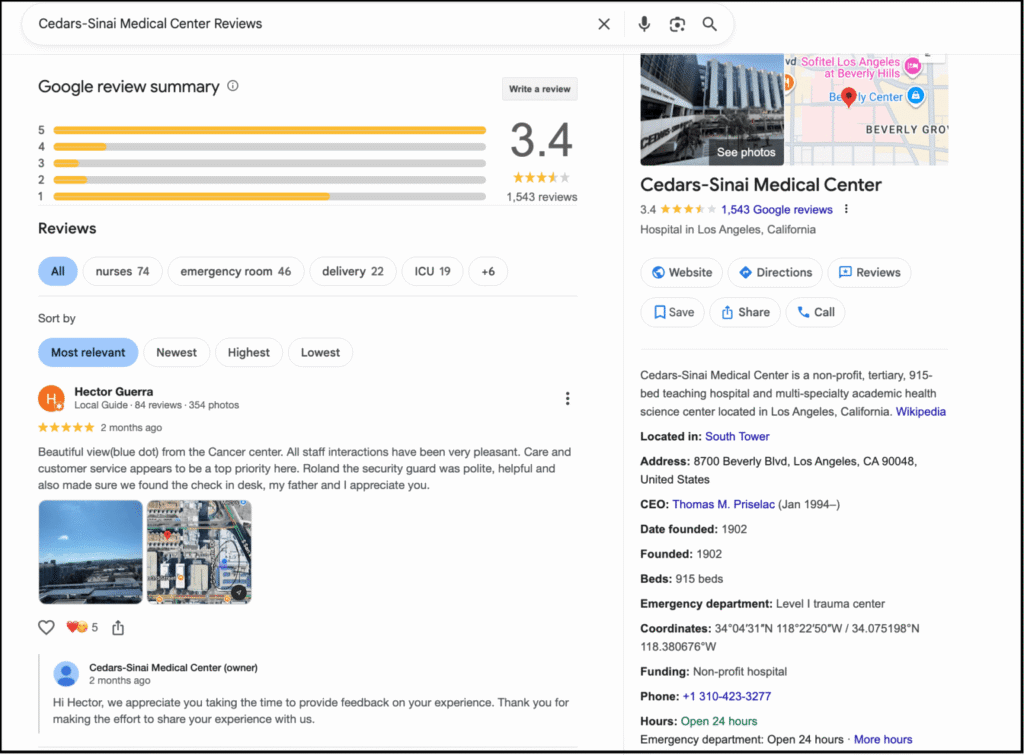
Here’s an example of a well-optimized Cedars-Sinai Medical Center Google Business Profile.
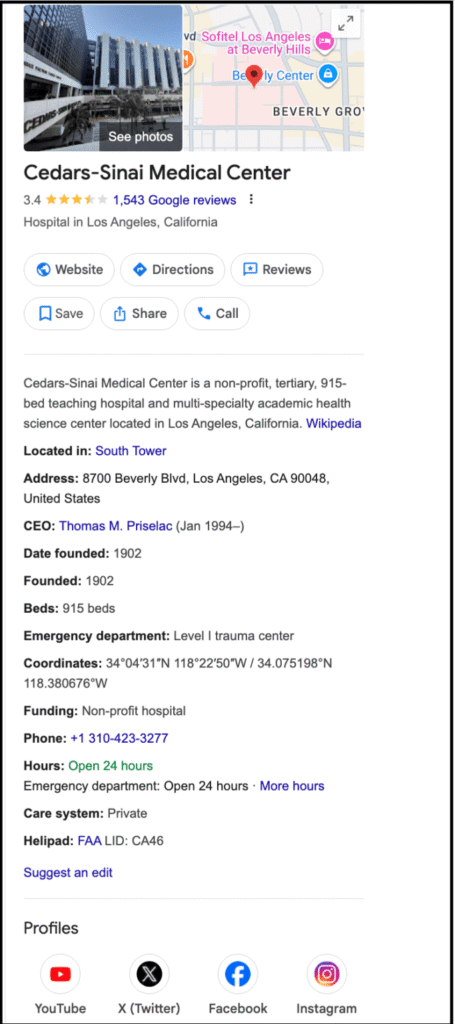
Additionally, you need to build hyper-personalized hospital or clinic location pages. It typically includes a clear overview of services offered at that specific facility, departments and specialties available on-site, emergency and urgent care information, and FAQs tailored to the local community.
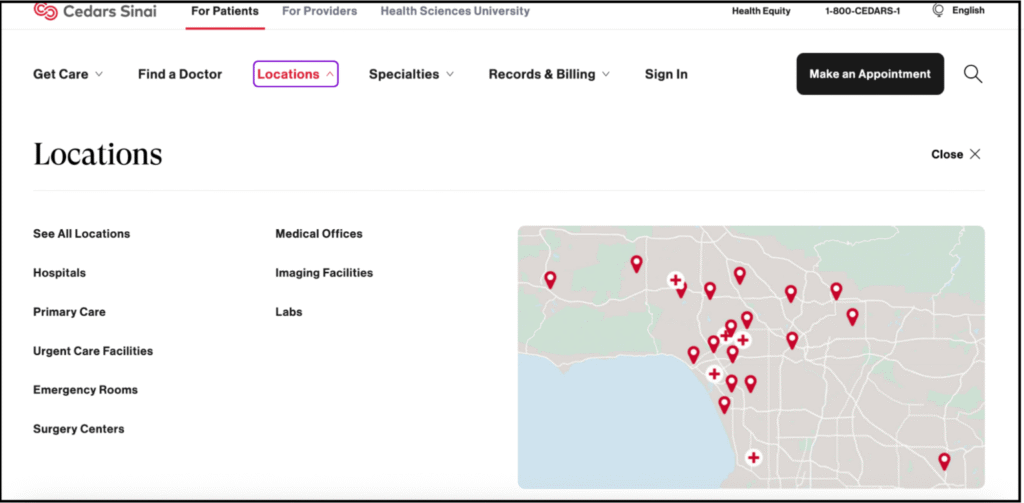
Cedar Sinai has built specific pages for different facilities, specialities, etc.
These pages act as decision hubs for patients who are already searching with intent and drive direct calls and visits.
ii. Create a review engine for medical services
Another important local SEO strategy for doctors and clinics is consistently gathering patient reviews. Reviews influence patient trust as well as affect local visibility.
Nearly 8 in 10 patients read reviews before they choose a healthcare provider.
For example, Cedars-Sinai Medical Center has over 1.5k Google reviews and actively responds to patient testimonials. This level of engagement signals credibility.
Some best practices for building a sustainable review engine include:
- Automated review requests post-visit
Once a patient has visited the clinic, send an automated follow-up requesting feedback about their experience.
- Collect anonymized patient success stories
Many patients may not feel comfortable sharing medical details publicly, so anonymized stories help showcase outcomes while respecting privacy.
- HIPAA-compliant outcome highlights
Share improvements and results in a compliant way that reinforces trust without exposing sensitive patient information.
Pillar #4: Authority building with high-trust backlinks
Search engines treat backlinks in healthcare as endorsements. When respected medical institutions, publications, or organizations reference your website, they signal authority that can’t be replicated through on-page optimization alone.
Here’s how to build authority through high-quality, contextual backlinks.
i. Look for high-impact placements (your biggest traffic multiplier)
Healthcare backlinks carry disproportionate weight, which is why a few high-impact placements often outperform dozens of generic links. High-impact placements include:
- Reputable health publications
- University medical blogs
- Research institution websites
- Insurance partner portals
- Medical conference directories
In our work with a healthcare education client in the CPR training space, we focused on earning backlinks around tightly related, topical content.
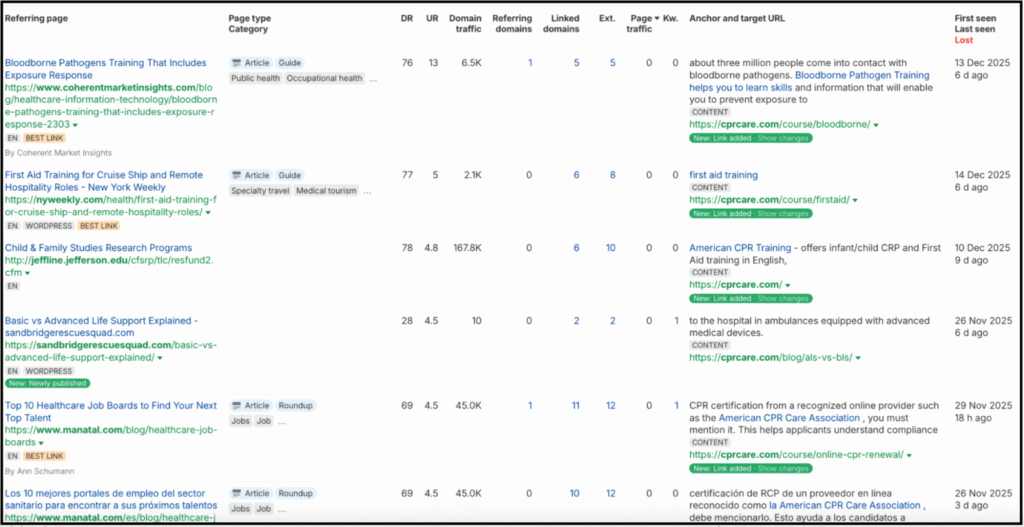
ii. Leverage PR for announcements & innovations
Whenever your organization launches new technology, adds departments, onboards specialists, or gets certifications, publish and distribute press coverage.
Google and AI systems heavily weigh third-party validation. Patients trust hospitals that appear in credible publications.
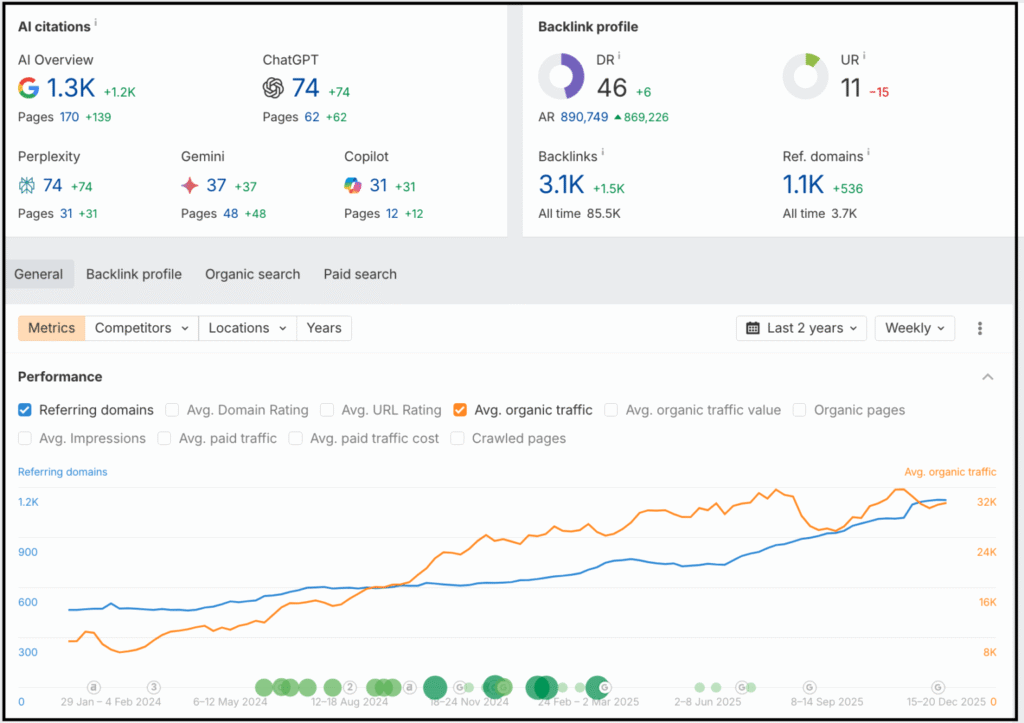
For the same CPR training provider we worked with, securing authoritative healthcare backlinks led to consistent organic growth over 6–8 months. AI visibility metrics also improved as authority signals increased.
Pillar #5: Build a fast, secure, and structured healthcare website
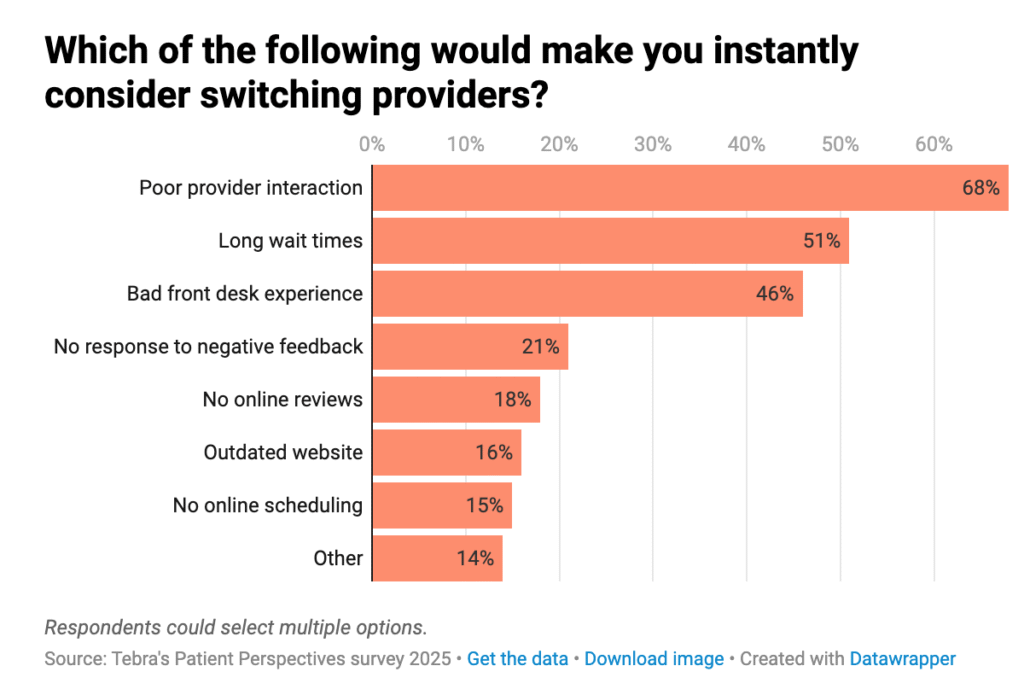
Technical SEO in healthcare is about safety, clarity, and accessibility. Studies consistently show that patients are more likely to switch providers if a website feels outdated or doesn’t offer convenient features like online scheduling.
Here are a few key areas to focus on to improve the overall visitor experience:
- Site speed, mobile performance & core web vitals
Patients often search under stress or urgency, especially on mobile. That’s why you need fast, mobile-friendly pages. It improves patient confidence, search visibility, and appointment conversions.
- Medical schema & structured data
Medical-specific schema, such as MedicalCondition, MedicalProcedure, Hospital, Physician, Drug, and FAQ, helps search engines and AI systems correctly interpret your content.
In practice, structured data increases eligibility for rich results and improves how medical information is surfaced in AI-generated answers.
- Clean, secure, patient-friendly architecture
Healthcare websites must balance usability with compliance. ADA accessibility, HIPAA-friendly forms, secure data handling, and a clear navigation flow from conditions to treatments to appointments are essential.
Measuring Success: The KPIs That Matter for Healthcare SEO
I’ve seen many healthcare teams celebrate ranking improvements while missing the fact that conversions stayed flat. Here are the key performance indicators (KPIs) that can help you avoid that trap and measure real growth.
This is the most important metric. Whether it’s booked consultations, call clicks, or form submissions, organic SEO should ultimately drive patient actions.
If traffic is growing but appointments aren’t, it usually signals a trust, intent, or UX gap and not an SEO problem.
- AI search citations and visibility
As AI-assisted search becomes more prominent, visibility inside AI-generated answers is an early indicator of authority.
When your content is referenced or summarized by AI systems, it’s a sign that your medical information is structured, credible, and aligned with trusted sources. And this is even before rankings fully reflect that authority.
- Local map pack rankings
For clinics and hospitals, appearing in the local map pack often drives more conversions than traditional organic listings.
Tracking visibility for high-intent local queries (e.g., “cardiology clinic near me”) helps you understand whether your local SEO efforts are translating into foot traffic and calls.
- Impressions on doctor and treatment pages
Doctor profiles and treatment pages are trust-heavy assets. Rising impressions here indicate that search engines are increasingly confident in your medical authority.
In many cases, growth in these pages precedes improvements in broader condition-based rankings.
- Backlink authority improvements
In healthcare, link quality matters far more than quantity. Monitoring growth in authoritative referring domains, especially from educational or medical news sources, helps validate whether your authority-building efforts are compounding over time.
- Organic traffic quality (not just volume)
Finally, always evaluate who is visiting your site, not just how many. Are users spending time on condition pages? Are they navigating to doctor profiles or appointment pages?
High-quality traffic reflects alignment between patient intent, content depth, and trust.
Taken together, these KPIs provide a much clearer picture of your healthcare SEO performance.
Build a Healthcare SEO System That Scales
Sustainable healthcare SEO requires a system that compounds over time.
At Tanot Solutions, we help healthcare brands scale SEO through a system-first approach that prioritizes safety, relevance, and long-term growth. And this starts with building healthcare-safe, white-hat backlinks.
We provide:
- Placements in trusted medical and news publications
- DR- and category-specific link strategies
- Complete transparency, no backlink goes live without approval
- Strategies built for YMYL and AI-first search
If you’re ready to move beyond short-term SEO tactics and build an authoritative, AI-recognized healthcare brand, contact us today.