

Many coaching businesses experience uneven lead flow — a few discovery calls one month, followed by long gaps the next. This inconsistency is rarely a visibility issue. More often, it’s a strategy issue.
SEO for coaches is frequently misunderstood because it’s approached as a content task rather than a structured client acquisition channel.
Publishing blog posts alone does not create predictable demand, especially in trust-driven, high-ticket niches like coaching.
When implemented with intent and authority, SEO becomes a reliable source of qualified leads who are actively seeking coaching support.
This guide breaks down a funnel-based SEO approach that connects visibility, trust, and conversion, helping coaching businesses build sustainable, long-term growth.
What SEO for Coaches Really Means in 2026
The advice to “start a blog and stay consistent” is no longer sufficient for coaching businesses competing in crowded digital spaces. Search engines and AI-driven discovery platforms increasingly prioritize credibility, relevance, and demonstrated expertise.
Coaching is a high-consideration decision. Prospective clients often spend weeks researching before reaching out.
As a result, SEO for coaching businesses must do more than generate traffic. It must support confidence and decision-making.
An effective coaching SEO strategy ensures that:
- Coaches are discoverable for relevant problems
- Their expertise is reinforced across touchpoints
- Visitors are guided toward clear next steps
SEO that focuses only on rankings or pageviews fails to address how coaching clients actually choose whom to work with.

Why funnel-based SEO delivers better ROI for coaches
A funnel-based approach aligns SEO with how coaching clients make decisions.
- Awareness: Identifying and understanding the problem
- Consideration: Evaluating solutions and approaches
- Decision: Choosing a coach they trust
When SEO supports each stage, growth becomes more predictable.
Instead of isolated traffic spikes, coaches benefit from steady inbound demand tied to measurable business outcomes, such as qualified leads and booked calls.
Funnel Stage 1: Generate Organic Visibility (Top of Funnel SEO)
The first stage of SEO for a coaching business focuses on being discoverable for the right audience. However, visibility without intent rarely converts.
Here’s how to do it right.
i. Keyword research for coaching businesses
Keyword research for coaches should prioritize intent rather than search volume alone. But this does not mean high-volume keywords are irrelevant; rather, they should be used deliberately, based on where a potential client is in their buying journey.
Effective coaching SEO distinguishes between two primary intent types:
- Problem-aware keywords
These reflect early-stage awareness, where prospects are trying to understand their challenges. Problem-aware keyword examples include burnout, leadership challenges, or career stagnation.
These keywords are valuable for building visibility, educating audiences, and establishing topical relevance.
- Solution-aware keywords
These keywords indicate a higher level of intent, where prospects are actively evaluating professional support. Examples include executive coaching services or a business coach for founders.
While these keywords usually drive lower search volumes, they attract users who are significantly closer to making a decision.
A useful illustration of this balance can be seen in established coaching brands.
For example, Tony Robbins’ website receives substantially more traffic from informational searches such as “public speaking tips” or “how to be confident” than from commercial queries like “Tony Robbins events” or “business coaching.”
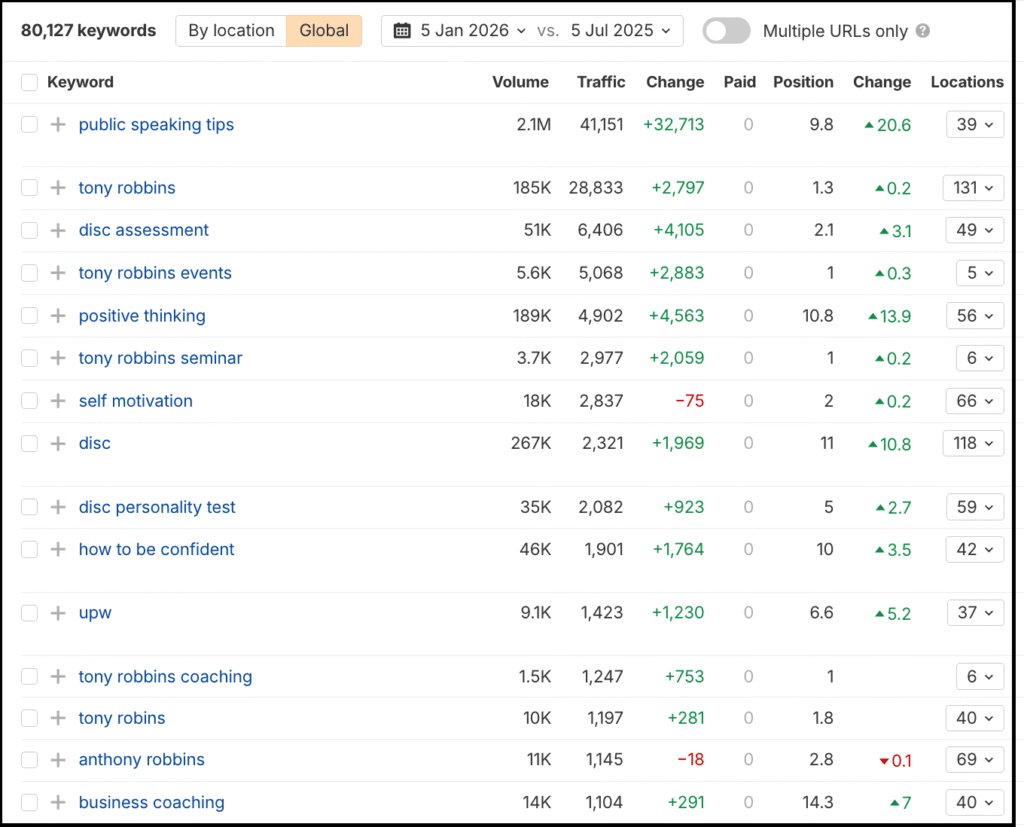
Both keyword types play an important role. Broad, high-volume keywords often attract users who are not ready to engage.
Intent-driven keywords, on the other hand, tend to attract fewer visitors with stronger commercial readiness.
This is where structured keyword analysis tools can help identify opportunities that align with real buying behavior rather than surface-level traffic metrics. You can then map keywords to specific funnel stages instead of treating all rankings equally.
ii. Website optimization for coaches (your SEO foundation)
A coaching website plays a critical role in establishing credibility. Even strong content underperforms when the site structure and fundamentals are weak.
Tony Robbins’ website attracts approximately 177K organic visitors.
While multiple factors contribute to this visibility, a significant portion can be attributed to a well-structured site architecture, clearly indexed pages, and consistent, search-friendly URL organization.
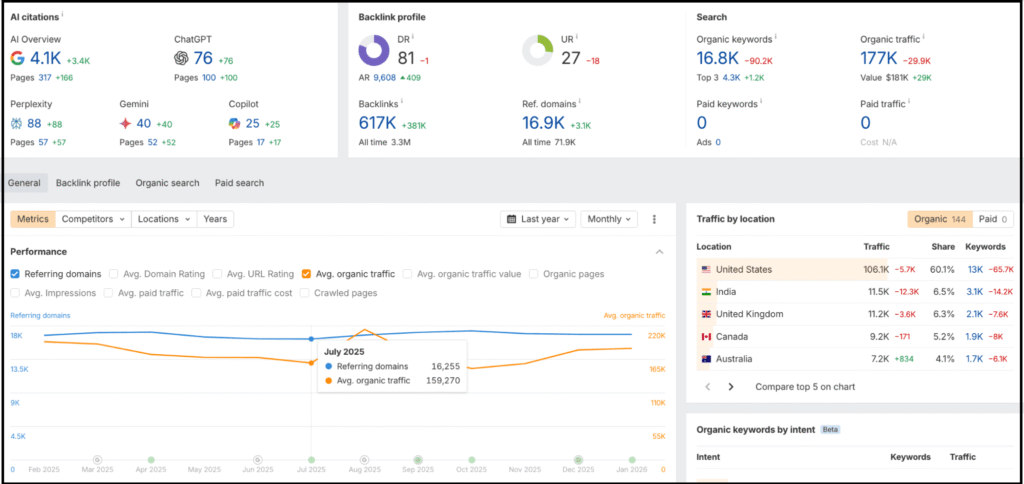
Let’s understand the key elements of a strong website foundation:
- Logical site architecture
Pages should be structured in a way that clearly communicates relationships between topics, services, and supporting content. A well-organized site helps search engines understand topical focus while making navigation intuitive for users.
- Internal linking strategy
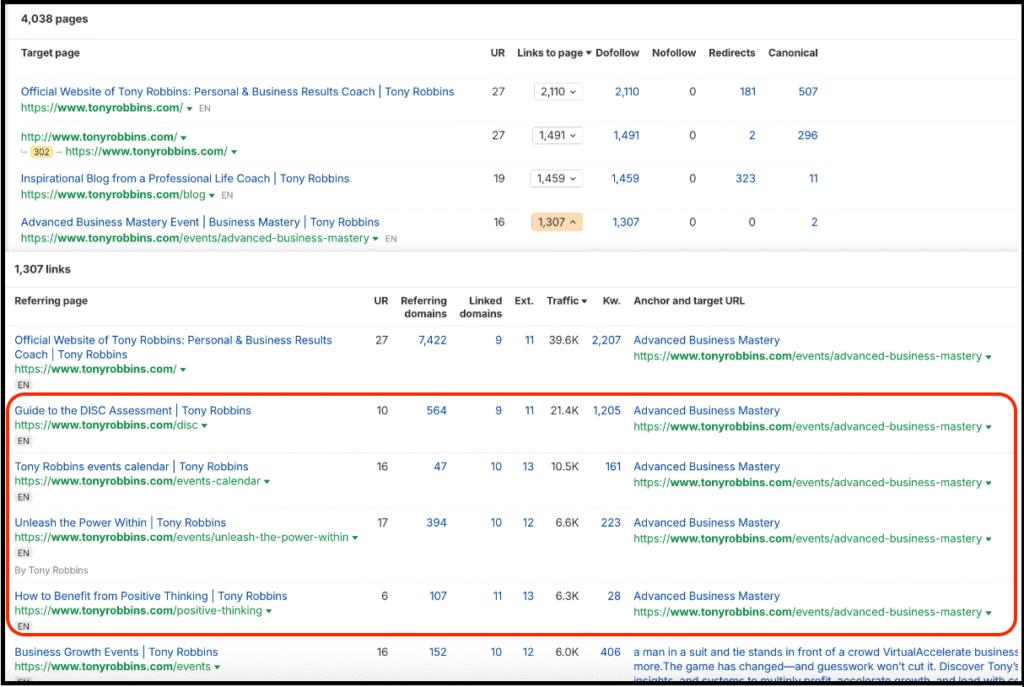
Internal links guide visitors through the site and distribute authority across important pages. Strategic linking from educational content to service and program pages helps align visibility with conversion goals.
A snapshot of how Robbins’ pages are interlinked highlights how users are guided from informational content toward relevant next steps.
- Technical performance and accessibility
Fast load times, mobile responsiveness, clean URLs, and proper indexing ensure that content is accessible across devices and platforms. These factors directly influence both rankings and user experience.
- Consistency in messaging and structure
Clear positioning, aligned terminology, and predictable page layouts reinforce trust and reduce friction as visitors move through the site.
These elements ensure that search engines can efficiently crawl and understand the website, while users can navigate it confidently.
iii. Blog content that improves online visibility for coaches
Blogs remain a valuable SEO asset when they serve a specific strategic purpose, rather than existing as isolated content pieces.
For coaching businesses, blog content should support both discoverability and credibility to guide visitors through the decision-making journey.
In practice, this usually involves a mix of content types:
- Educational content helps search engines understand topical relevance while addressing common challenges your audience is researching.
- Thought leadership content differentiates the coach’s perspective, frameworks, and approach, reinforcing expertise and originality.
- Search-driven articles attract new audiences by targeting specific, non-branded queries with clear intent.
- Brand-driven articles deepen trust with visitors who are already familiar with your work and are evaluating whether to engage.
While these content types serve different purposes, they should not exist in silos. The real effectiveness comes from interlinking related content so that visibility naturally leads to deeper engagement.
A strong example of this approach can be seen on the blog of Tony Robbins. His site features a broad mix of educational, thought leadership, and search-driven articles, many of which rank highly for competitive topics.
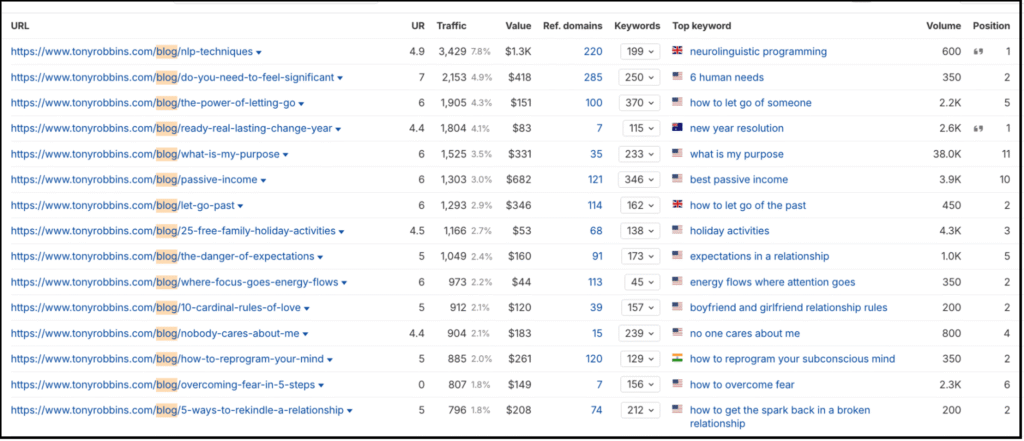
What stands out is not just the variety of content, but how it is connected. Even educational or thought leadership articles are strategically linked to relevant service pages.
For instance, an article discussing NLP techniques does not stop at explaining the concept; it guides readers toward coaching programs where those techniques are applied in practice. This creates a clear path from learning to action.
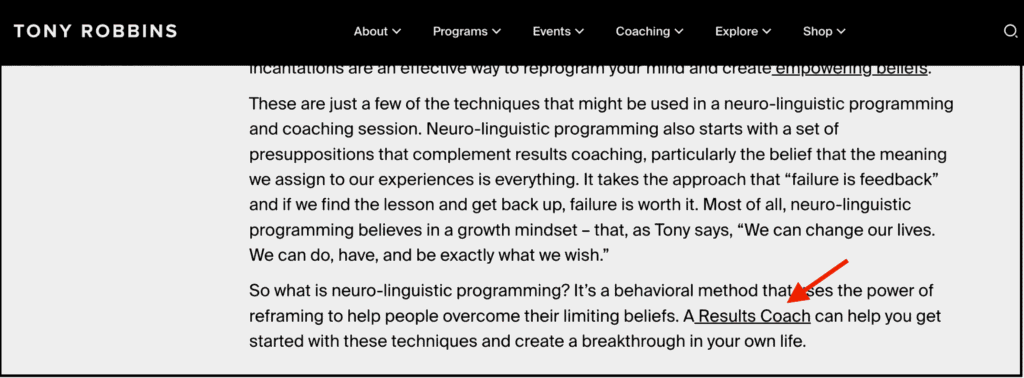
Internal linking from an educational article to a coaching service page
This approach reflects a thoughtful balance of content marketing and SEO that improves online visibility without diluting authority or positioning.
iv. Authority building for coaching SEO
Coaching operates in a competitive, trust-driven niche, where credibility often determines who earns visibility. As a result, search engines increasingly rely on external validation to assess which coaching brands deserve to rank.
This means Google and AI-driven discovery systems evaluate who is referencing you and the context in which your expertise is cited.
Editorial backlinks from relevant, reputable publications:
- Improve keyword rankings
- Strengthen authority signals
- Increase visibility in AI-generated results
- Reinforce brand trust
Look how Tony Robbins is consistently mentioned across a wide range of editorial contexts — from leadership articles and listicles to discussions of coaching techniques and methodologies.
These contextual references signal credibility at scale, both to search engines and to readers.
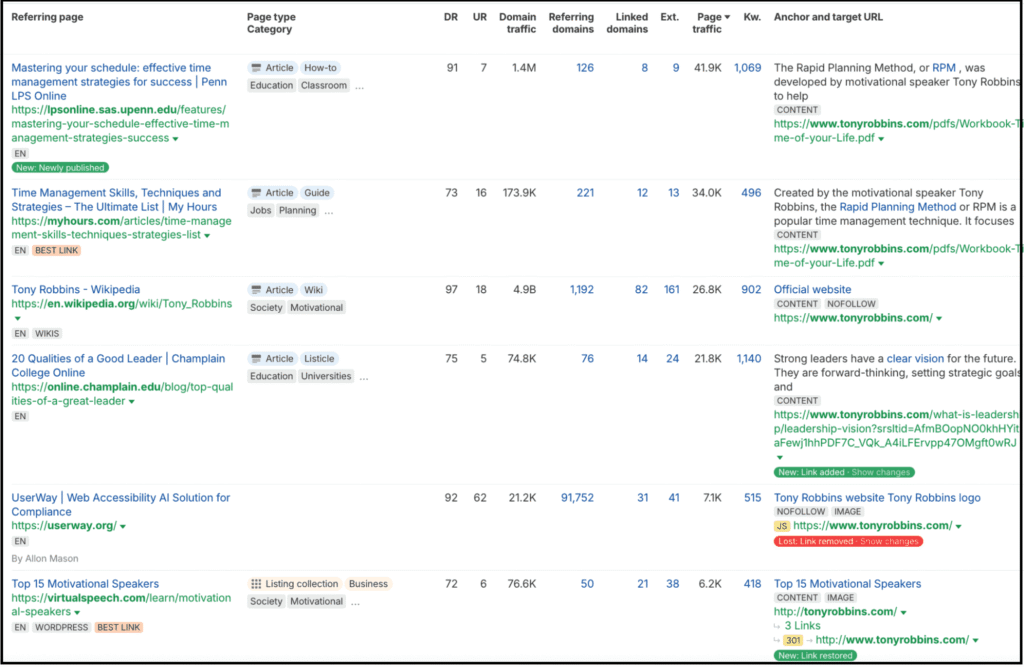
Because of this, authority building needs to be treated as a strategic layer of SEO, not a checklist item.
This is the approach followed at Tanot Solutions, where link building is planned around a coach’s niche, audience, and growth goals rather than link volume alone.
Funnel Stage 2: Generate and Nurture SEO Leads (Middle of Funnel)
Middle-of-funnel SEO bridges the gap between early interest and hiring intent.
Once visibility is established, the focus shifts from being discovered to being considered. At this stage, SEO’s role is to convert attention into leads and build trust over time.
i. Creating SEO-optimized landing pages for coaching services
Landing pages play a central role in lead generation at this stage. Rather than trying to appeal broadly, effective pages reflect specific search intent and address clearly defined needs.
- Service pages focus on core coaching offerings and are typically aligned with solution-aware keywords.
- Program pages highlight structured frameworks, cohorts, or time-bound engagements, often supporting higher-intent searches.
Tony Robbins has dedicated service landing pages for different coaching programs.

Each landing page should be built around:
- A clearly defined audience
- A specific problem or context
- A clear outcome and next step (such as booking a call or downloading a resource)
Generic pages often struggle to convert because they attempt to speak to everyone. Pages that are aligned to a distinct intent are more effective at turning organic traffic into qualified leads.
ii. Content marketing for coaches that builds trust
Middle-of-funnel content extends beyond written blog articles. At this stage, content’s primary role is to reduce uncertainty and build familiarity by establishing expertise.
To do this effectively, coaches need to expand their presence beyond a single format and use multiple content channels.
- YouTube videos
Create YouTube videos to explain concepts, walk through frameworks, or demonstrate how they work with clients in a way that written content cannot fully replicate.
See how Natalie Dawson, a coach for business owners, has built a substantial audience on YouTube with hundreds of thousands of views across her videos.
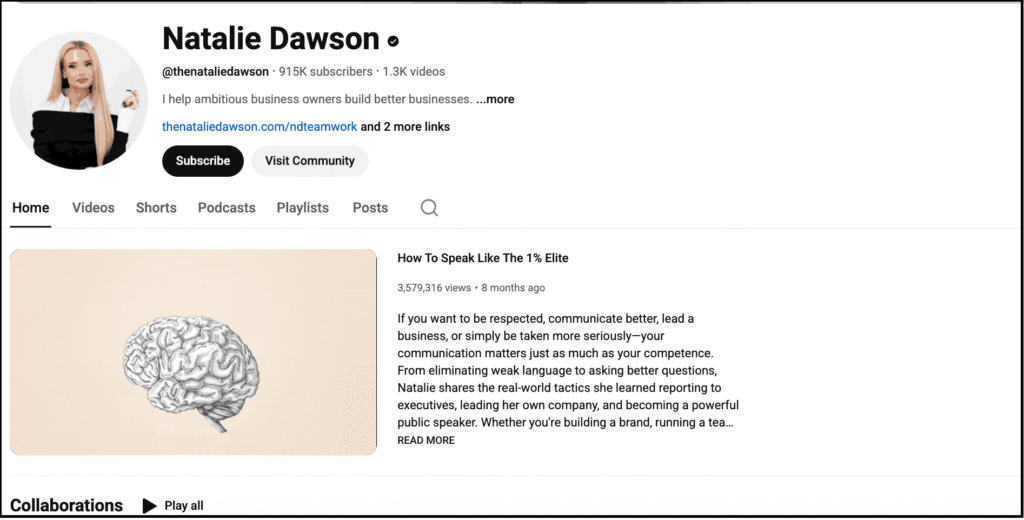
You can even embed those videos on relevant service or blog pages, as it supports SEO by increasing engagement.
- Podcasts
Another strategy to increase your online visibility is by doing podcasts. With 584.1 million podcast listeners globally, podcasts support deeper relationship-building through long-form conversation.
It can be your own podcast or guest appearances; either way, podcasts help establish authority and generate brand mentions.
- Downloadable guides
Downloadable guides act as the primary bridge between traffic and leads. Frameworks, assessments, or checklists allow visitors to engage more deeply while providing an email address in return.
Tony Robbins has a dedicated section of free resources on his website designed to educate and move visitors further into his ecosystem.

These assets work best when directly connected to the search intent that brought the visitor to the site.
Each format should serve a defined role within the funnel rather than operate independently.
iii. Using SEO to grow your email list and nurture prospects
One of the most common gaps in coaching SEO strategies is the underuse of email marketing.
Many coaches invest time in attracting organic traffic but fail to capture and nurture that attention.
When coaches struggle with low lead conversion, the issue is often not traffic quality, but the absence of a clear path to re-engage.
Email remains one of the most effective channels for nurturing leads. While not every visitor is ready to book a call immediately, many are open to continued guidance if it is relevant and helpful.
Effective email marketing approaches include:
- Attracting lead magnets aligned with search intent
- Email sequences that educate rather than sell
- Newsletters addressing common coaching questions
This stage helps move prospects from interest to readiness, allowing coaches to build trust gradually rather than relying on immediate conversion.
Funnel Stage 3: Convert Leads into Paying Coaching Clients
The final stage focuses on decision support. At this point, leads already know who you are, understand what you offer, and are actively evaluating whether to work with you.
SEO’s role here is to remove friction and guide action. Here are a few ways to do it right.
i. Decision-stage SEO pages that drive booked calls
Decision-stage pages target queries such as:
- “Hire a business coach”
- “Executive coaching for senior leaders”
These pages differ from service pages in the sense that they are more detailed and designed to answer the final, unspoken question.
Here’s an example of a high-intent service page. This service page on 1:1 coaching delves into the details of how the coaching process looks, includes relevant testimonials, addresses frequently asked questions, and presents a clear, confident call to action.
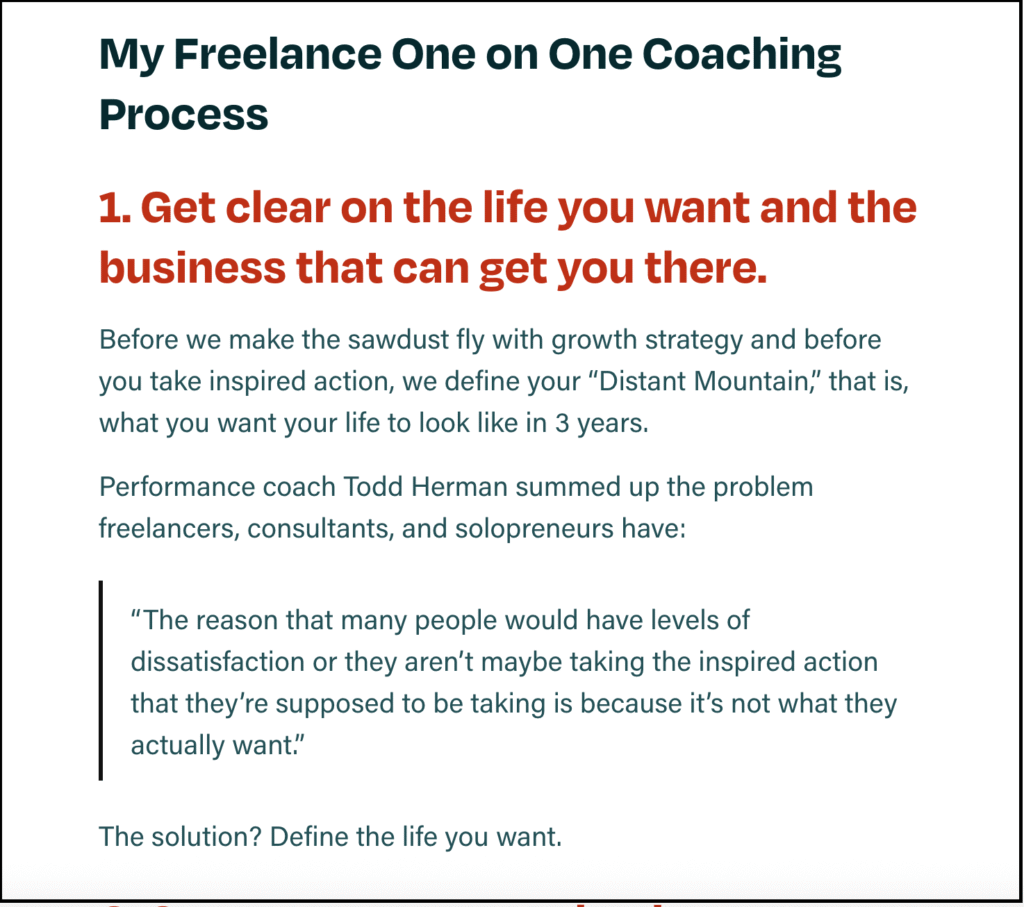
Strong decision-stage pages clearly communicate:
- Who the offer is for (and who it is not for)
- How the coaching works, including structure and engagement style
- Why the coach is qualified, based on experience and outcomes
- What the next step looks like, with minimal ambiguity
The goal is not persuasion through volume, but confidence through clarity.
ii. SEO + CRO: turning rankings into revenue
At this stage, SEO and conversion rate optimization (CRO) intersect more tightly than anywhere else in the funnel.
Strong rankings alone do not guarantee conversions. Decision-stage visitors need reassurance and direction, not more information.
Conversion-focused SEO at this stage involves:
- Intent-matched CTAs that reflect readiness (e.g., “Apply for Coaching” rather than generic prompts)
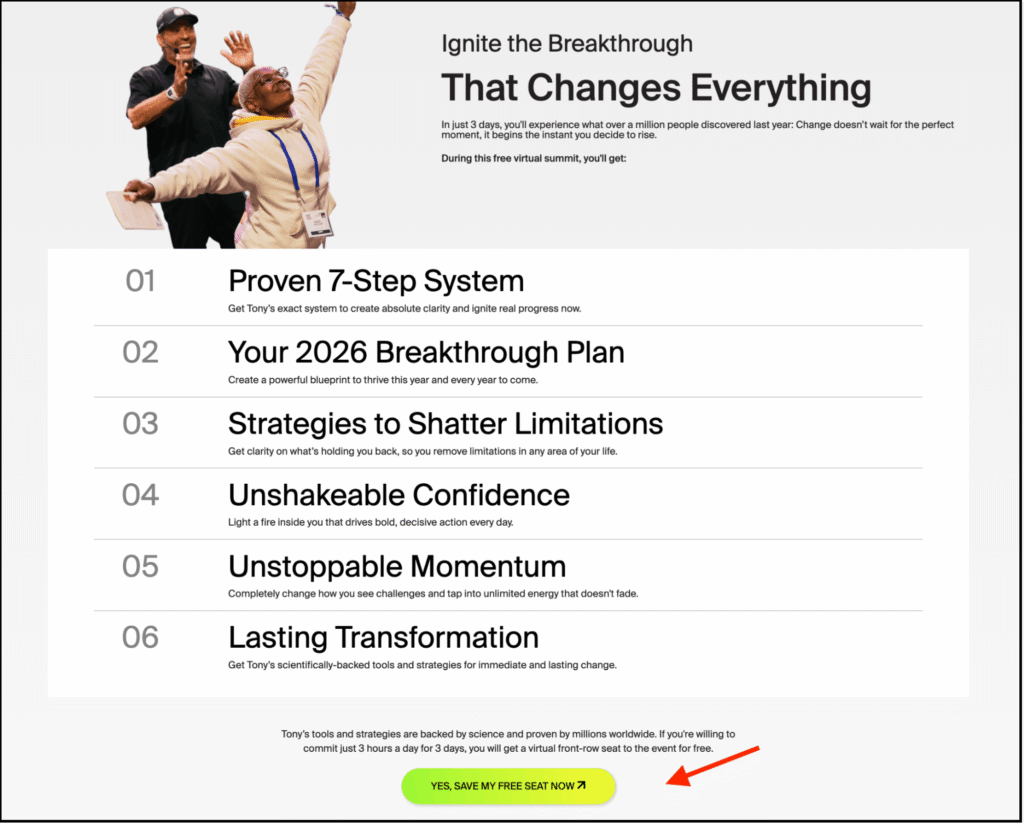
See how Robbins has an action-oriented CTA on his high-intent event program page
- Clear content hierarchy, so visitors can quickly find what matters most to them
- Purposeful internal linking from comparison or decision-support content directly to booking or application pages
Aligning SEO with conversion rate optimization ensures that traffic translates into measurable business outcomes.
iii. Trust signals that close high-ticket coaching clients
Trust becomes decisive at the point of conversion.
Prospects are no longer asking whether coaching could help. They are deciding whether you are credible enough to invest in.
Effective trust signals at this stage include:
- Authority links pointing directly to service and offer pages, ensuring that external validation supports revenue-driving pages
- Client testimonials and outcomes that demonstrate real-world impact
- Credentials, certifications, and media mentions that reinforce professional credibility
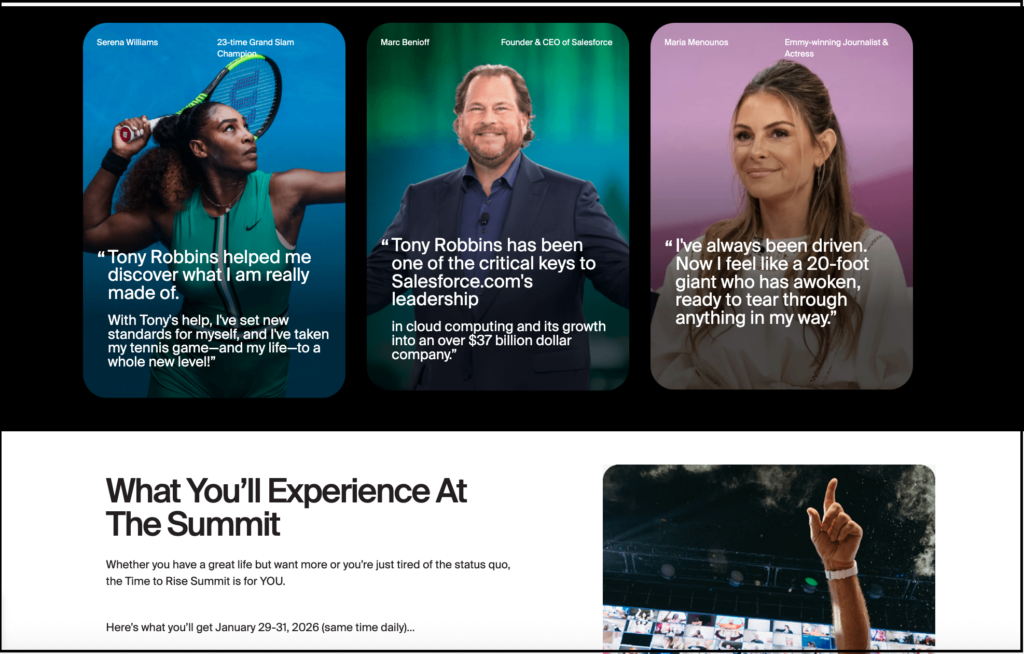
Clear testimonials featuring real people strengthen credibility and reduce trust friction
What matters is placement as much as presence. When authority and proof are positioned close to conversion points, hesitation is reduced, and decision-making becomes easier.
DIY SEO vs. Hiring an SEO Partner for Coaching Businesses
DIY SEO often appears cost-effective at first, but the real cost shows up over time. For most coaches, managing SEO internally means diverting attention away from client work and navigating long learning curves.
More importantly, authority-building, one of the most critical aspects of coaching SEO, is difficult to do well without experience and established processes.
Without consistency and strategic oversight, results tend to plateau or remain unpredictable.
What to look for in an SEO partner for coaches
When evaluating an SEO partner for your coaching business, look beyond tools and promises. An effective partner brings:
- A strategy-first approach, not isolated tactics
- Proven authority-building expertise, especially in trust-driven niches
- Transparent processes and reporting, so progress is clear
- Alignment between SEO efforts and business goals, not just rankings
The right partner complements your coaching practice by handling complexity while keeping growth intentional and measurable.
How Tanot Solutions Helps Coaches Scale SEO Across the Funnel
Tanot Solutions approaches SEO as an integrated growth system. Every decision, from keyword selection to authority building, is designed to support how coaching clients actually move from discovery to decision.
Our backlink strategies are designed around a coach’s niche, audience, and commercial priorities.
Rather than distributing links evenly across the site, authority is planned deliberately so that trust flows to the pages that matter most.
This includes:
- Selecting placements that are contextually relevant to coaching, leadership, or professional development
- Aligning backlink targets with funnel intent, not just content type
- Ensuring authority supports long-term positioning rather than short-term ranking boosts
Final Thoughts: SEO for Coaches Is a Long-Term Growth Asset
SEO for coaches is not a short-term tactic; it compounds over time.
Authority strengthens gradually, and trust becomes a differentiator in crowded coaching markets. Besides, a funnel-based SEO approach brings predictability to client acquisition rather than relying on referrals or sporadic demand.
For coaches looking to build a reliable, long-term growth channel, SEO remains one of the most durable investments available.
If you’re ready to approach SEO as a structured authority-building system, it’s essential to work with the right partner. Explore how Tanot Solutions helps coaching businesses improve visibility, build trust, and convert organic demand consistently.
Frequently Asked Questions (FAQs)
How is SEO for coaches different from SEO for other businesses?
SEO for coaches focuses on building trust and guiding clients through a decision-making process. Unlike general SEO, it’s not just about traffic or rankings. Coaching SEO emphasizes showing expertise, demonstrating results, and creating a clear path from awareness to booking, so prospective clients feel confident choosing the right coach.
How long does it take for SEO to bring coaching clients?
SEO for coaching is a long-term strategy. Typically, visibility improves first, followed by engagement and qualified leads over a few months. With consistent content, authority building, and a structured funnel, coaches start seeing more steady and predictable inquiries, rather than sporadic traffic spikes or short-term results.
Why do coaches need a funnel-based SEO approach?
Coaching decisions are high-consideration, meaning prospects research extensively before hiring. A funnel-based SEO approach ensures content addresses each stage—from awareness to evaluation to decision—guiding visitors naturally toward trust and booking. Without it, SEO may attract traffic but fail to convert leads into paying clients.
Is blogging still effective for coaching SEO?
Blogging is effective when it’s purposeful. Educational and thought leadership content helps coaches establish expertise, answer client questions, and demonstrate credibility. Its value increases when posts are linked to relevant service pages, ensuring readers can move seamlessly from learning about challenges to considering coaching solutions.
Which keywords should coaching businesses target?
Coaches should focus on problem-aware keywords to attract those just recognizing challenges and solution-aware keywords to capture high-intent prospects. Balancing both helps guide visitors through the funnel, supports visibility, and ensures that organic traffic aligns with real client acquisition goals instead of just generating clicks.
Why is authority important for coaching SEO?
Authority signals like backlinks, mentions, and credible references matter because coaching is a trust-based service. Search engines and potential clients both use these signals to assess credibility. High authority not only improves visibility but also reassures prospects that the coach is reliable and capable of delivering results.
Should coaches manage SEO themselves or hire a partner?
Managing SEO in-house can work for basic tasks, but long-term results require consistent strategy, authority building, and technical expertise. Partnering with an SEO expert allows coaches to focus on clients while ensuring content, backlinks, and funnels are aligned for sustainable growth and steady lead generation.