

If you run an accounting firm, you need a steady pipeline of high-quality leads.
70% of buyers search online before contacting a professional service provider. That’s why a strong online presence matters.
So when someone searches for accounting services, your firm name pops up and looks credible, too.
At Tanot Solutions, we’ve seen how strategy-led SEO, especially authority-focused link building, transforms visibility into qualified enquiries. This guide explains how to approach SEO for accountants strategically to attract qualified leads consistently and filter out low-intent enquiries.
Why SEO for Accountants Is Important
SEO for accountants refers to optimizing your website so search engines, including AI-powered systems, understand your expertise and connect it with people actively looking for accounting services.
Unlike most industries, accounting is a high-trust, high-stakes service. Clients aren’t just evaluating a provider. They are looking for an accounting partner that they can trust with their finances, compliance, risk exposure, and long-term decisions.
SEO is how prospects validate that trust.
They may have discovered your firm earlier or heard about you through a referral. Either way, this is where SEO quietly influences the final decision, even when you’re already “known.”
Search becomes the validation layer. If your firm looks outdated or inconsistent, you’re often ruled out before the first conversation even happens.
Boston Consulting Group (BCG) research shows that high-consideration services involve multiple touchpoints before conversion. With success in AI, it has fundamentally changed how prospects assess options, compare providers, and build confidence before reaching out.
Buyers don’t move neatly through a linear funnel anymore. This is why SEO for accounting firms today demands a more flexible approach.
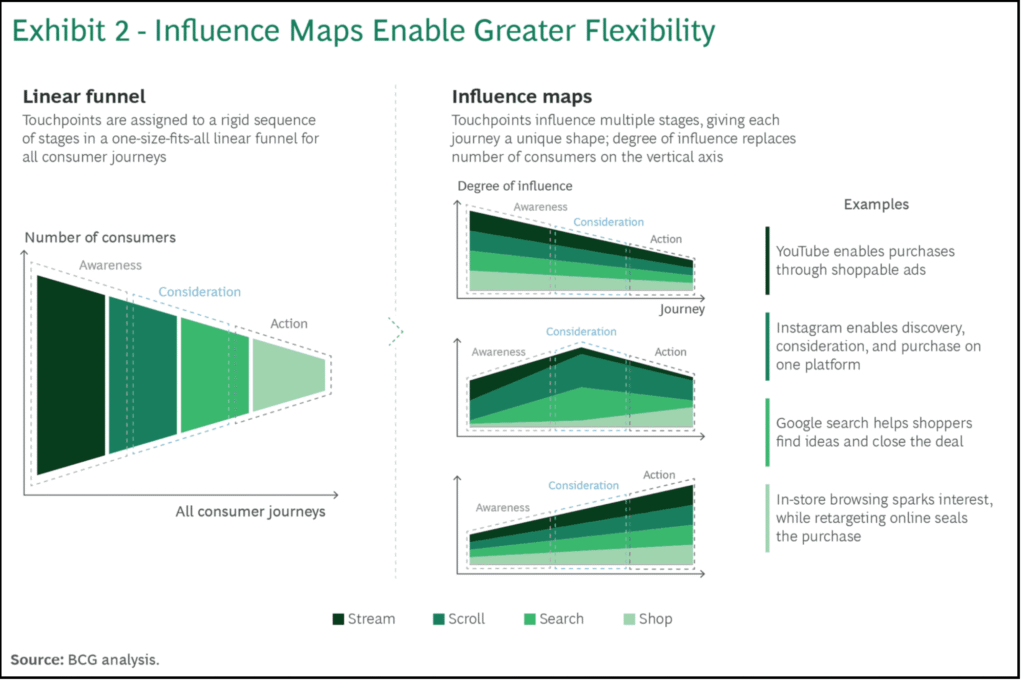
Let’s now understand the fundamentals of an effective SEO strategy for accountants to get started.

Local SEO for Accountants Who Want Serious Clients
The first step to building a strong online presence is setting up your Google Business Profile (GBP). Most accounting firms treat this as a one-time setup task.
In reality, it plays a far bigger role in how prospects discover, evaluate, and choose your firm.
For accountants, your GBP functions as:
- A trust checkpoint
- A conversion driver
- A local authority signal
Well-optimized profiles consistently influence both local pack rankings and enquiry rates. When your services are clearly listed, your details are accurate, and your reviews reflect real client experiences, the difference in lead quality is noticeable.
Here’s an example of a well-optimized Google Business Profile for an accounting firm.
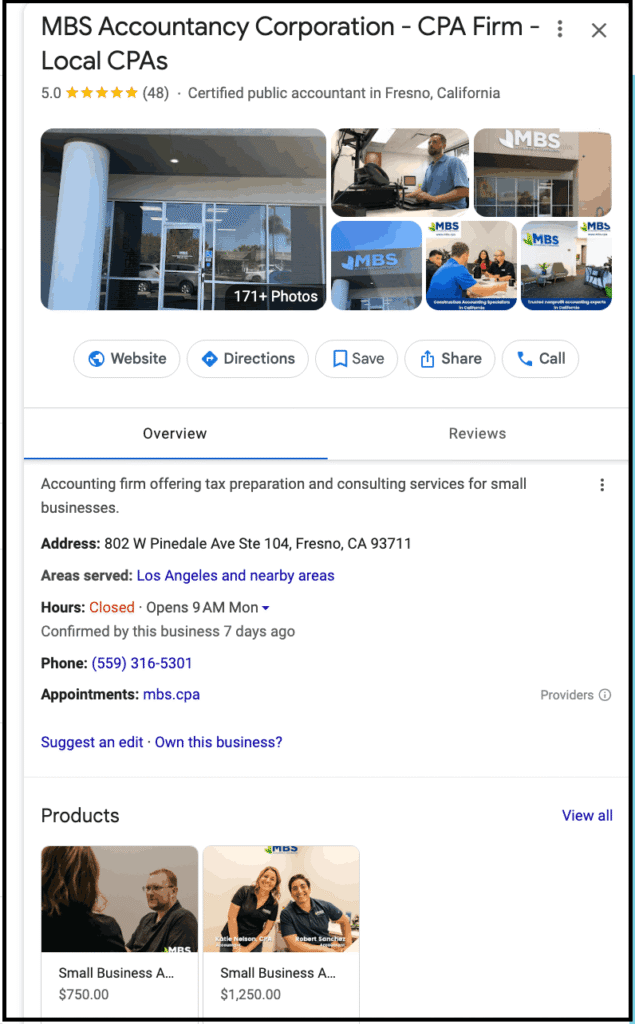
Why reviews matter more than you think
Reviews, in particular, help drive higher click-through rates and convert more local traffic.
For accounting firms, they often answer the unspoken question prospects are already asking: “Can I trust these people with my business?”
59% of consumers don’t trust a star rating until a business has at least 20 to 99 reviews behind it.
That’s why it’s important to have a simple, consistent process for collecting timely reviews from existing clients. Strong review signals don’t just improve visibility. They help reduce hesitation before the first call.
How local SEO drives both high- and low-intent traffic
Ranking for searches like “accountant near me” can bring volume. But volume doesn’t always mean quality.
Without a clear strategy, local SEO often attracts:
- One-time filers
- Price-sensitive prospects
- Businesses looking for the cheapest option
These low-quality enquiries drain billable hours, clog your pipeline, and distract your team from clients who actually value your expertise. That’s why filtering for commercial intent is critical.
How to filter for commercial intent
Effective local SEO for accountants focuses on:
- Service-specific searches (such as tax advisory, compliance, or audit)
- Business-focused queries rather than generic accounting terms
- Location pages built around services, not just cities
Here’s an example showing how generic keywords like “bookkeeping services” drive higher traffic, while business-focused searches such as “CFO services for small businesses” or “accounting firms for startups” attract lower volume but far stronger intent.
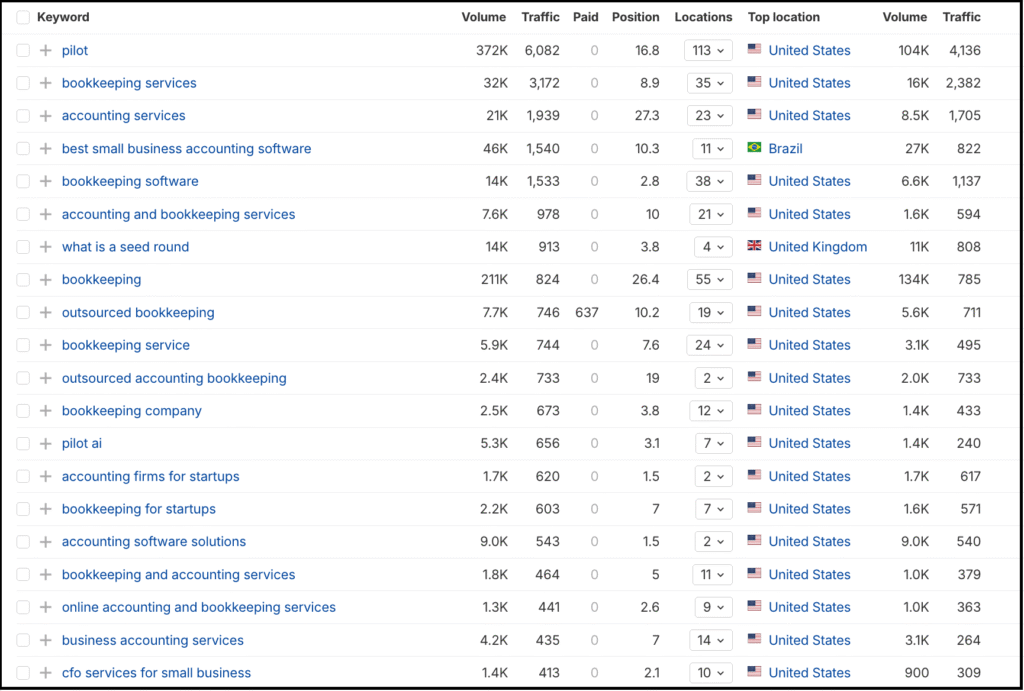
Stronger accounting firms build location relevance without spam by:
- Mapping services to locations naturally
- Supporting pages with meaningful content and authority
- Avoiding doorway-style pages that Google increasingly devalues
When local SEO is done this way, it stops being a volume play and becomes a lead-quality filter.
Content That Pre-Qualifies Accounting Clients Before They Contact You
BCG’s research has already shown that modern consumer journeys are complex and rarely follow a linear marketing funnel. This is a common reason many accountants feel frustrated with content marketing.
They get decent traffic on blog articles, but struggle to convert that traffic into qualified leads. This is because educational blog content naturally attracts:
- Early-stage researchers
- DIY users
- People with no immediate buying intent
That doesn’t mean blogging is ineffective, or that you should stop doing it. It means blogging alone is no longer enough.
Today, consumer journeys are shaped by multiple touchpoints, not a single page or channel. To drive qualified enquiries, firms need to understand how prospects move across those touchpoints and which ones actually influence decisions.
Some prospects are decisive. They might read a blog post, watch a YouTube video, and sign up shortly after. Others are more cautious. They’ll look deeper: comparing different providers, reviewing the accountant’s background, and reading thought leadership articles that share scenario-based content before making contact.
This is why modern SEO content strategies can’t rely on blogs alone. Content now extends across formats and platforms, and accounting firms need bespoke content plans that support multiple, non-linear buyer journeys.
Content types that pre-sell expertise
High-performing accounting websites focus on content that helps prospects decide, not just learn.
| Content Type | What It Does | Why It Works |
| Decision-Support Pages | Clarify who your firm is best suited for, who you’re not a good fit for, and how engagements work | Filters out low-quality leads before they contact you |
| Scenario-Based Content | Addresses real business situations, common compliance challenges, and growth-stage financial needs | Resonates strongly with decision-makers facing similar challenges |
| Comparison & Clarity Pages | Explains service differences, advisory vs compliance roles, and pricing logic (without listing prices) | Builds trust through transparency and reduces hesitation |
When content is structured this way, it helps attract pre-qualified leads, ensuring the conversations you have are worth your time.
On-Page SEO for Accounting Websites
On-page SEO for accountants is about helping search engines and AI-powered systems reinforce trust in your website. We call it trust-first optimization, and it’s central to why your business needs SEO for sustainable, long-term growth.
On-page SEO ensures that both Google and prospects clearly understand:
- What services you offer
- Who those services are for
- Why your firm is qualified to deliver them
i. Start with clear, service-focused keyword optimization
Effective on-page SEO begins with optimizing your core website pages around clear, intent-driven keyword terms.
For accounting firms, this means prioritizing:
- Service-based keywords (e.g., tax advisory services, audit services for small firms, CFO services)
- Location-based keywords (e.g., small business accounting service in California)
Each page should have a clear primary focus. Trying to rank one page for multiple unrelated services often weakens relevance and confuses both users and search engines.
Clarity here sets the foundation for everything else.
ii. Internal linking that reinforces expertise
Internal links don’t exist just to connect pages but also help strengthen the depth of expertise.
Internal linking your website pages the right way helps:
- Improve crawl efficiency for search engines
- Strengthen topical relevance across your site
- Guide users toward conversion paths naturally
For example, linking your blog content to relevant service or location pages helps guide users to the right next step and moves them naturally through the buying journey.
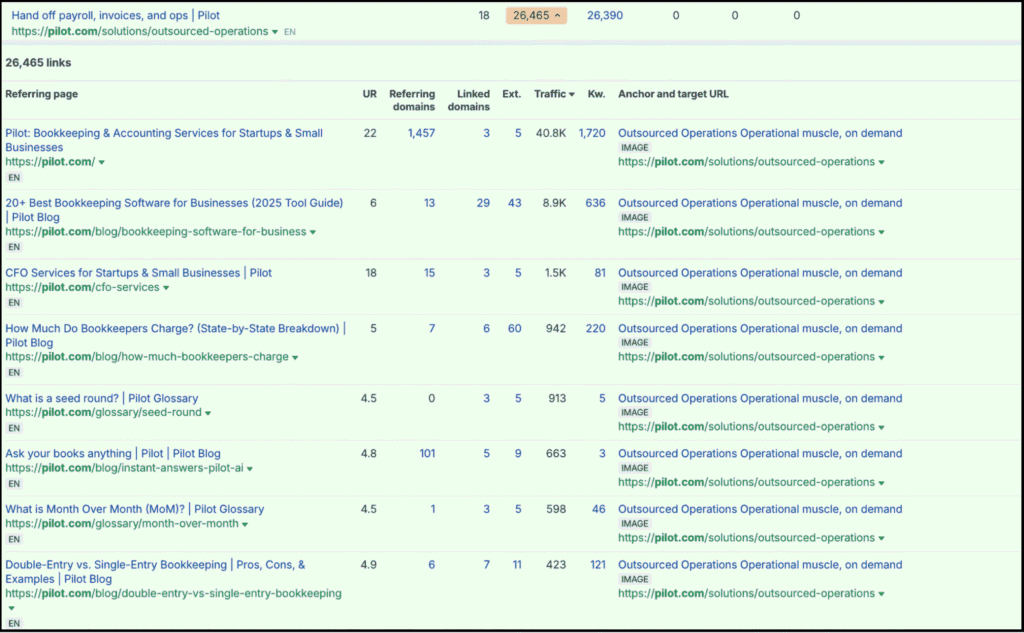
Pilot’s solution pages are strategically interlinked with its homepage and supported by multiple relevant blog articles.
This creates a clear progression: learning → validation → enquiry
iii. Trust signals that strengthen an accountant’s credibility
Strong on-page SEO includes visible credibility cues, such as:
- Professional accountants credentials and certifications
- Clear experience indicators
- Author bios that establish expertise and accountability
These signals help search engines evaluate trustworthiness while giving prospects the confidence to take the next step.
When on-page SEO is built around trust and not shortcuts, your website stops being just an information source and starts working as a decision-support asset.
Link Building for Accounting Firms
This is where many accounting firms, and even SEO agencies, get it wrong.
Accounting firms cannot afford risky backlinks. In a trust-heavy industry, one poor decision can undo months of solid SEO work.
But wait, aren’t backlinks dead? The answer is no. Backlinks still play a quite important role in authority building, something we break down in detail in our guide on the unexpected benefits of building high-quality links.
Why precision beats volume
“More links” is no longer a winning strategy, especially for accounting firms.
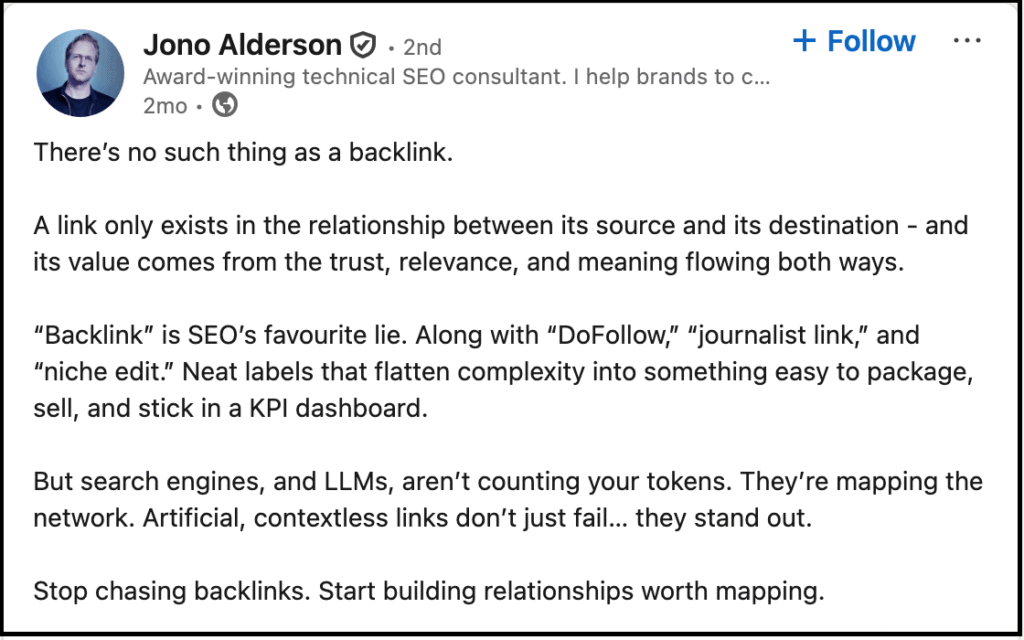
Jono Alderson, a leading technical SEO consultant, recently highlighted that many traditional backlink metrics, such as chasing dofollow tags, journalist links, or inflated DR numbers, have become vanity KPIs.
Search engines and modern language models don’t evaluate links in isolation. They care about context, credibility, and real-world signals.
This is especially true in YMYL industries like accounting, where Google applies stricter scrutiny.
A weak or careless link profile can:
- Stall organic growth
- Trigger ranking volatility
- Undermine trust signals across your site
This isn’t a niche where “more links” wins. Precision does.
What makes a backlink “safe” in accounting niches
High-quality backlinks for accounting firms consistently share three characteristics:
- Relevance: The website and content context must genuinely align with your audience and services.
- Editorial control: Links should be placed naturally within real, editorial content. It shouldn’t be forced, templated, or transactional placements.
- Real traffic: Authority isn’t just a domain rating (DR) score. It’s whether real users actually see and engage with the content linking to you.
In other words, link building for accounting firms needs to be intentional and mapped strategically.
This is exactly where Tanot Solutions takes a different approach.
We follow a transparent, approval-first link-building process where every placement is reviewed for relevance and brand alignment before it goes live.
Approval-based link building ensures:
- Brand alignment
- Risk control
- Long-term sustainability
Every link we build is strategy-led and client-approved, never automated or rushed. That’s how we’ve helped businesses achieve up to 5× SEO results without exposing them to unnecessary risk.
What SEO Success Looks Like for an Accounting Practice
SEO success for accounting firms isn’t about how many keywords you rank for or how much traffic your site gets. It’s about whether SEO is bringing in the right kind of leads.
That means reframing the key performance indicators (KPIs) you track.
i. Qualified enquiries by service
The first metric that matters is who is reaching out, and for what. Instead of counting total leads, strong accounting firms track:
- Enquiries by service line (tax, audit, advisory, compliance)
- Whether those enquiries align with core revenue drivers
Ten tax advisory enquiries are often more valuable than fifty generic accounting requests. SEO should support your most profitable services, not just inflate inbox volume.
ii. Lead-to-client conversion rate
Traffic and leads are only inputs. Conversion is where SEO proves its value.
A healthy SEO strategy for accounting businesses improves:
- The quality of incoming enquiries
- The percentage of leads that turn into paying clients
If organic leads consistently convert better than other channels, it’s a sign your SEO is attracting prospects with real intent.
iii. Revenue per organic lead
This is where many firms gain real clarity. Revenue per organic lead helps you understand:
- The average deal value coming from SEO
- Whether SEO is attracting clients who fit your pricing and engagement model
A smaller number of high-value clients almost always outperforms a large volume of low-margin work. SEO for your accounting business should support that outcome.
iv. Long-term cost efficiency vs paid ads
Unlike paid ads, SEO compounds. Over time, strong SEO:
- Lowers cost per acquisition
- Reduces reliance on ads and referrals
- Continues to drive leads without increasing spend
Comparing organic acquisition costs to paid channels often reveals why SEO becomes one of the most efficient growth drivers for accounting firms in the long run.
Wrap Up: SEO for Accounting Firms Is a Long-Term Asset
When done right, SEO for accounting firms becomes a compounding reputation asset.
Every service page you refine and every high-quality link you earn strengthen how search engines, LLMs, and prospects perceive your firm. Over time, that credibility makes it easier to rank, easier to convert, and harder for competitors to displace you.
Authority does take time. But unlike paid channels that stop the moment budgets pause, SEO continues to pay back long after the work is done.
Firms that invest in trust-first SEO benefit from lower acquisition costs, stronger lead quality, and more predictable growth year after year. This is also why accounting firms that “win” SEO tend to churn clients far less often.
At Tanot Solutions, we support this long-term approach by focusing on authority-led, link building service for accountants.
If you’re ready to build SEO that compounds rather than resets, Tanot Solutions can help you turn link building into a sustainable growth lever. Contact us today for a customized SEO plan for your accounting firm.
Frequently Asked Questions (FAQs)
How long does SEO realistically take to bring good clients to an accounting firm?
SEO is not instant, especially for accounting firms where trust matters. In most cases, early improvements appear within a few months through better local visibility and clearer service pages. Consistent, high-quality enquiries usually follow once authority builds. Firms that stay patient and focused tend to see more stable results over time.
Should accountants try to rank for broad keywords or specific services?
Specific services usually perform better. Broad terms attract many people who are just browsing or comparing prices. Service-based searches bring prospects who already understand their needs. These users ask better questions, value expertise more, and are easier to convert into long-term clients rather than one-off engagements.
Why do many accounting websites get traffic but few enquiries?
Traffic alone doesn’t mean people are ready to hire. Many visitors are researching or trying to solve things themselves. When websites lack clear service explanations, expectations, or next steps, users leave. Pages that explain who the firm works best with tend to convert fewer visitors, but far better ones.
Can SEO help reduce unqualified or time-wasting enquiries?
Yes, when done properly. SEO helps set expectations before contact. Clear descriptions of services, engagement types, and ideal clients discourage casual or price-focused enquiries. This means fewer calls overall, but more relevant conversations with businesses that understand your value and are prepared for professional advisory relationships.
Is blogging still worth it for accounting firms?
Blogging helps, but it should not stand alone. Blogs build credibility and answer early questions, but they rarely close decisions by themselves. When blog content supports stronger service pages and practical explanations, it helps prospects feel informed and confident rather than unsure or overwhelmed when they reach out.
Why do accounting firms need to be careful with link building?
Accounting sits in a high-trust category. Poor-quality links can harm credibility and rankings rather than help. Search engines look closely at relevance and intent in this space. A smaller number of well-placed, relevant links is far safer than aggressive tactics that might work in lower-risk industries.
What should accountants track to know if SEO is working?
The most useful signals are not page views or rankings alone. Look at the type of enquiries coming in, the services people ask about, and how many leads become paying clients. When SEO starts bringing clients who match your pricing and service model, it’s working as intended.