

Most dental practices today are doing SEO in some form. You likely have a website, a Google Business Profile, and perhaps even a few blog posts.
Yet patient bookings haven’t increased the way you expected.
This disconnect usually has nothing to do with effort. In most cases, SEO is being treated as a collection of marketing tactics rather than a true patient acquisition system.
This guide breaks down how SEO for dentists actually works, and how it can be used to drive measurable, long-term patient growth.
The Three Pillars of SEO for Dentists (And Why You Need All Three)
Successful dental SEO rests on three interconnected pillars:
- Local visibility
- Organic rankings
- Actual patient acquisition
Many clinics focus heavily on one while neglecting the others. This results in partial wins that don’t translate into consistent growth.
Think of these pillars as a system. Local visibility helps patients discover you. Organic rankings help them trust you. Patient acquisition determines whether SEO delivers real ROI. Remove one, and the entire system weakens.
Let’s look at how these pillars come together to form a complete, patient-focused funnel for your dental practice.

Pillar #1 Local Visibility: Being Found When Patients Search Nearby
For most dental practices, local visibility is the first touchpoint.
When someone searches for “dentist near me” or “emergency dentist,” Google’s local results and map pack dominate the screen. If your practice isn’t visible here, you’re invisible at the moment of highest intent.
Local visibility is driven by a few core elements:
i. A well-optimized Google Business Profile (GBP)
Your GBP is often the first impression patients have of your practice, even before they visit your website.
An optimized GBP includes:
- Accurate business name, address, and phone number (NAP)
- Correct primary and secondary categories (e.g., general dentist, cosmetic dentist, emergency dentist)
- Clear service descriptions written for patients, not search engines
- Regular updates, photos, and posts that show the practice is active
Two clinics may offer identical services, but the one with complete service listings, updated photos, and clear descriptions is far more likely to appear and be clicked than a half-filled profile.
Here’s what a well-optimized GBP looks like:
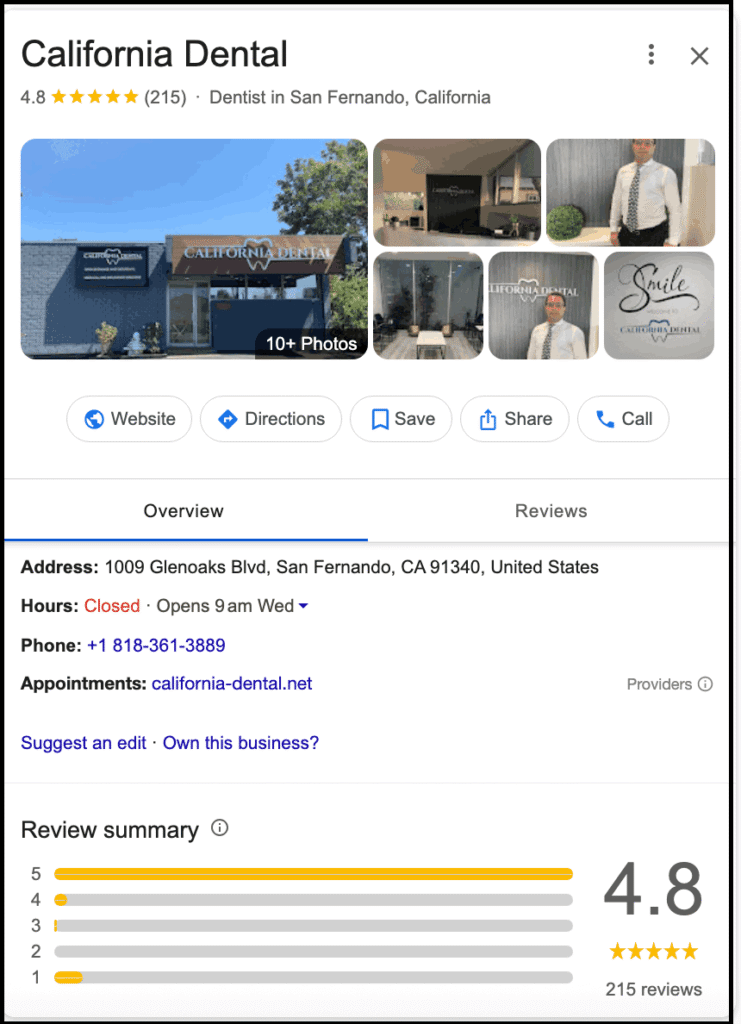
ii. Consistent Presence in Local Map & Pack Results
Ranking in the local pack isn’t just about your Google Business Profile alone. Google cross-references your practice across the web to confirm legitimacy and relevance.
Make sure that your name, address, and phone number match everywhere they appear online. It could be in business listings on a directory or on your own website.
Additionally,
- Build service pages that clearly mention the city or locality you operate in
- Align on-page content with the local search terms patients actually use
California Dental clearly references its location within the service page content.
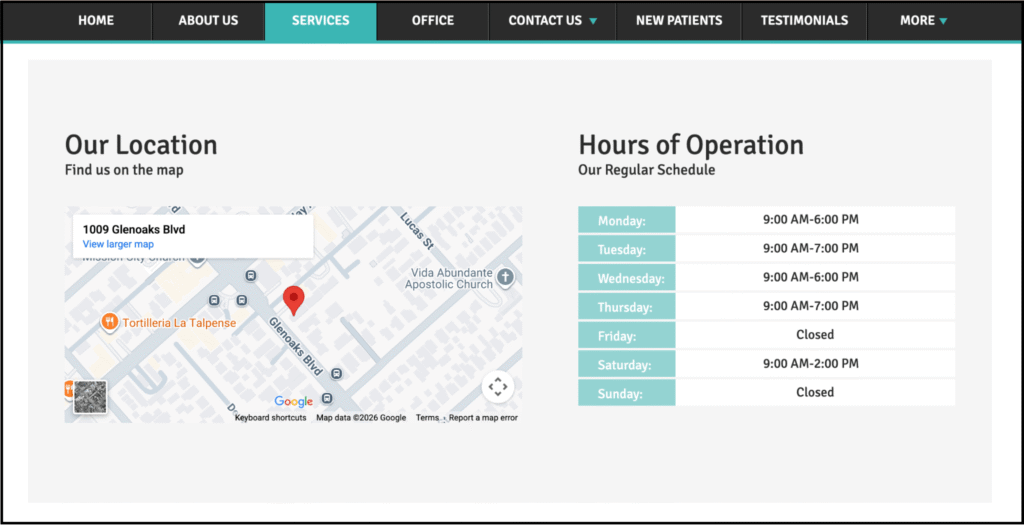
This helps both search engines and patients immediately understand where the practice operates.
iii. Reviews and Ratings
Patient reviews play a dual role in dental SEO:
- They influence local rankings
- They influence patient decisions
Patients often scan reviews before clicking through to a website.
A steady flow of genuine reviews, thoughtful responses, and strong overall ratings can significantly improve both visibility and click-through rates.
With 215 reviews and 4.8 ratings, California Dental is building a strong local visibility for its dental clinic.
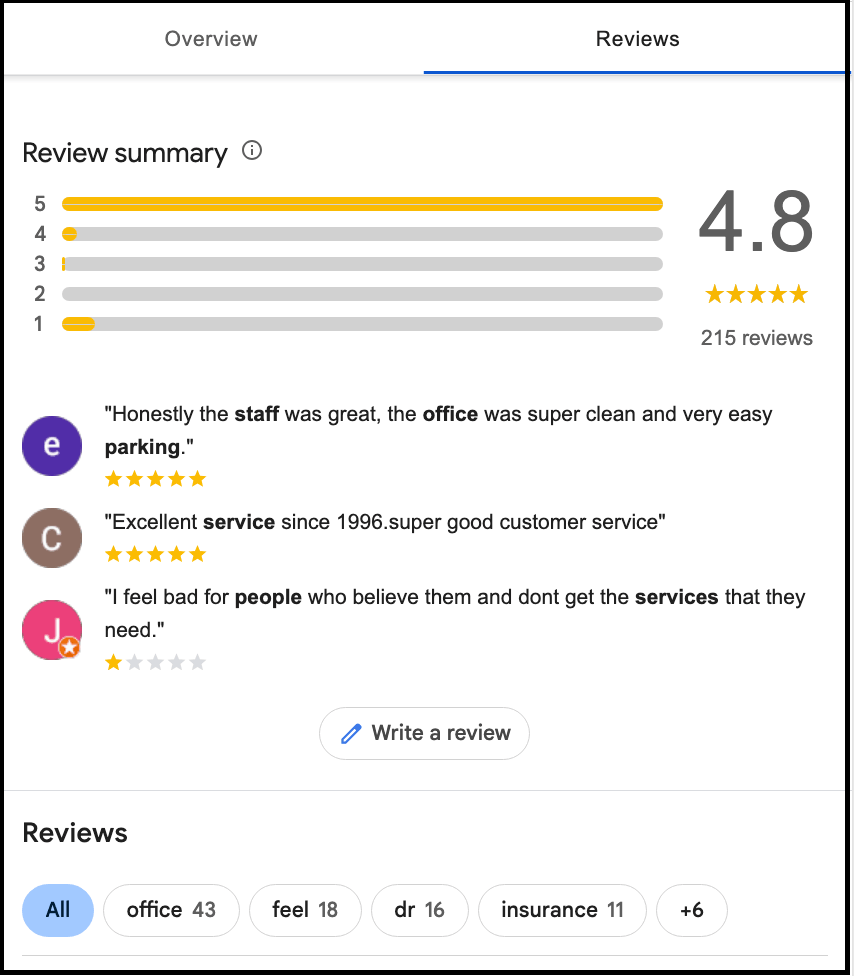
| 💡Local visibility drives discovery. Patients may find you through maps, but they rarely choose you based on that alone. |
Pillar #2 Organic Rankings: Building Authority Beyond the Map Pack
Once local visibility is in place, organic rankings become the layer that builds patient confidence.
When your website appears for service-specific or educational searches, it reassures patients that your practice understands their concerns and has the expertise to address them.
This visibility supports informed decision-making rather than impulse clicks.
Here’s how to build organic rankings that support patient confidence and drive informed appointment decisions.
i. Service- and condition-based searches: where high-intent patients live
Not all dental searches indicate the same level of intent. Some reflect early curiosity, while others signal urgency or readiness to book.
High-intent organic searches often look like:
- “Invisalign dentist for adults”
- “Root canal treatment cost”
- “Best dentist for gum disease”
- “Tooth pain when biting”
Patients using them are looking for expertise and reassurance that the provider understands their specific concern.
How to approach this strategically
Rather than relying on a single, generic services page, it’s more effective to create dedicated pages for your core treatments.
Each page should be structured around:
- One primary service-focused keyword
- Supporting condition-based queries that reflect real patient concerns
- Including FAQs that address common pain points, such as discomfort, recovery timelines, risks, and cost expectations.
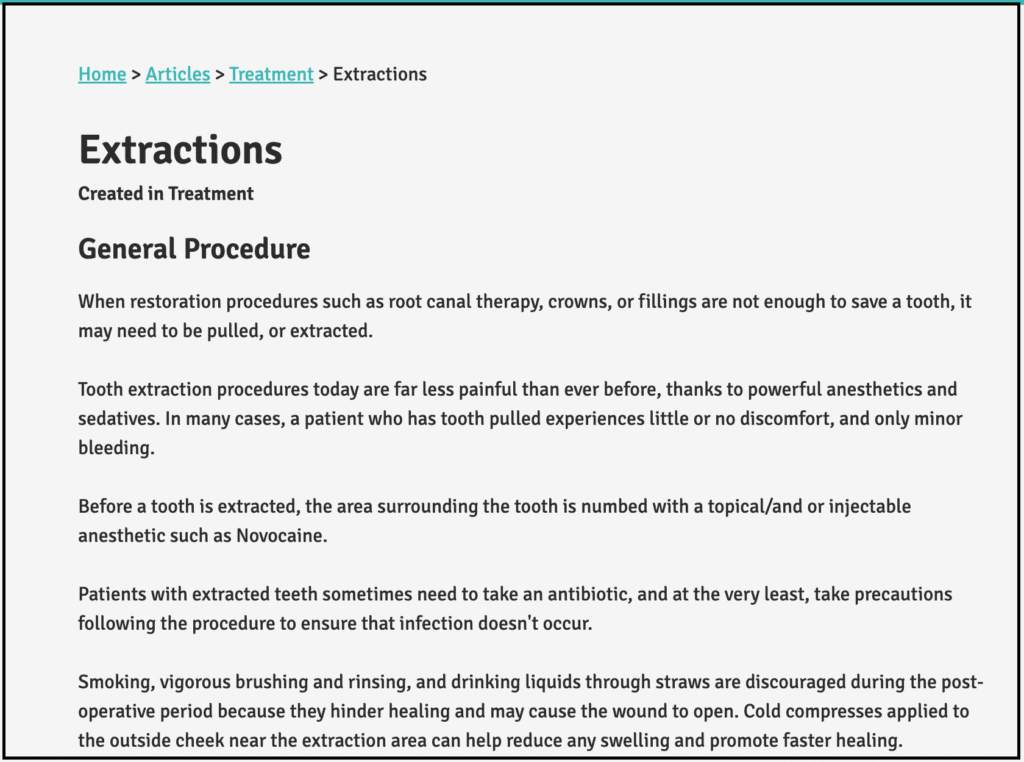
Here’s how California Dental has done it.
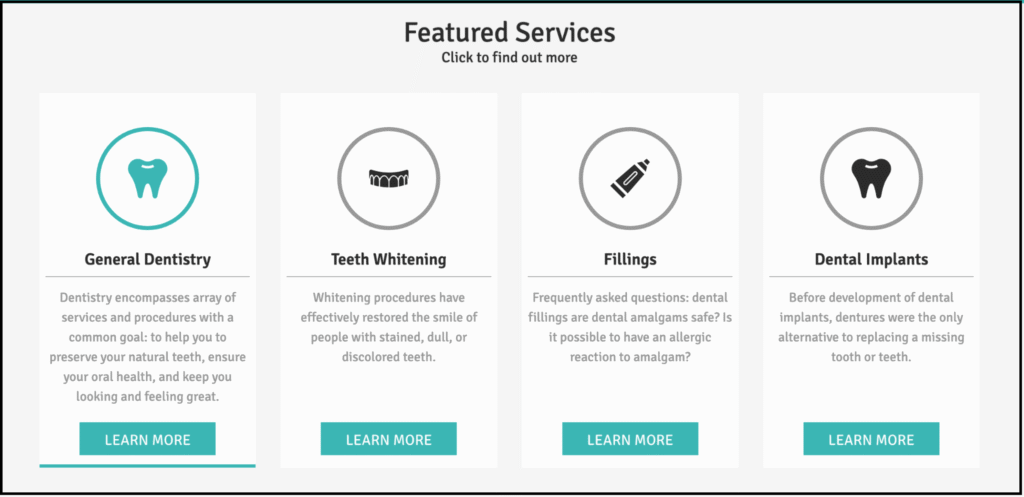
When you click on a specific service on California Dental’s website, you’re taken to a dedicated service page that explains the treatment and its procedure.
ii. Educational and treatment-intent keywords: building confidence before the appointment
Dental decisions often come with anxiety. Patients want to understand the problem before committing to treatment.
Common educational searches include:
- “Is a root canal painful?”
- “How long does Invisalign take?”
- “Signs of gum disease”
- “What happens if a cavity is left untreated?”
Ranking for these queries positions your practice as a helpful resource during the evaluation stage, rather than just another local listing.
How to approach this strategically
Educational content works best when it is focused and patient-centric. Each piece should:
- Address one specific question or concern
- Link naturally to relevant treatment or service pages
- Use clear, plain language instead of clinical terminology
Adding a brief section that explains when it’s appropriate to see a dentist helps guide readers toward the next step without pressure. The goal is to support informed decisions, not force conversions.
California Dental, for example, has a dedicated Dental Education section, which is a strong foundation for building topical authority.
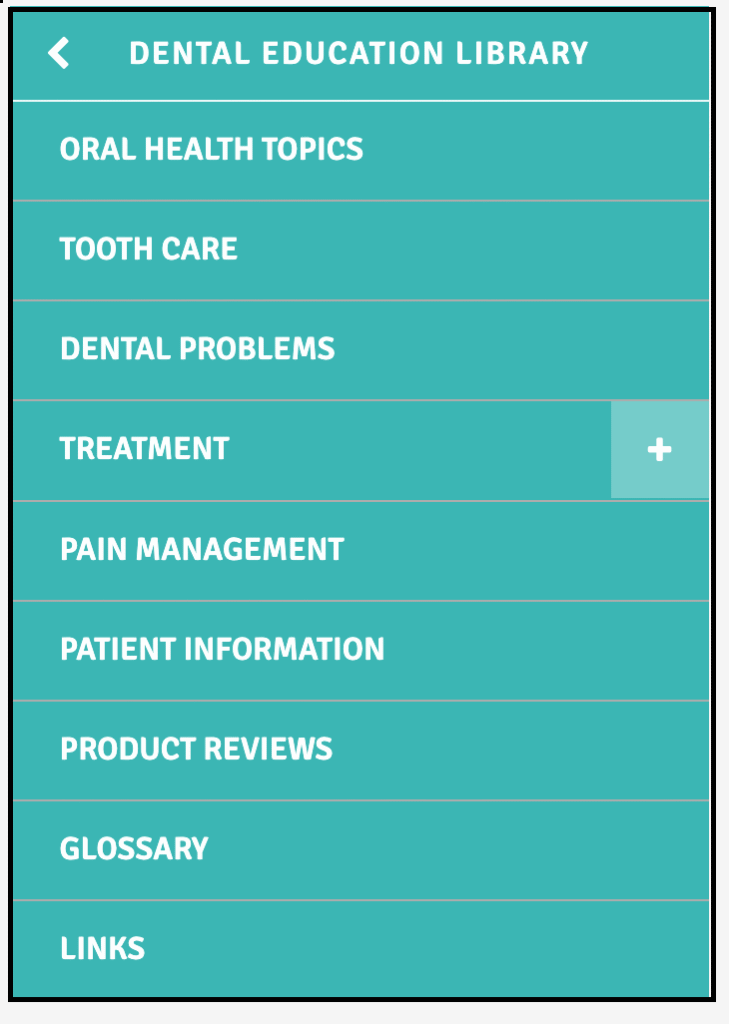
With additional internal linking to service pages and clearer next-step guidance, this type of content can play an even bigger role in supporting both organic rankings and patient acquisition.
| 💡Organic rankings create validation and depth. They answer the question, “Is this the right dentist for me?” |
Pillar #3 Actual Patient Acquisition: Turning Visibility into Appointments
Visibility alone doesn’t grow a dental practice. Conversions do.
Many clinics invest heavily in visibility, only to see minimal growth in patient numbers. The reason is almost always the same: conversion hasn’t been designed intentionally.
Here are the core elements that transform SEO traffic into real patients.
i. Conversion-focused website optimization
A dental website is the final decision point.
When someone lands on your site after searching for a dentist, they are usually time-conscious and comparing multiple options. Your website needs to reduce friction immediately.
This includes:
- Fast load times, especially on mobile
- Clear service pages for treatments like implants, root canals, or cosmetic dentistry
- Simple navigation that doesn’t force users to “figure things out”
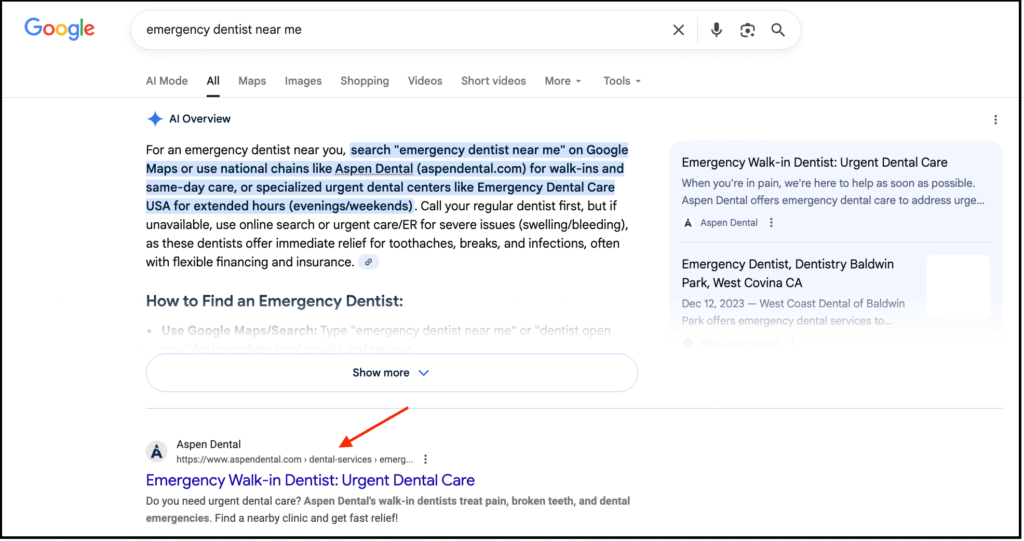
For example, a patient searching “emergency dentist near me” shouldn’t land on a generic homepage and be left to figure out what to do next. Within seconds, they should see reassurance, availability, and a clear path forward.
Practices like Aspen Dental handle this well by directing users straight to a relevant service page, where a prominent call-to-action makes it easy to schedule an appointment immediately.
ii. Trust signals that reassure hesitant patients
Dental decisions are high-trust decisions. Patients want to feel confident before they book.
To build trust, you must include:
- Professional credentials and certifications
- Years of experience and areas of specialization
- Before-and-after images (where appropriate)
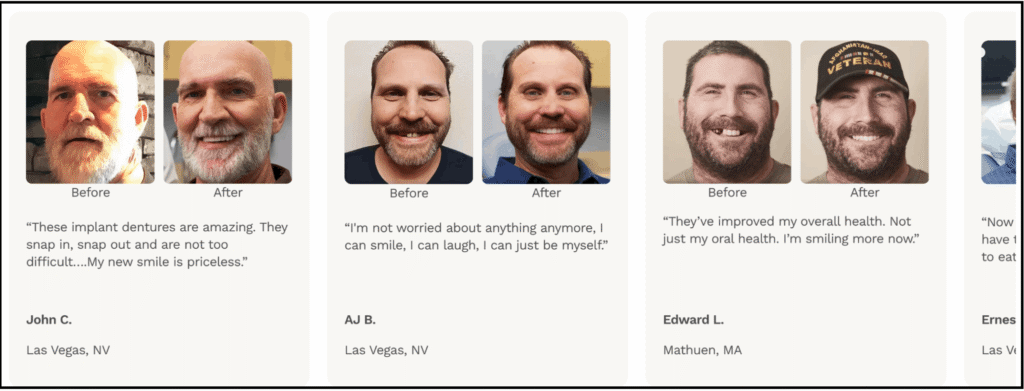
Aspen Dental has a clear before-and-after image of its patients for credibility.
- FAQs that address cost, pain, safety, and procedure concerns
For instance, a patient considering Invisalign is far more likely to book when they see clear explanations, practitioner experience, and answers to common objections — all without having to call first.
Trust doesn’t happen by accident. It’s engineered through clarity and transparency.
iii. Clear appointment paths (no guesswork required)
One of the most common dental SEO conversion mistakes is making users work too hard to book.
Every important page should clearly answer:
- How do I book an appointment?
- What happens next?
- Is this the right option for my situation?
Effective appointment paths include:
- Prominent “Book Appointment” or “Call Now” buttons
- Click-to-call options on mobile
- Dedicated booking CTAs on service and location pages
If patients have to hunt for contact details or scroll endlessly, many won’t book even if they intended to.
A good example of this in action is Aspen Dental. Their homepage banner features a clear, immediate call-to-action, and patients can select the reason for their visit right away.
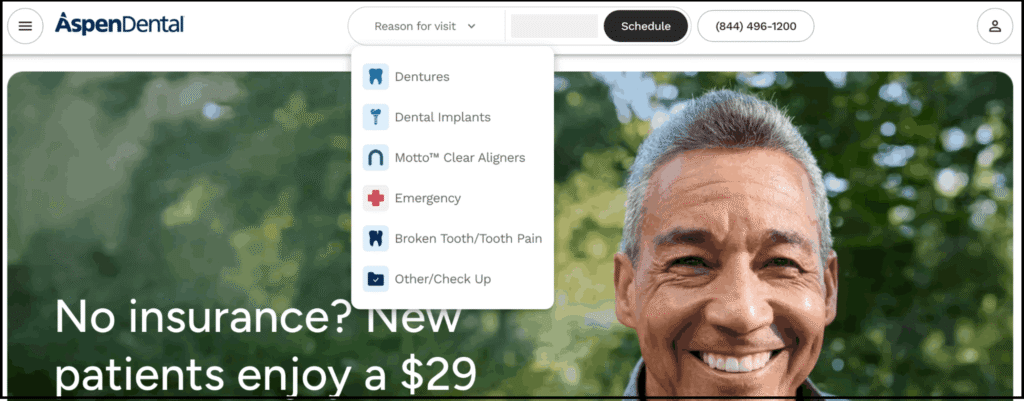
The process is fast, intuitive, and friction-free, exactly what high-intent search visitors need.
iv. Tracking what actually matters: calls, forms, and bookings
Traffic alone doesn’t pay the bills. True SEO for dentists’ performance is measured by:
- Phone calls generated from the search
- Appointment form submissions
- Confirmed bookings tied to organic traffic
Without proper tracking, it’s impossible to know:
- Which pages bring in real patients
- Which keywords drive revenue, not just clicks
- Whether SEO is actually delivering ROI
For example, ranking #1 for a high-volume informational keyword might look impressive. However, a lower-volume treatment keyword that drives consistent calls is often far more valuable.
| 💡A site can rank well and still underperform if patients feel uncertain, overwhelmed, or unsure of the next step. |
Backlinks & Authority: The Missing Link in Most Dental SEO Strategies
With AI-driven search now influencing how people discover healthcare providers, authority has become a deciding factor between page one and page two.
When multiple dental practices have similar websites and solid local optimization, Google and increasingly AI systems look for stronger signals of credibility and trust.
This is where backlinks act as third-party validation. They signal to search engines and AI systems that your practice is being referenced, cited, and trusted beyond its own website.
But it’s important to understand that not all links contribute equally.
What actually moves the needle is:
- Relevance to healthcare, dentistry, or trusted local and industry publications
- Real traffic and editorial context, not links from empty or purely SEO-driven domains
- Editorial placement, where your practice is mentioned naturally rather than listed in bulk directories or spammy outreach campaigns
Tanot Solutions specializes in helping dental businesses build contextual, highly relevant backlinks that strengthen both SEO performance and AI visibility over time.
Our approach includes:
- Authority citations for AI visibility that reinforce credibility across trusted sources
- Link insertions within existing, relevant content on authoritative websites
- Niche edit link building focused on contextual relevance, not volume
- Guest posting on vetted publications with real readership and trust
- Brand mentions that build recognition and authority beyond direct links
How Long Does SEO Take for Dental Clinics?
Dental SEO is not instant, but it is predictable when done correctly. A realistic timeline typically looks like this:
| Timeline | Phase | What Happens During This Stage |
| 0–3 months | Foundation | Technical fixes, local SEO setup, on-page optimization, and aligning content with patient search intent |
| 3–6 months | Traction | Improved local and organic visibility, early ranking movement, and initial increases in calls and inquiries |
| 6–12 months | Competitive Growth | Authority building, stronger rankings for competitive treatments, and more consistent patient flow |
What affects how fast dental SEO works?
- Local competition: The more clinics competing in your area, the more authority and time it takes to outperform them.
- Geographic market: Large cities and dense metro areas are more competitive than smaller towns, slowing ranking movement.
- Existing authority: Clinics with an established online presence and trusted mentions see results faster than brand-new sites.
- Current link profile: A clean, relevant backlink profile accelerates growth, while weak or spammy links can slow progress.
Anyone promising instant results is usually cutting corners.
Common Dental SEO Mistakes That Cost Clinics Patients
Many dental clinics end up making these basic SEO mistakes that result in low visibility and reduce patient inquiries over time.
Each of these directly influences how AI models perceive and ultimately recommend your brand.
Once you know the gaps, build a strategy around closing them.
Here’s a simple checklist of common pitfalls worth avoiding:
Chasing low-cost SEO packages that promise results but lack clear deliverables
Overlooking authority and backlinks as part of long-term growth
Targeting broad or low-intent keywords that attract traffic, not patients
Lacking transparency into what the SEO agency is actually executing
SEO should feel like a controlled, measurable investment.
Turning Dental SEO into a Predictable Patient Growth Channel
Effective SEO for dentists doesn’t chase trends, hacks, or ranking. Instead, it focuses on aligning:
- Local visibility for discovery
- Organic rankings for trust
- Patient acquisition for ROI
When these elements work in sync, SEO shifts from an experiment to a reliable system for patient acquisition.
Contact Tanot Solutions today to understand how we can help build long-term authority with transparency and control that delivers real patient growth.
Frequently Asked Questions (FAQs)
Why is local visibility important for my dental practice?
Local visibility ensures patients can find your clinic when searching for services nearby. Optimizing your Google Business Profile, maintaining consistent contact information, and gathering genuine reviews helps your practice appear in map packs and local search results, increasing appointment bookings and patient trust at the moment they are actively looking for care.
How does improving organic rankings benefit my dental clinic?
High organic rankings show your expertise and help patients feel confident choosing your practice. Ranking for service-specific or educational searches reassures visitors that you understand their needs, which can encourage them to book appointments and view your clinic as a reliable and credible provider in your area.
What makes a dental website conversion-friendly?
A conversion-friendly website guides visitors quickly to book an appointment. This includes fast mobile performance, clear treatment pages, intuitive navigation, visible call-to-action buttons, and concise instructions on next steps. A well-optimized website reduces friction and increases the likelihood that patients will take action instead of leaving to check competitors.
How do patient reviews influence SEO and new appointments?
Reviews help search engines and prospective patients evaluate your clinic’s trustworthiness. High ratings and thoughtful responses improve your visibility in local search results and influence decisions, as patients are more likely to choose a practice with strong, authentic reviews that reflect quality care and positive experiences.
Why are backlinks important for dental SEO?
Backlinks act as a vote of confidence from other websites. Quality links from healthcare, dental, or authoritative local sources signal credibility to search engines, helping your practice rank higher. They also reinforce trust with patients who see your clinic referenced in reputable publications or resources.
How long does it usually take to see results from dental SEO?
SEO results for dental practices aren’t instant. Typically, 0–3 months focus on technical fixes and local SEO, 3–6 months show improved visibility and early leads, and 6–12 months bring consistent patient flow and authority. Timelines depend on competition, location, and current website authority.
What common mistakes can reduce the effectiveness of dental SEO?
Common pitfalls include targeting broad, low-intent keywords, ignoring backlinks, chasing cheap SEO packages, or not tracking results. These errors can lower visibility, attract the wrong audience, and fail to convert visitors into patients. Focused, transparent, and well-structured SEO strategies ensure measurable, long-term growth.