
Almost 8 in 10 U.S. consumers look up local businesses online every week.
Most firms recognize this shift. According to the Clio Legal Trends Report, 74% of surveyed lawyers already use their firm’s website to promote or market their services to potential clients.
Yet visibility and effectiveness are not the same thing.
Despite widespread website adoption, a large portion of potential clients still struggle to find the information they’re looking for on law firm websites.
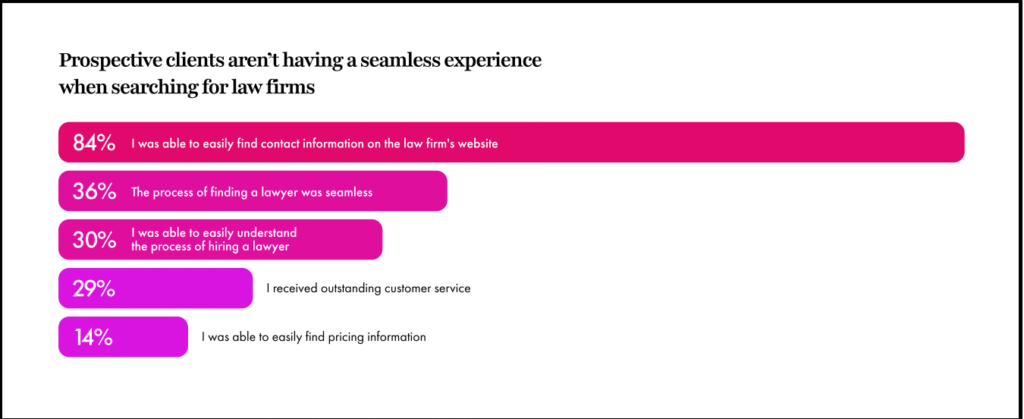
Source: Clio Legal Trends Report 2024
The result is a familiar pattern across law firm SEO:
- Websites exist, but don’t convert
- Rankings improve, but inquiries don’t scale
- SEO spend increases, but ROI remains unclear
This guide shares how lawyers can close that gap using a systematic approach to on-page, off-page, and local SEO.
What Is Law Firm SEO?
Law firm SEO is the process of optimizing a legal website so it ranks for relevant searches and converts those searches into consultations and cases. At a surface level, it looks like traditional SEO, which includes:
- Keywords
- Content
- Links
- Local optimization
But legal SEO demands more.
First, your content must meet Google’s Your Money or Your Life (YMYL) standard.
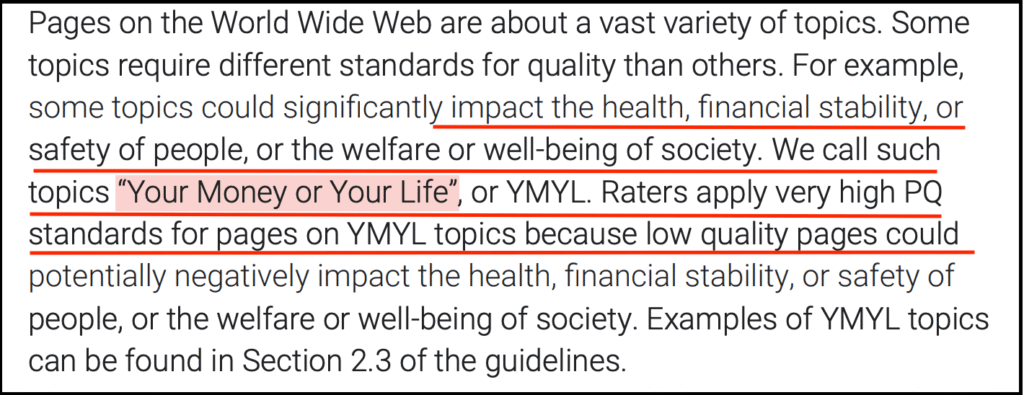
This means avoiding guarantees, staying jurisdiction-aware, and ensuring all information is accurate and up to date with current laws.
Second, the legal space is highly competitive. You need stronger authority signals, such as brand mentions and PR-driven backlinks, to win trust.
Why SEO for Lawyers Can’t Be Ignored
A simple way to understand the growing importance of SEO for lawyers is to look at search behavior.
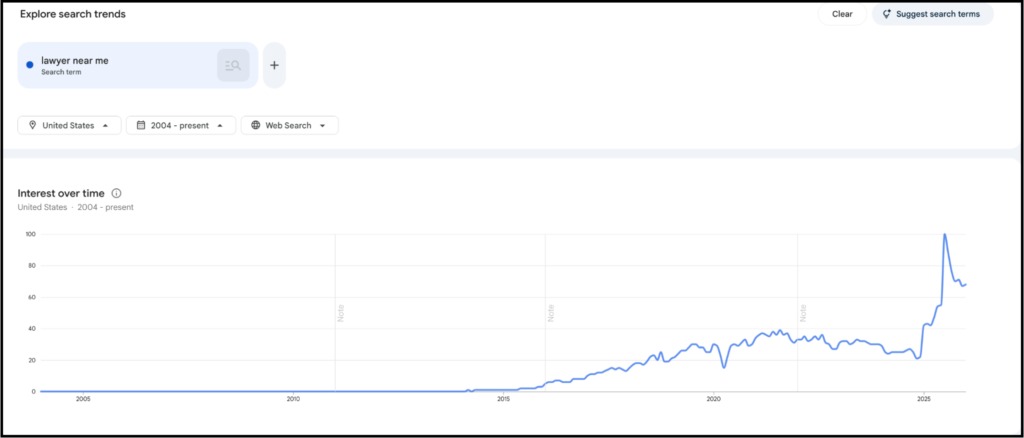
Take a basic query like “lawyer near me.” Data from Google Trends shows a steady increase in interest for this term year over year.
It’s clear evidence that people increasingly rely on search engines when looking for legal help.
When you narrow this further to high-intent searches such as “injury lawyer near me,” the trend becomes even more pronounced.
In 2025 alone, interest in this keyword category has continued to rise. This reflects how users search when legal needs are urgent, and decisions need to be made quickly.
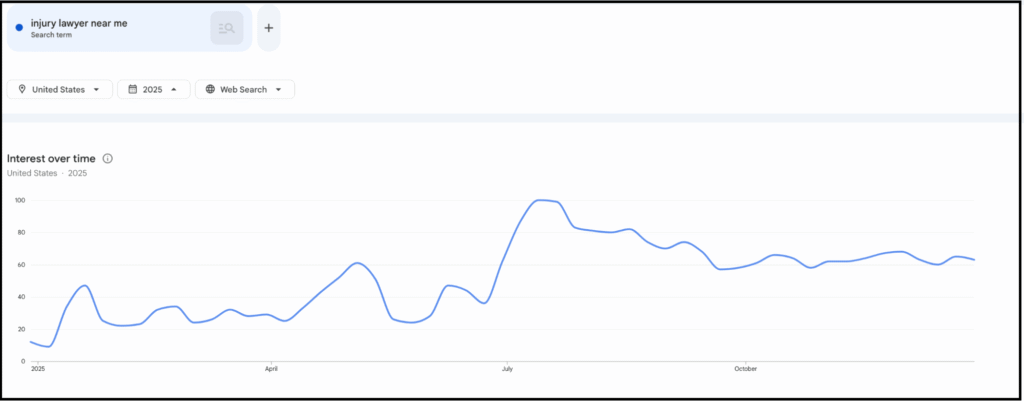
It matters because search visibility directly influences who gets contacted first, and often, who gets hired.
Paid ads can certainly capture some of this demand. However, the moment ad spend stops, visibility disappears.
That’s why you need strong organic SEO strategies for lasting visibility. It enables you to attract qualified case inquiries consistently without paying for every click.
With that context in mind, let’s look at the SEO strategies for lawyers that consistently drive long-term client acquisition.
Strategy #1: On-Page SEO for Lawyers
On-page SEO is where most law firm websites quietly lose opportunities.
Not because pages are missing keywords, but because they don’t align with how legal clients think and search.
Let’s delve into the components of on-page SEO for lawyers.
i. Practice-area keyword mapping
A common mistake on many law firm websites is listing all services on a single page.
From a search engine’s perspective, that dilutes relevance. From a client’s perspective, it creates confusion.
The guiding principle should be simple:
One core service = one primary page
Each service page targets:
- A primary keyword (e.g., personal injury lawyer)
- Supporting variations (e.g., car accident attorney, injury lawyer consultation)
Sweet James Accident Attorneys does this well by creating separate pages for different practice areas.
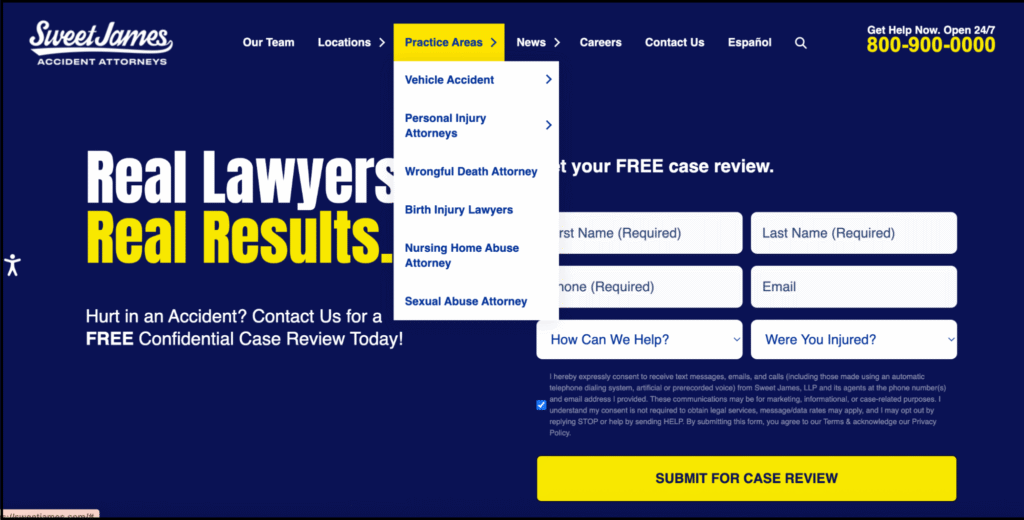
Google can understand what you specialize in, and it becomes easier for users to confirm they’re in the right place.
ii. Location-based service pages
In addition to dedicated service pages, law firms also need dedicated location pages when serving multiple cities. Why?
Legal searches are inherently local, even when users don’t explicitly include a city name. Relying on a single page can limit your visibility in local search results.
Sweet James, for example, has dedicated location pages for both states and individual cities.
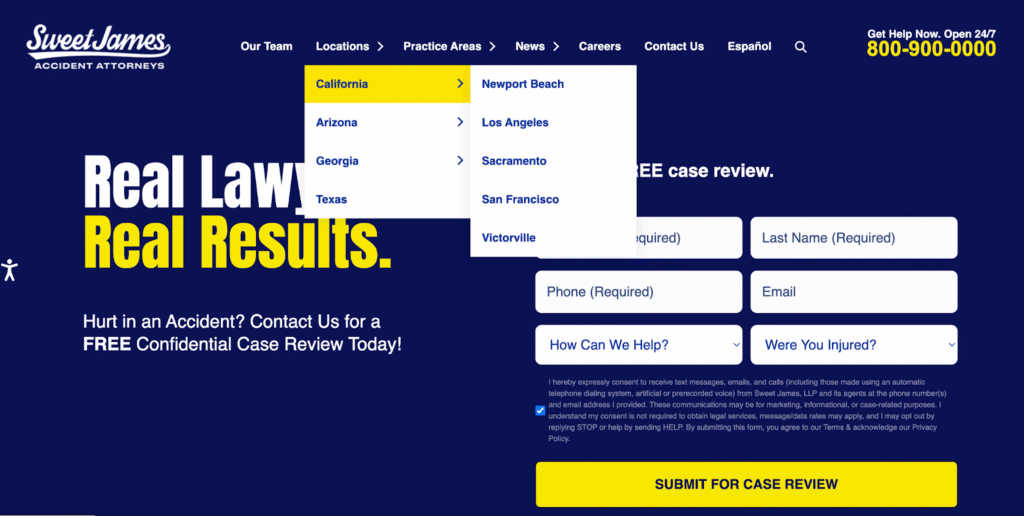
A strong law firm SEO strategy pairs “practice area + location” intentionally. Keyword examples include: “Car Accident Lawyer in [City]” or “Personal Injury Attorney Serving [Area].”
This structure aligns with how users search and how AI systems and Google evaluate local relevance.
iii. Attorney bios as authority assets (E-E-A-T)
There are thousands of attorneys online. Why should a potential client trust you?
The simplest answer: demonstrate your expertise.
Attorney bio pages should clearly highlight credentials, bar admissions, and experience on your website. Even consider publishing thought leadership content under your profiles to show how you think, not just what you claim.
And if you’re a law firm with multiple attorneys, create a dedicated section for your team. These pages act as strong E-E-A-T signals for both search engines and prospective clients.
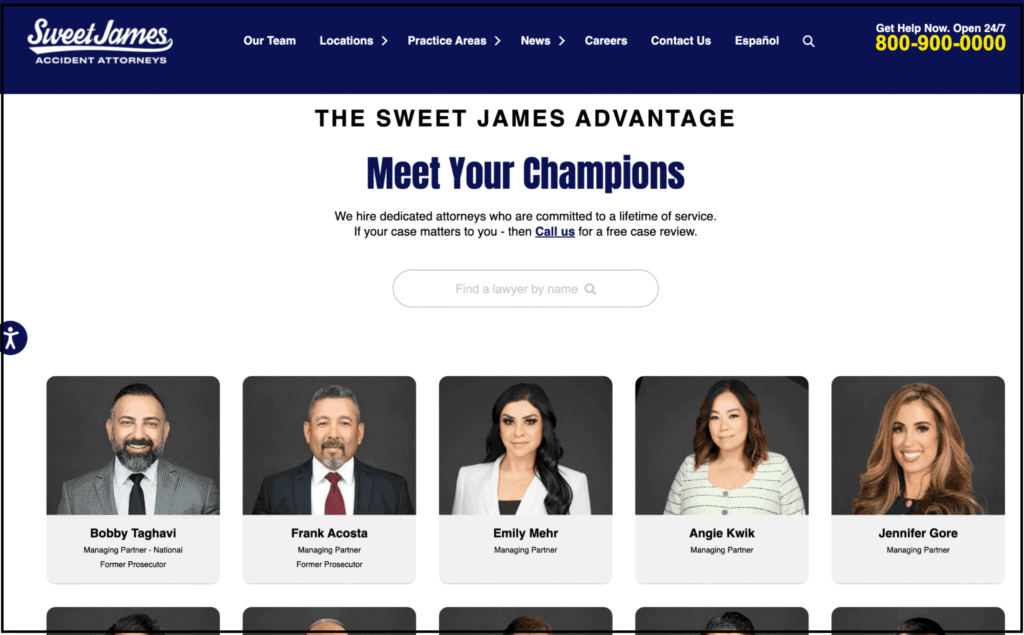
Sweet James executes this well with an “Our Team” page. Each attorney snapshot links to an individual profile detailing experience, education, and credentials.
These are exactly what users look for when they’re carefully evaluating a lawyer for themselves.
iv. Internal linking for case relevance
Internal links tell search engines how your content fits together, and tell users where to go next.
A practical internal linking structure looks like:
- Informational blog content → Practice-area pages
- Practice-area pages → Location pages
- Location pages → Consultation or contact CTAs
This does three things:
- Distributes authority across priority pages
- Improves crawl efficiency
- Guides users toward conversion without friction
For example, Sweet James’ Newport Beach location page is internally linked to related service pages, attorney profiles, and team pages on the website.
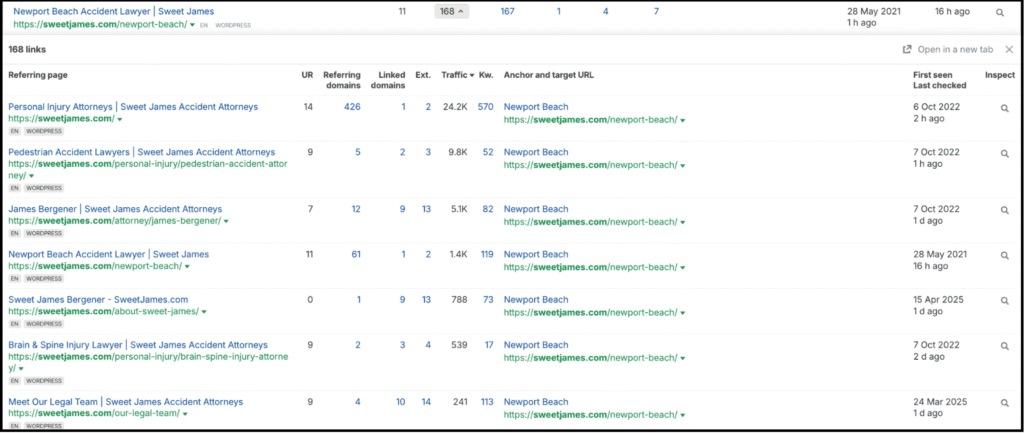
When internal links are intentional, SEO and UX start working together instead of separately.
v. Law firm website optimization essentials
Even the strongest content won’t convert if the site experience creates friction.
Key website optimization essentials include:
- Page speed: Slow-loading pages increase bounce rates and erode trust, especially on mobile.
- Mobile usability: With over 60% of searches happening on mobile, website browsing must work seamlessly on smaller screens.
- Clear CTAs: Calls to action should be visible without excessive scrolling and clearly worded (e.g., Request a Consultation, Speak to an Attorney).
When these fundamentals are in place, your on-page SEO efforts are far more likely to translate into real leads.
Strategy #2: Local SEO for Lawyers
Local SEO is often the deciding factor between a law firm that gets consistent inbound leads and one that stays invisible, regardless of how strong its website is.
If you’re not visible in map results, you’re invisible to high-intent searchers.
i. Google business profile optimization
Your Google Business Profile (GBP) is the most influential local ranking asset for law firms. Every firm should ensure:
- The correct primary category (e.g., Personal Injury Attorney, Criminal Defense Lawyer)
- Accurate business name (no keyword stuffing)
- Updated service areas and office hours
- High-quality office and team photos
Sweet James Accident Attorneys’ GBP is optimized to include product categories and popular visiting times, helping prospective clients decide when to avoid peak hours.
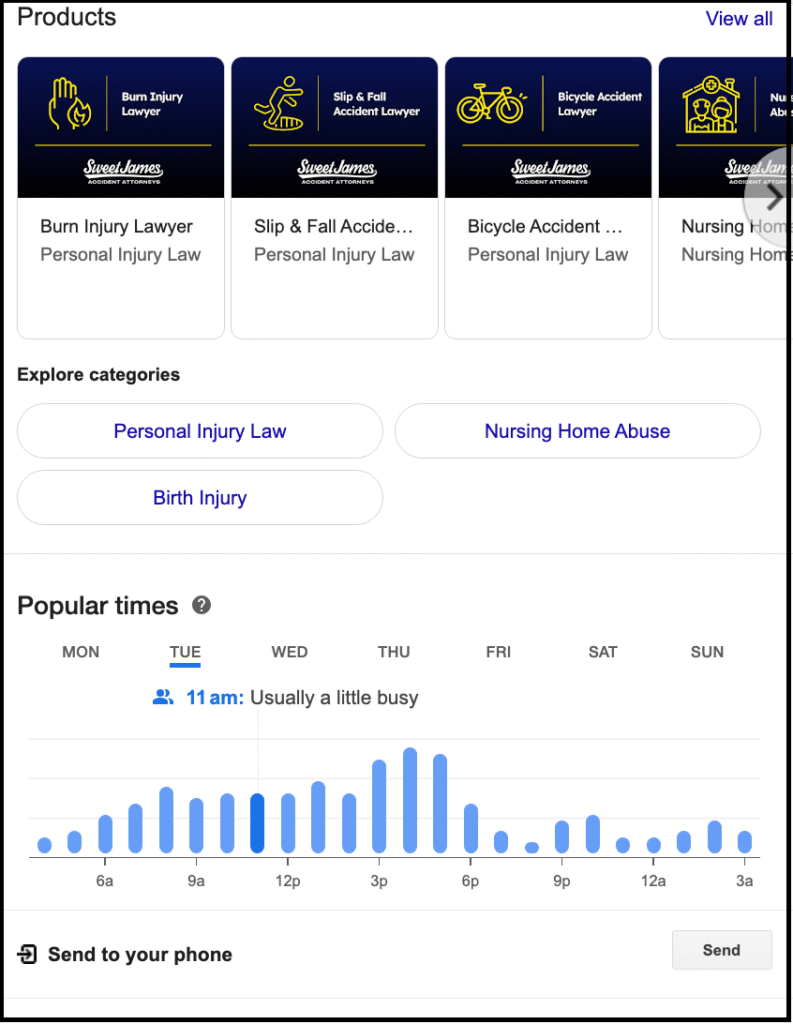
An optimized GBP increases visibility in the local map pack and builds immediate trust before users even click through to your website.
ii. NAP consistency across the web
NAP (Name, Address, Phone Number) consistency is a foundational local SEO signal.
Search engines and AI systems cross-check your business information across the web to verify legitimacy. Inconsistent listings, such as different phone numbers or address formats, create trust gaps that suppress rankings.
Ensure your NAP details are:
- Identical across your website, GBP, and directories
- Updated whenever your firm moves offices or changes contact information
iii. Legal directories vs. spam listings
Not all citations are equal. High-quality legal directories, such as Avvo, Justia, FindLaw, and state bar associations, strengthen authority and relevance.
Low-quality or spammy listing sites, on the other hand, offer little value and can dilute trust signals.
A smart local SEO strategy for lawyers prioritizes:
- Reputable legal and industry-specific directories
- Local business directories relevant to your city or region
- Avoiding mass-submission tools that create low-quality citations
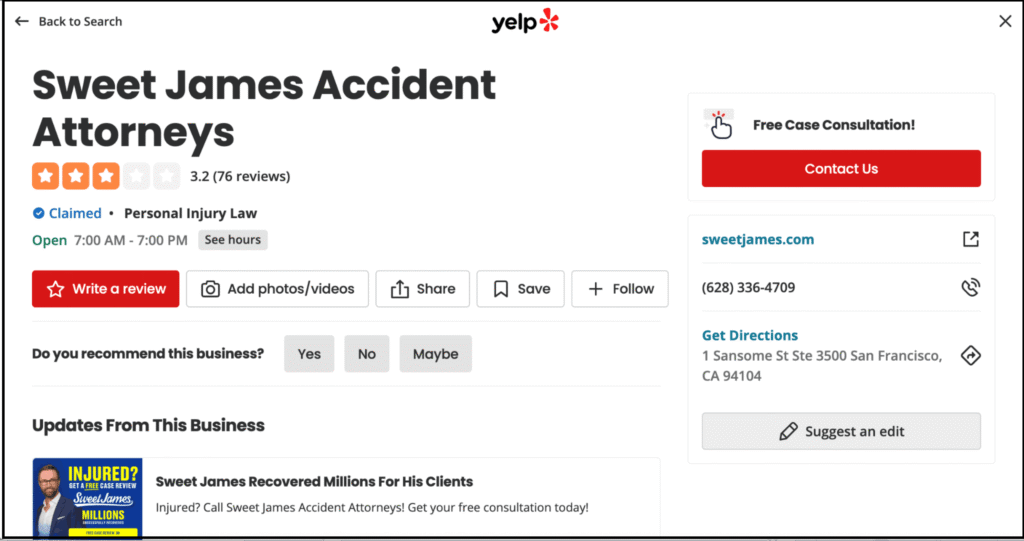
Sweet James Accident Attorneys are listed on the Yelp directory
Quality citations help Google and AI search systems like ChatGPT, Perplexity, and others validate your firm as a legitimate local entity.
iv. Review generation strategy (ethical & compliant)
Client reviews influence local ranking and conversion factors for law firms.
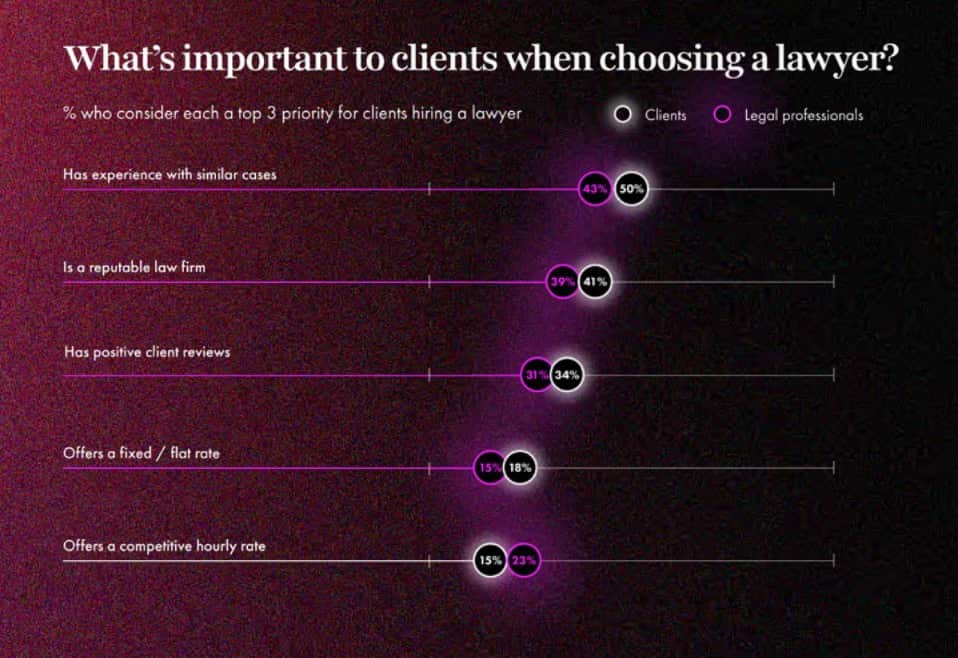
According to the Clio Legal Trends Report, 34% of clients rank positive reviews among the top three factors when choosing a lawyer.
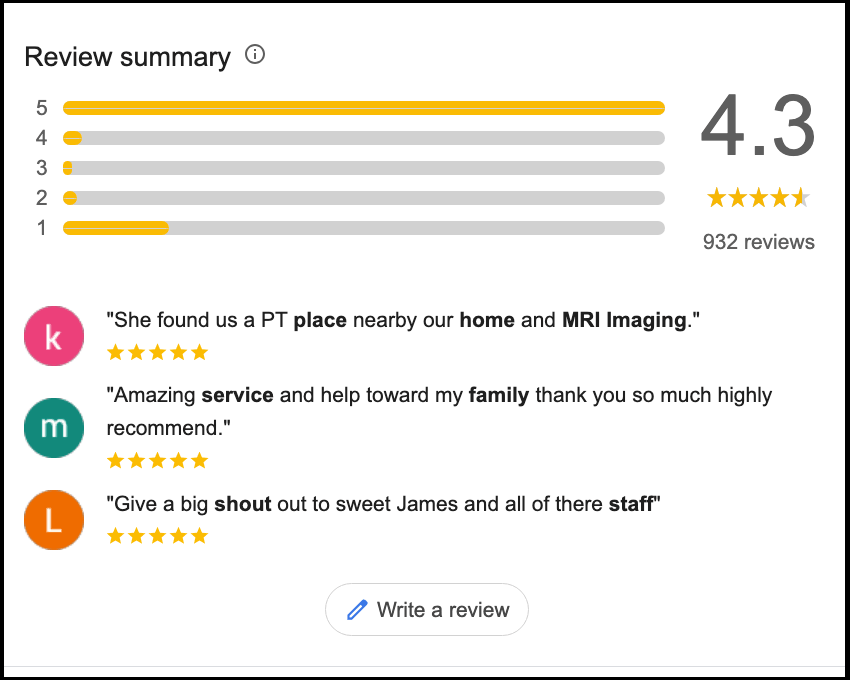
Sweet James Accident Attorneys currently holds a 4.3-star rating across 932 reviews.
An effective review strategy focuses on:
- Requesting reviews at appropriate moments (post-case resolution or consultation)
- Using neutral, non-incentivized requests
- Responding professionally to both positive and negative reviews
Why is this important? Because ethical review generation improves map pack rankings and builds social proof at the exact moment potential clients are comparing options.
Strategy #3: Off-Page SEO for Lawyers
Simply put, off-page SEO is where law firm authority is earned and not claimed. It signals how credible and trusted your firm is in the wider legal ecosystem.
Why link building for lawyers matters more than ever
Link building for lawyers acts as a vote of trust.
Search engines and AI systems alike use high-quality links and citations to evaluate:
- Trustworthiness
- Topical authority
- Brand legitimacy
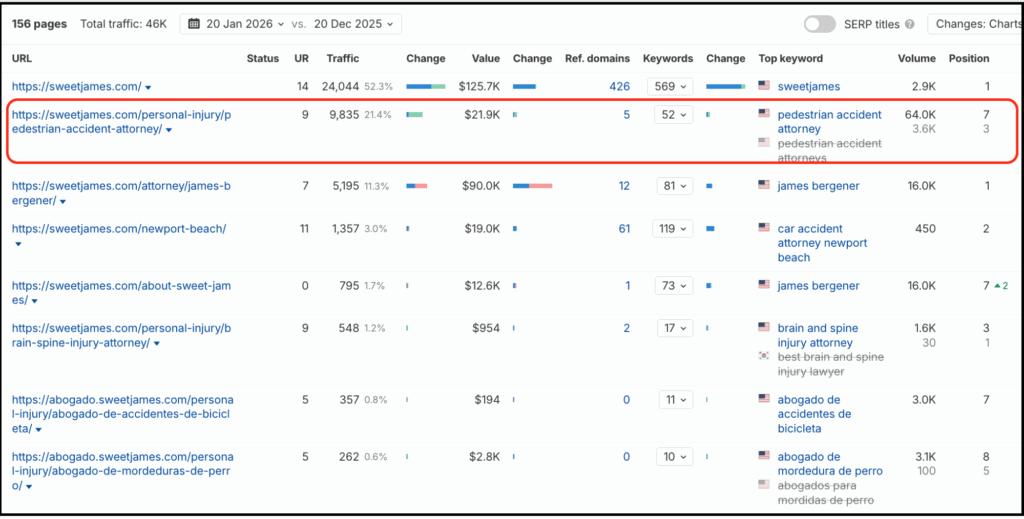
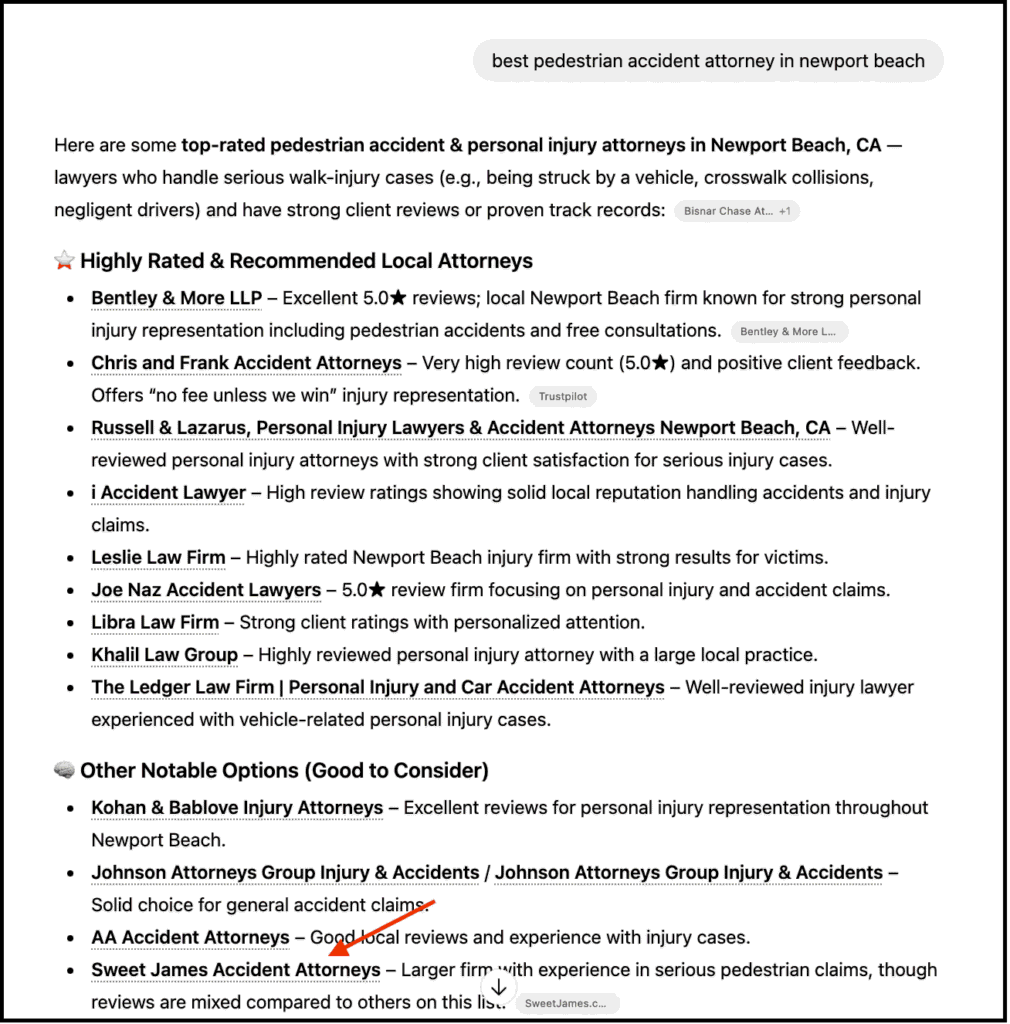
For example, when I searched for “best pedestrian accident attorney in Newport Beach,” Sweet James ranked on the first page of Google SERPs.
At the same time, it also surfaced in AI-powered summaries.
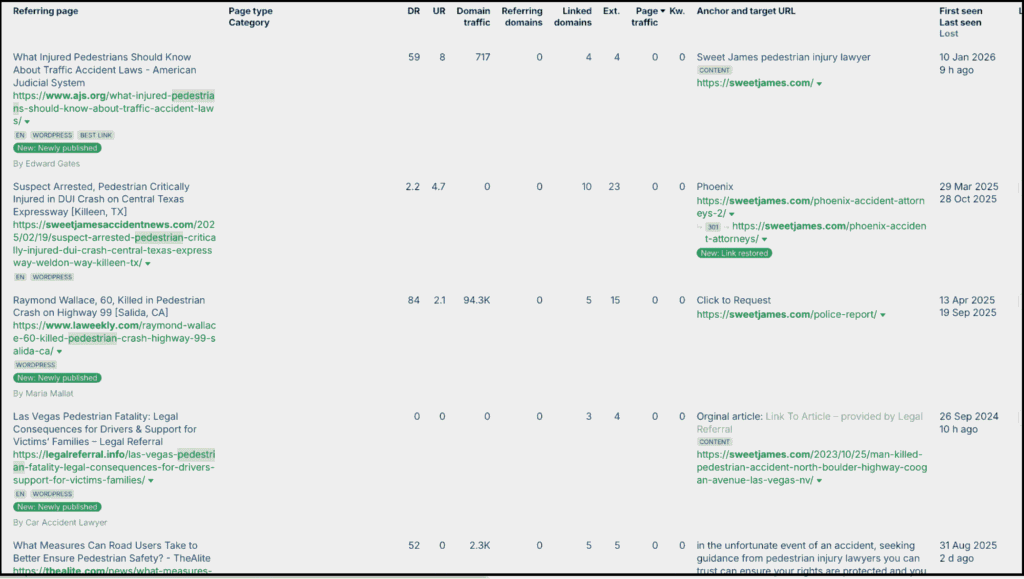
This visibility can be clearly attributed to the strong topical authority they have built around pedestrian injury law through consistent, relevant backlinking.
Understanding different types of backlinks for lawyers
A strong off-page SEO strategy for lawyers prioritizes context and editorial integrity.
Here’s how the most common legal backlink types differ:
- Legal PR mentions
These are editorial mentions earned through news coverage, legal publications, or authoritative industry platforms. They build brand authority beyond your website and strengthen trust signals used by AI models.
These mentions are among the strongest contributors to both SEO performance and AI visibility.
- Guest posts
Guest posts involve publishing expert content on relevant, authoritative websites. They help establish attorneys as subject-matter experts while building contextual relevance around specific practice areas.
That said, the emphasis should always be on the quality of the publication, not the quantity of placements.
- Editorial link insertions
These links are placed naturally within existing, high-performing content. They pass authority from aged, trusted pages to your website.
Because they sit within established content, editorial insertions help AI models associate your firm more confidently with relevant legal topics.
What to avoid in law firm link building
Not all backlinks improve visibility; some actively undermine it.
Law firms should avoid:
- PBNs (Private Blog Networks): Artificial link networks that fail trust evaluations
- Irrelevant guest posting: Off-topic placements that weaken topical authority
- Fiverr-style link packages: Low-quality, automated links that provide no lasting SEO or AI value
These low-quality links introduce noise and weaken your firm’s overall credibility.
How Tanot Solutions drives SEO and AI visibility
Law firms working with Tanot Solutions typically see faster, more sustainable growth because every backlink is evaluated against clear criteria:
- Topical relevance
- Domain authority with real user traffic
- Editorial placement aligned with AI trust signals
Rather than chasing domain rank (DR) metrics alone, the focus is on building verifiable authority.
When link building is executed with intention, it helps position your law firm to be discoverable and referenced in both traditional search results and AI-powered answers.
Strategy #4: Content That Matches Legal Search Intent
Legal search behavior is shaped by three factors:
- Dealing with high-stakes situations
- Comparing consequences and outcomes
- Evaluating credibility before taking action
If your content doesn’t align with this mindset, it won’t convert.
In fact, 50% of clients surveyed say that a lawyer’s experience with similar cases is one of the top three factors influencing their hiring decision.
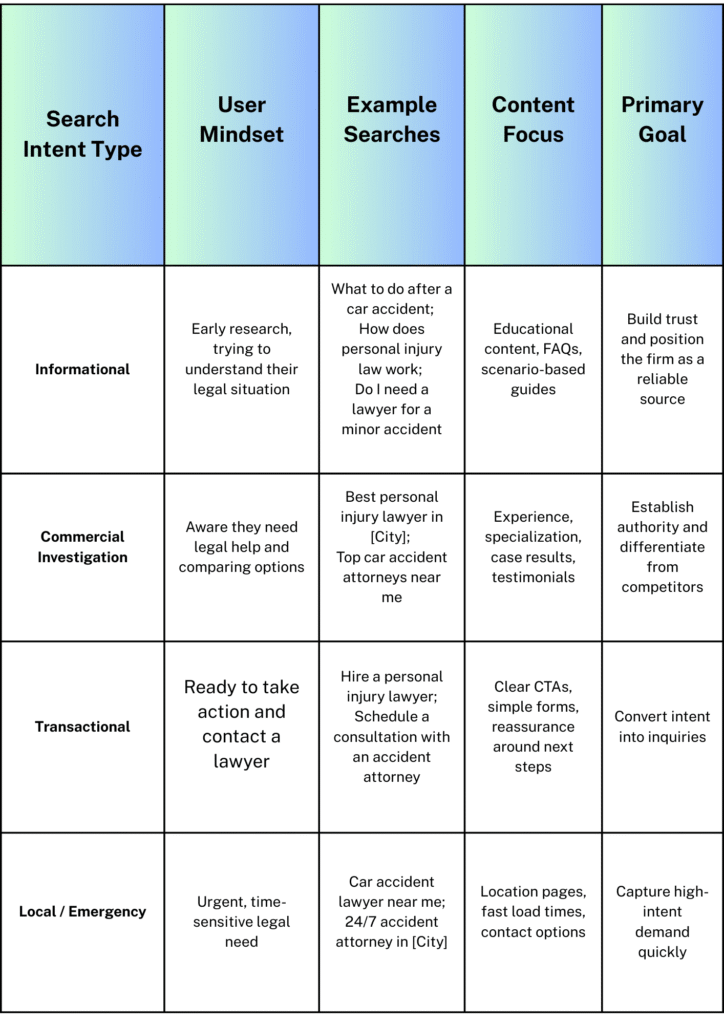
To create content that truly resonates, it’s important to understand the different types of search intent and build content around each one.
Mapping content to the client decision journey
Once you understand search intent, you can create content that supports potential clients at every stage of the decision-making process.
A simple framework looks like this:
- Awareness: Informational guides and FAQs
- Consideration: Practice-area pages, attorney profiles, case examples
- Decision: Location pages, testimonials, consultation CTAs
This ensures users don’t hit dead ends and can move naturally from research to action within your site.
When to Hire a Law Firm SEO Agency
Not every law firm needs to outsource SEO from day one. However, there are clear signals that internal efforts may no longer be enough.
SEO for lawyers should be outsourced when:
- Internal efforts stall: Rankings plateau, traffic stops growing, or results feel unpredictable despite consistent work.
- Competition intensifies: Larger firms or aggressive competitors begin dominating local and practice-area searches.
- Link building becomes risky or inconsistent: Acquiring authoritative links requires time, relationships, and judgment. Mistakes here can do more harm than good.
At this stage, an experienced law firm SEO agency like Tanot Solutions can provide structure, scalability, and risk management that’s difficult to sustain in-house.
Before hiring an SEO partner, though, it’s important to get clarity on how they operate.
| Question | What to Look For |
|---|---|
| How do you evaluate link quality? | Look for answers that reference relevance, authority, editorial standards, and real placement context. |
| Will we approve link placements? | Transparency in where and how links are built is essential for long-term trust and compliance. |
| How do you measure ROI? | The focus should go beyond rankings to include qualified traffic, lead quality, and conversions tied to business outcomes. |
The right agency should be able to explain how they work in clear terms without ambiguity or deflection.
Ready to Scale Your Law Firm’s SEO the Right Way?
If you want to master SEO for your law firms, you can’t take shortcuts. It will rarely build visibility for the long term.
Using a sustainable and ethical process, you can achieve small, consistent gains that will build authority over time.
Just as importantly, trust in your SEO partner matters as much as trust from Google. Clear reporting, open communication, and shared decision-making ensure your SEO efforts are built for the long run.
At Tanot Solutions, we help attorneys build authority-first SEO through white-hat, client-approved backlinks that support commercial growth. Contact us today to explore more.